

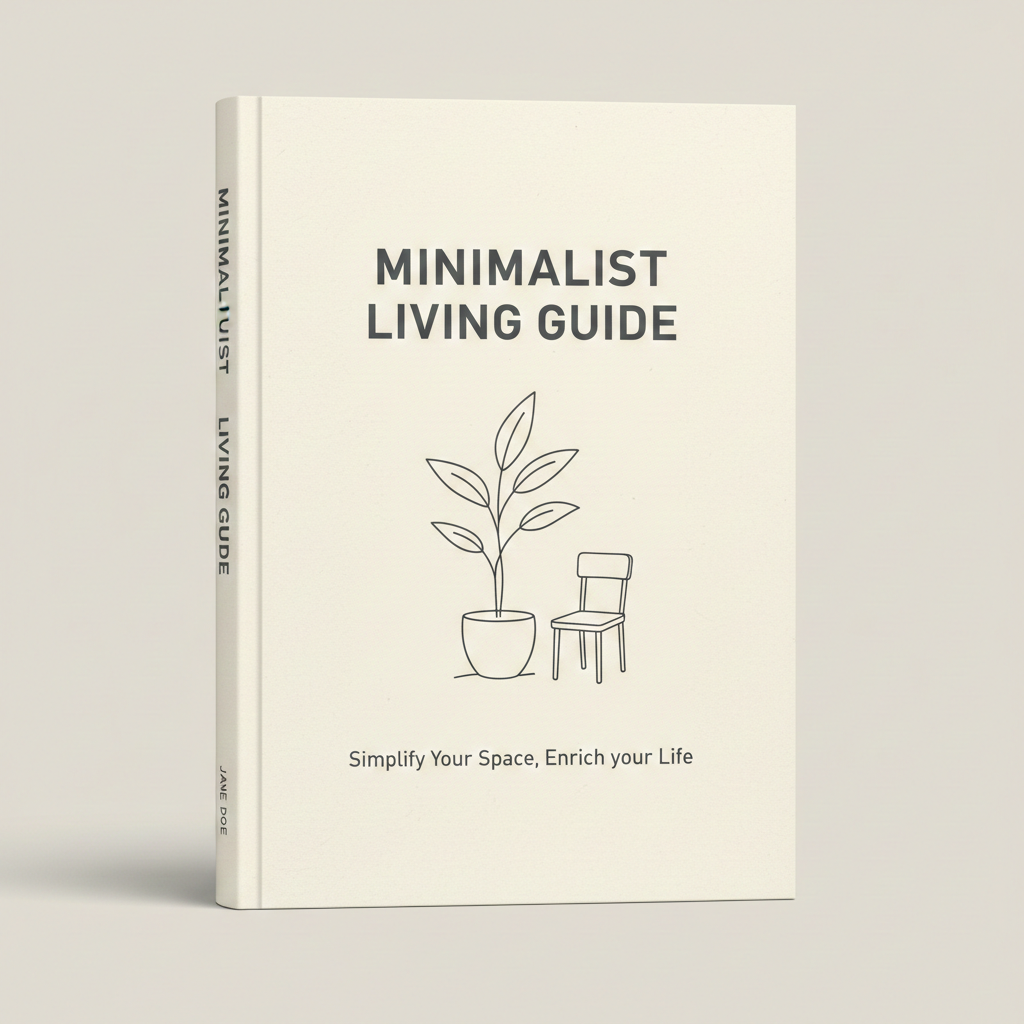
Why Minimalist Living Is More Than Just Less Stuff
Minimalist living is not about owning nothing or living an extreme lifestyle. It’s about intentionally choosing what adds value to your life—and letting go of everything else.
In today’s fast-paced, consumer-driven world, many people feel overwhelmed by clutter, stress, and constant pressure to buy more. Minimalism offers a practical solution: simplify your surroundings, your schedule, and even your mindset to create more space for happiness, clarity, and freedom.
This minimalist living guide will walk you step by step through the philosophy, benefits, and practical strategies of minimalism—whether you live in a small apartment, a family home, or a busy city lifestyle.
Understanding Minimalist Living: The Core Philosophy
Minimalism is a lifestyle focused on intentional living. It means keeping only what serves a purpose or brings genuine joy.
What Minimalist Living Really Means
Minimalist living is about:
- Living with intention, not impulse
- Valuing experiences over possessions
- Reducing distractions to improve focus
- Aligning daily choices with personal values
According to research from the American Psychological Association, cluttered environments are linked to increased stress and anxiety . Minimalism helps counter this by creating calmer physical and mental spaces.
Key Benefits of Minimalist Living You Can Feel Every Day
Mental Health and Emotional Well-being
Minimalism reduces decision fatigue and mental overload. Fewer possessions mean fewer things competing for your attention.
Benefits include:
- Reduced stress and anxiety
- Improved concentration
- Better sleep quality
- More emotional clarity
A study by Harvard Medical School highlights how simplified environments contribute to lower cortisol (stress hormone) levels.
Financial Freedom Through Simplicity
Minimalism naturally encourages mindful spending.
| Before Minimalism | After Minimalism |
|---|---|
| Impulse shopping | Intentional purchases |
| High monthly expenses | Lower living costs |
| Credit dependency | Savings & investments |
By buying less and buying better, many minimalists save 20–30% of their income annually, according to consumer behavior studies.
Time Freedom and Productivity
Owning less means:
- Less cleaning
- Less organizing
- Less maintenance
This creates more time for:
- Family
- Health
- Personal growth
- Side businesses or hobbies
Minimalist Living vs Traditional Lifestyle: A Clear Comparison
| Aspect | Traditional Lifestyle | Minimalist Lifestyle |
|---|---|---|
| Possessions | Excessive | Intentional |
| Spending | Emotion-driven | Value-driven |
| Stress | High | Lower |
| Focus | Scattered | Clear |
| Happiness | External | Internal |
How to Start Minimalist Living (Step-by-Step Guide)
Start With a Minimalist Mindset Shift
Before decluttering your home, declutter your thinking.
Ask yourself:
- Do I own this out of habit or intention?
- Does this item improve my life?
- Would I buy this again today?
Minimalism starts in the mind—not the closet.
Decluttering Your Home the Right Way
Begin With One Room, Not Everything
Avoid burnout by starting small:
- Closet
- Kitchen drawer
- Bathroom shelf
Use the 90/90 Rule:
If you haven’t used it in the last 90 days and won’t use it in the next 90, let it go.
Minimalist Decluttering Checklist
- Clothes you no longer wear
- Duplicate kitchen items
- Old documents and papers
- Unused electronics
- Expired products
Donate, recycle, or responsibly discard items.
Minimalist Living Room: Calm, Clean, and Functional
A minimalist living room should encourage relaxation and connection.
Key principles:
- Neutral color palette
- Multi-functional furniture
- Open space
- Natural light
Less furniture creates more breathing room—for both body and mind.
Minimalist Bedroom: Designing for Better Sleep
A clutter-free bedroom directly impacts sleep quality.
Minimalist bedroom essentials:
- Comfortable bed
- Simple bedding
- Soft lighting
- Zero distractions
The National Sleep Foundation confirms that clutter-free sleeping environments improve sleep consistency and duration.
Minimalist Kitchen: Eat Better, Waste Less
Minimalist kitchens focus on efficiency and health.
How to Simplify Your Kitchen
- Keep only daily-use utensils
- Adopt meal planning
- Reduce packaged foods
- Use glass or reusable containers
This approach reduces food waste and supports healthier eating habits, as supported by nutrition research from the World Health Organization.
Minimalist Digital Life: Declutter Your Screen
Digital clutter is just as stressful as physical clutter.
Digital Minimalism Tips
- Unsubscribe from unnecessary emails
- Delete unused apps
- Limit social media usage
- Organize files into clear folders
According to productivity studies, digital decluttering can increase focus by up to 25%.
Minimalist Living on a Budget
Minimalism is not expensive—it saves money.
Smart Budgeting the Minimalist Way
- Buy quality over quantity
- Follow a one-in, one-out rule
- Avoid emotional spending
- Track expenses monthly
aligns perfectly with financial independence goals.
Minimalism for Families: Yes, It’s Possible
works for families too—with flexibility.
Family-friendly minimalist strategies:
- Rotate children’s toys
- Shared storage systems
- Teach kids intentional buying
- Focus on experiences over gifts
Families practicing minimalism often report stronger bonds and reduced household stress.
Common Myths About Minimalist Living
Myth 1: Minimalism Is Boring
Reality: Minimalism creates room for creativity.
Myth 2: Minimalism Means No Style
Reality: Minimalist design is timeless and elegant.
Myth 3: Minimalism Is Only for Singles
Reality: Families, professionals, and retirees all benefit.
Real-Life Minimalist Living Statistics
- 78% of people feel calmer after decluttering their homes
- Minimalists save an average of 15 hours per month
- Reduced clutter leads to higher life satisfaction scores
(Source: Consumer psychology and wellness studies)
FAQs About Minimalist Living
What is minimalist living in simple words?
Minimalist living means focusing on what truly matters by removing unnecessary physical, mental, and emotional clutter.
Is minimalist living suitable for everyone?
Yes. Minimalism adapts to your lifestyle, values, and personal goals.
How long does it take to become a minimalist?
There is no timeline. Some start seeing benefits in weeks, others gradually over months.
Can minimalism help with mental health?
Yes. Studies link minimalism to reduced stress, anxiety, and improved focus .
Do I need to get rid of everything?
No. Minimalism is about intention—not deprivation.
For more lifestyle insights, explore related articles on thenews.zone.
Internal & External Resources for Deeper Learning
- Internal Resource: thenews.zone (Lifestyle & Wellness section)
- External Resource: Harvard Health Publishing
- External Resource: World Health Organization (Mental Wellness)
Conclusion: Choose Less, Live More
Minimalist living is not about restriction—it’s about freedom.
By simplifying your surroundings, finances, and mindset, you gain:
- More clarity
- More peace
- More time
- More purpose
If you’re ready to stop feeling overwhelmed and start living intentionally, minimalism is a powerful place to begin.
Take the first step today—declutter one space, make one mindful choice, and experience the calm that comes with living less but better.
👉 For more high-quality lifestyle guides, visit thenews.zone and start your journey toward a simpler, smarter life.
