

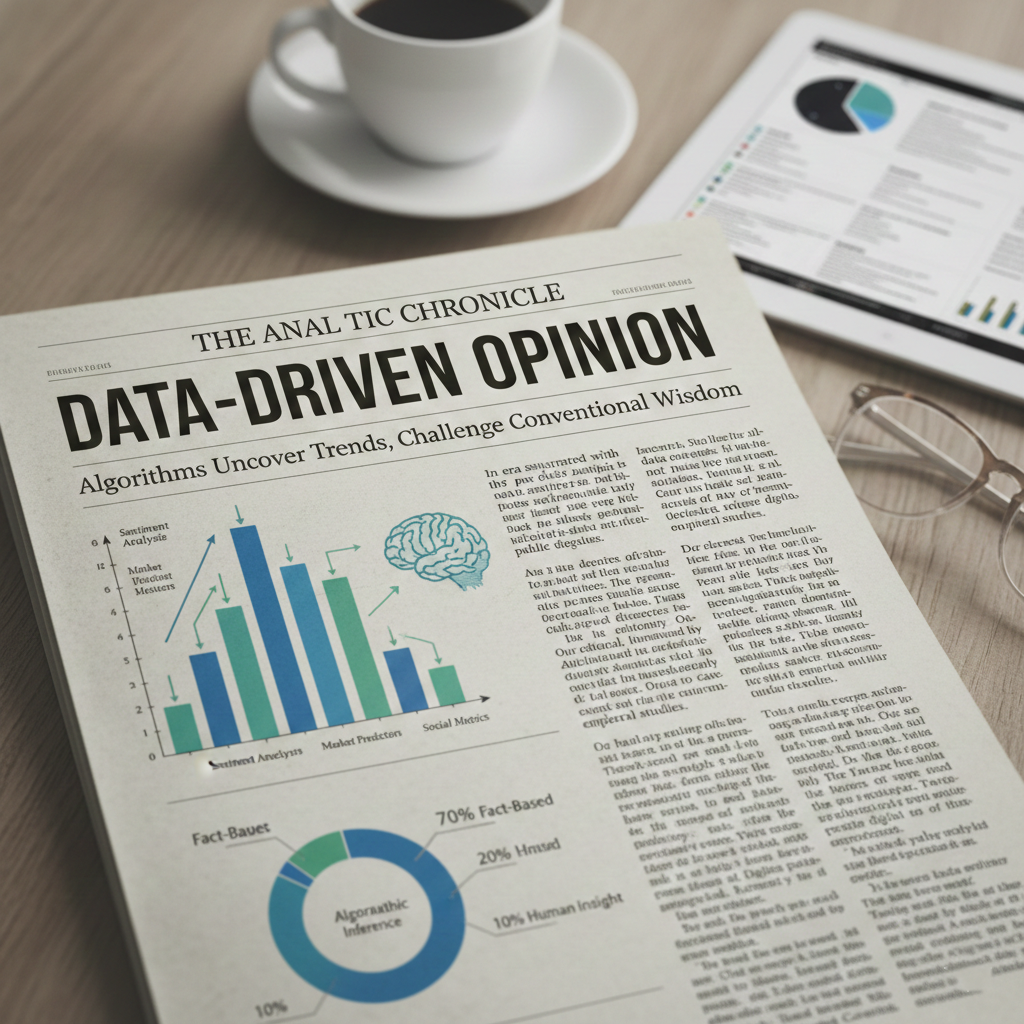
The Rise of Data-Driven Opinion in a Noisy World
Data-driven opinion is no longer a luxury—it is a necessity. In an era where social media amplifies emotions, half-truths, and viral misinformation, opinions backed by real data stand out as credible, trustworthy, and impactful.
Today, decisions made by governments, businesses, media houses, and even individuals increasingly rely on data rather than instinct alone. From economic policy and healthcare planning to digital marketing and journalism, evidence-based viewpoints are shaping outcomes that affect millions of lives.
This article presents a data-driven opinion on why evidence matters, how data transforms opinions into influence, and what happens when decisions ignore facts. Backed by statistics, real-world examples, and expert insights, this piece is designed to inform, not inflame—and to rank well while delivering genuine value.
For more analytical perspectives like this, explore in-depth opinion content on thenews.zone, where facts lead the conversation.
What Does “Data-Driven Opinion” Really Mean?
A data-driven opinion is not emotionless or robotic. Instead, it blends human judgment with verified facts to create arguments that are both persuasive and reliable.
Opinion vs Data-Driven Opinion: A Clear Difference
| Aspect | Traditional Opinion | Data-Driven Opinion |
|---|---|---|
| Basis | Personal belief | Verified data & research |
| Credibility | Subjective | High |
| Impact | Short-term | Long-term |
| Trust factor | Variable | Strong |
| Risk of bias | High | Lower (if data is transparent) |
A data-driven opinion does not remove perspective—it strengthens it.
Why Data-Driven Opinions Matter More Today
Information Overload Has Changed How We Trust
According to global media studies, the average person is exposed to thousands of content pieces daily, yet trust in news remains fragile. Research by the Reuters Institute shows declining trust in opinion content that lacks sourcing or evidence.
This shift has created a demand for opinions that can answer one key question:
“Where is the proof?”
When opinions cite credible data from organizations like the World Bank, WHO, or Statista, readers are more likely to engage, share, and believe.
The Role of Data in Shaping Public Opinion
Data Influences Belief Before Emotion Does
Contrary to popular belief, data plays a powerful role in shaping public sentiment—especially when presented clearly.
Examples where data reshaped public opinion:
- COVID-19 vaccination acceptance rose when infection and recovery data were publicly shared (WHO).
- Climate change awareness increased after visual data showed rising global temperatures (NASA).
- Economic reform debates changed after GDP and employment figures were published (World Bank).
Outbound reference:
World Bank economic data provides transparent insights into global development trends.
Media, Journalism, and the Shift Toward Evidence
Modern journalism is evolving from opinion-heavy narratives to fact-supported analysis.
Why media platforms prefer data-backed opinions:
- Higher reader trust
- Better SEO performance
- Lower misinformation risk
- Greater authority in search results
Platforms like thenews.zone emphasize analytical reporting because search engines and readers both reward credibility.
Data-Driven Opinion in Business and Economics
Numbers Drive Smarter Business Decisions
In business, opinion without data is guesswork. Data-driven insights lead to:
- Better investment decisions
- Accurate market predictions
- Improved customer experience
Key statistics:
- Companies using data-driven strategies are 23 times more likely to acquire customers (McKinsey).
- Data-led firms report 6% higher profits on average.
Outbound reference:
McKinsey & Company research on data-driven organizations highlights this advantage.
Political and Social Opinions: When Data Is Ignored
The Cost of Emotion-Only Narratives
When political or social opinions ignore data, the consequences can be severe:
- Poor policy decisions
- Economic instability
- Social division
A data-driven opinion does not eliminate ideology—but it grounds debate in reality.
For example:
- Inflation debates backed by CPI data are more productive than blame-based arguments.
- Employment discussions supported by labor statistics reduce misinformation.
The Psychology Behind Data-Backed Opinions
Why People Trust Numbers
Humans are wired to seek certainty. Data provides:
- Structure
- Predictability
- Verifiability
However, data must be:
- Accurate
- Contextual
- Transparent
Without context, numbers can mislead. That is why strong editorial platforms like thenews.zone combine interpretation with evidence.
How Data Improves SEO and Content Authority
Search Engines Reward Evidence
From an SEO perspective, data-driven content performs better because:
- It attracts backlinks
- It increases dwell time
- It signals expertise (E-E-A-T)
SEO benefits of data-driven opinions:
- Higher keyword relevance
- Rich snippet potential
- Strong internal linking opportunities
Internal linking example:
For more expert analysis and verified opinion pieces, visit thenews.zone for trusted insights.
Common Mistakes in Data-Driven Opinion Writing
When Data Is Used Incorrectly
Even data-driven opinions can fail if:
- Statistics are cherry-picked
- Sources are unreliable
- Context is missing
Best practices:
- Use multiple sources
- Cite original studies
- Explain what the data means
Outbound reference:
Statista offers reliable, up-to-date global statistics across industries.
Real-World Case Studies: Data Changing Opinions
Case Study 1: Digital Marketing ROI
Marketers once relied on creativity alone. Today:
- Data shows targeted campaigns outperform generic ads by 3x
- Analytics tools guide budget allocation
Case Study 2: Healthcare Policy
Countries using health data dashboards managed resources more effectively during pandemics.
These examples prove one thing: data changes minds when used responsibly.
The Ethical Side of Data-Driven Opinions
Transparency Builds Trust
Ethical data usage requires:
- Clear sourcing
- Honest interpretation
- Disclosure of limitations
Without ethics, data becomes manipulation rather than insight.
FAQs: Data-Driven Opinion Explained
What is a data-driven opinion?
A data-driven opinion is a viewpoint supported by verified statistics, research, and factual evidence rather than emotion alone.
Why are data-driven opinions more credible?
Because they rely on measurable facts, transparent sources, and logical interpretation, increasing trust and authority.
Can opinions still be subjective if they use data?
Yes. Data informs the opinion but does not remove perspective—it strengthens it.
How does data-driven content help SEO?
Search engines prioritize authoritative, well-sourced content, improving rankings and visibility.
Where can I read more analytical opinion pieces?
You can explore fact-based opinion and analysis on thenews.zone, a platform focused on evidence-led content.
Outbound reference:
For global data verification, refer to resources like the World Health Organization (WHO).
Conclusion: The Future Belongs to Data-Driven Opinions
In a world flooded with voices, data-driven opinion is the filter that separates noise from knowledge. Opinions supported by facts are not just more credible—they are more powerful, ethical, and sustainable.
Whether in journalism, business, politics, or everyday decision-making, evidence-based viewpoints lead to better outcomes. As readers grow smarter and search engines grow stricter, the demand for data-backed perspectives will only rise.
If you value clarity over chaos and facts over fiction, make data your foundation.
Read more insightful, fact-driven opinion pieces and in-depth analysis on thenews.zone, where informed voices shape meaningful conversations.
