

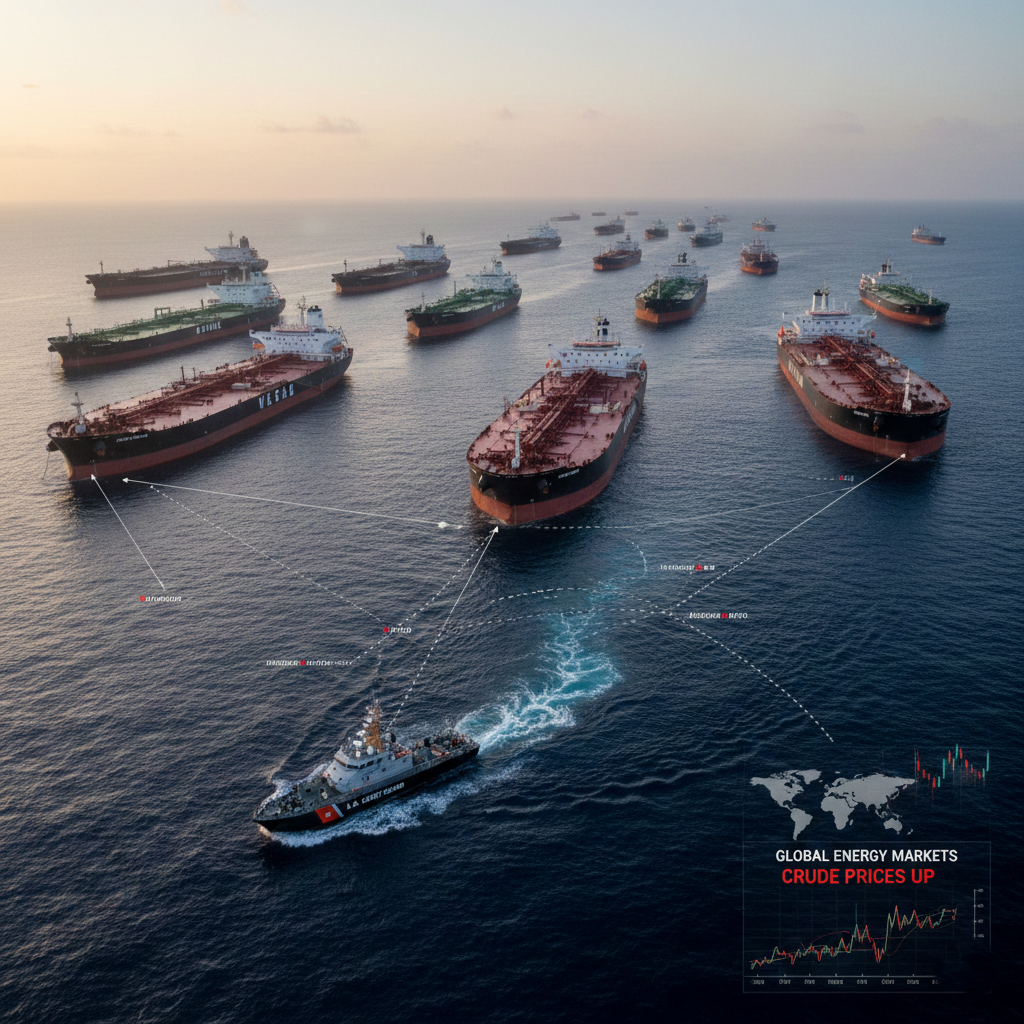
More oil tankers turning away from Venezuela amid US threat to seize vessels is fast becoming one of the most important developments in the global energy trade. Shipping companies, insurers, and oil traders are growing cautious as Washington tightens pressure on Venezuela’s oil exports. The result is a visible slowdown in crude shipments, rising uncertainty in energy markets, and fresh challenges for a country already struggling with economic instability.
This shift is not just about Venezuela. It affects global oil supply chains, freight rates, geopolitical alignments, and fuel prices worldwide. As tankers hesitate or divert to safer routes, the ripple effects stretch far beyond Latin America.
In this in-depth analysis, we break down why oil tankers are turning away from Venezuela, what the US threat really means, how global markets are reacting, and what may come next.
Why Oil Tankers Are Avoiding Venezuela
The recent pullback by oil tankers is driven by a mix of political risk, legal uncertainty, and financial exposure.
US Warnings and Legal Risks
The United States has warned that vessels involved in unauthorized Venezuelan oil trade could face:
- Seizure of ships
- Heavy financial penalties
- Sanctions on ship owners and insurers
- Restricted access to US ports and banking systems
For shipping firms, these risks often outweigh the profits from transporting Venezuelan crude.
Sanctions Compliance Pressure
Even companies not based in the US feel the pressure. Global shipping operates through:
- Dollar-based payments
- International insurance markets
- US-linked port infrastructure
A single sanctions violation can shut a company out of these systems.
Insurance and Financing Challenges
Without insurance, most tankers cannot legally sail. As risks increase:
- Insurers raise premiums or withdraw coverage
- Banks refuse to finance voyages
- Charter rates become unpredictable
This makes Venezuela-bound trips commercially unattractive.
Venezuela’s Oil Industry Under Strain
Declining Production Capacity
Venezuela sits on the world’s largest proven oil reserves, yet production remains far below historical levels.
| Year | Estimated Production (barrels/day) |
|---|---|
| 2013 | ~2.5 million |
| 2018 | ~1.2 million |
| 2023 | ~800,000 |
Years of underinvestment, mismanagement, and sanctions have weakened infrastructure.
Heavy Crude Complications
Most Venezuelan oil is heavy crude, which requires:
- Specialized tankers
- Blending with lighter oil
- Advanced refining capacity
Fewer buyers and logistical hurdles make exports harder even without sanctions.
Impact on Global Oil Markets
Supply Disruptions and Price Sensitivity
When oil tankers turn away from Venezuela:
- Global supply tightens slightly
- Regional shortages emerge
- Price volatility increases
While Venezuela is not a top exporter today, marginal supply losses still matter in a tight market.
Shifts in Trade Routes
Buyers look elsewhere:
- Asian refiners increase Middle East imports
- Some turn to Russia or West Africa
- Shipping distances grow, raising costs
This reshuffling affects freight rates and delivery timelines.
Effect on Fuel Prices
Consumers may feel indirect effects through:
- Higher diesel and gasoline prices
- Increased transportation costs
- Inflationary pressure on goods
Energy markets react quickly to geopolitical uncertainty.
Who Is Still Buying Venezuelan Oil?
Key Buyers Taking the Risk
Despite the warnings, some buyers continue limited imports:
- State-owned firms with political backing
- Companies using ship-to-ship transfers
- Buyers willing to accept legal gray zones
These trades often involve discounts to compensate for risk.
Shadow Fleet Operations
A growing “shadow fleet” uses tactics such as:
- Turning off tracking systems
- Renaming vessels
- Changing flags frequently
While effective short term, these methods raise accident and environmental risks.
Comparison: Venezuela vs Other Sanctioned Oil Producers
| Country | Sanctions Level | Export Stability | Buyer Diversity |
|---|---|---|---|
| Venezuela | High | Low | Limited |
| Iran | High | Moderate | Asia-focused |
| Russia | Moderate–High | High | Broad |
Venezuela’s weaker infrastructure makes it more vulnerable than others.
US Strategy: Pressure Without Full Isolation
Targeted Enforcement
The US approach focuses on:
- Selective vessel seizures
- Financial deterrence
- Diplomatic signaling
Rather than a total blockade, the goal is compliance and leverage.
Political Objectives
Washington aims to:
- Influence Venezuela’s domestic policies
- Push for electoral reforms
- Limit revenue used by the state
Oil remains the primary pressure point.
What This Means for Shipping Companies
Rising Compliance Costs
Shipping firms now face:
- Enhanced due diligence
- Legal consultations
- Higher insurance premiums
Many decide it’s safer to avoid Venezuela altogether.
Reputation Risk
A single sanctioned voyage can:
- Damage brand credibility
- Lead to long-term business loss
- Trigger regulatory investigations
In today’s market, reputation equals survival.
Long-Term Outlook for Venezuelan Oil Exports
Short-Term: Continued Uncertainty
In the near future:
- Tanker hesitancy is likely to continue
- Exports remain volatile
- Discounts deepen
Medium-Term: Conditional Recovery
If sanctions are eased:
- Tanker traffic could resume
- Production may rise modestly
- International partnerships could return
But trust takes time to rebuild.
Long-Term: Structural Reform Needed
True recovery depends on:
- Investment in infrastructure
- Transparent governance
- Stable international relations
Without reform, Venezuela’s oil sector will remain fragile.
FAQs
Why are oil tankers turning away from Venezuela?
Oil tankers are avoiding Venezuela due to US threats of vessel seizure, sanctions, insurance risks, and financial penalties.
Can the US legally seize oil tankers?
Yes, if vessels violate US sanctions or operate within US jurisdiction, seizures are legally possible.
How does this affect global oil prices?
Reduced Venezuelan exports can tighten supply, contributing to price volatility, especially during high demand periods.
Who benefits from Venezuela’s oil decline?
Other exporters like Middle Eastern and African producers may gain market share as buyers shift sources.
Is this situation temporary?
It depends on political developments. Sanctions relief could quickly change tanker behavior.
For ongoing global energy updates, readers can follow trusted reporting from outlets like Reuters and Bloomberg, alongside independent analysis on thenews.zone.
Internal & Outbound SEO Links
- Internal link: thenews.zone
- Outbound links:
- Reuters – Global Energy News
- US Energy Information Administration (EIA)
These sources help readers explore deeper context and verified data.
Conclusion: A Turning Point for Global Energy Trade
The fact that more oil tankers are turning away from Venezuela amid US threat to seize vessels signals more than a shipping slowdown. It highlights how geopolitical pressure can reshape global energy flows almost overnight.
For Venezuela, the challenge is existential. For global markets, it’s another reminder that oil is as much about politics as it is about supply and demand.
Stay informed, stay ahead.
For continuous, in-depth coverage of global energy and geopolitical developments, visit thenews.zone and explore expert insights that matter.
