

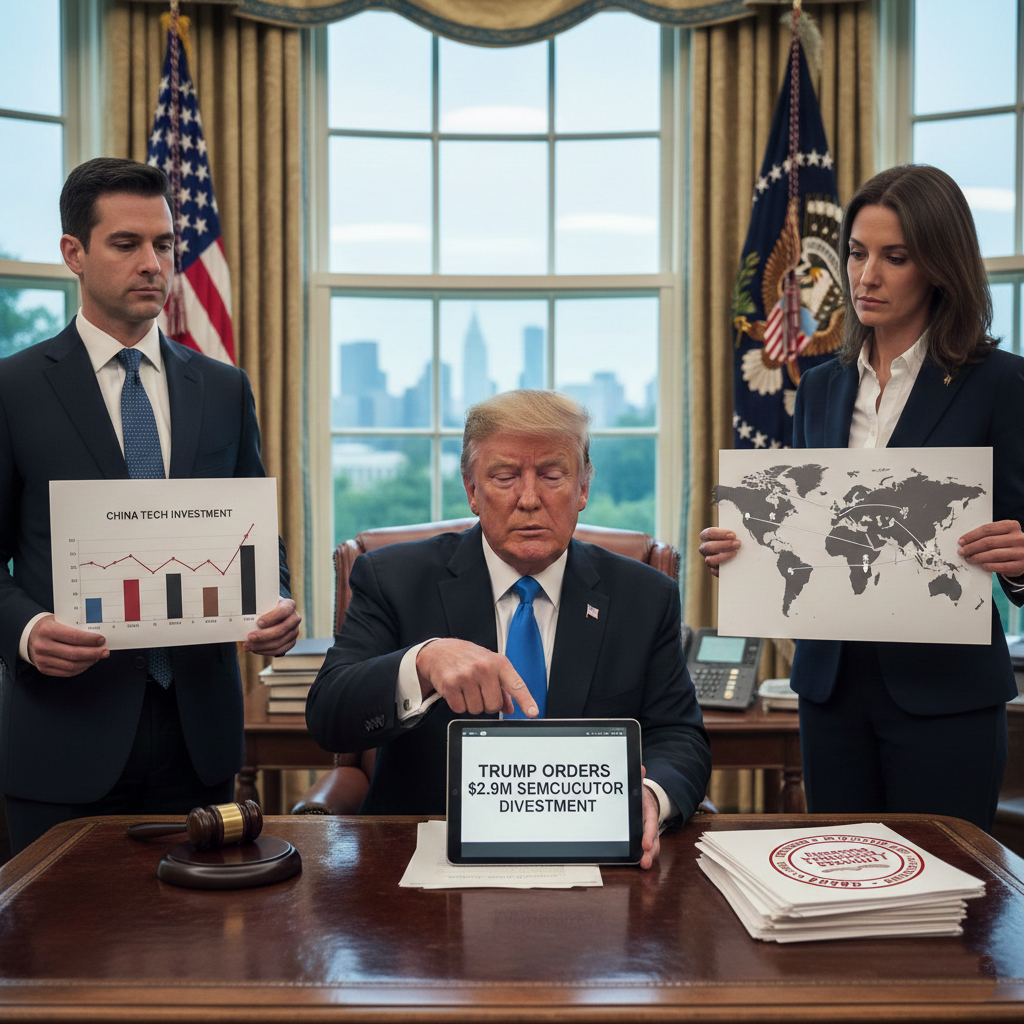
Trump Targets $2.9 Million Chips Deal Over Security Fears
In a bold move that’s catching global attention, President Donald Trump has ordered the divestment of a $2.9 million computer chips deal, citing serious national security concerns — particularly linked to foreign ownership and potential technology access risks. The executive order requires the company that acquired the chips technology to divest within 180 days or face enforcement actions, signaling a hardline stance on tech and security in the increasingly complex US–China economic relationship.
This major decision highlights how the intersection of geopolitics, technological innovation, and national security continues to shape policy and international business. Let’s unpack what happened, why it matters, and what this could mean for the future of semiconductor deals.
📌 What Happened: Trump Blocks Chip Acquisition (Explained)
Breakdown of the $2.9M Semiconductor Transaction
In May 2024, aerospace and defense company Emcore Corp. agreed to sell its digital chip and wafer fabrication operations to HieFo Corp., a Delaware-registered company. The deal was valued at approximately $2.92 million, including assumed liabilities.
However, on January 2, 2026, President Trump issued an executive order that:
- Blocked HieFo’s ownership of the Emcore assets.
- Cited credible evidence that HieFo is controlled by a citizen of the People’s Republic of China.
- Ordered divestment of the technology acquired — to be completed within 180 days.
Why It Matters
The US government argues that the transfer of this semiconductor technology could pose a national security risk, particularly if sensitive chip technologies fall under foreign influence or control — especially where geopolitical tensions exist.
This isn’t just about $2.9 million worth of assets; it’s about control over technology that plays a role in advanced computing and defense.
🧠 Understanding the Security Concerns
What National Security Experts Are Saying
The Committee on Foreign Investment in the United States (CFIUS) reviewed the transaction and flagged potential risks related to:
- Access to proprietary technology and intellectual property
- Control of semiconductor production and expertise
- Diversion of critical chip supply outside US interests
These concerns informed the White House order to reverse the deal.
China’s Role in the Spotlight
Reports underline that the US sees Chinese ownership or control of advanced tech assets as a strategic risk, especially in sectors that underpin military, AI, and communications capabilities.
📊 Deal Overview: At a Glance
| Item | Details |
|---|---|
| Seller | Emcore Corp. |
| Buyer | HieFo Corp. |
| Deal Size | $2.92 million |
| Assets Sold | Digital chips & wafer fab business |
| Security Concern | Foreign ownership, IP access |
| Divestment Deadline | 180 days |
| Governing Body | White House / CFIUS |
📉 What This Means for the Semiconductor Industry
1. Heightened Scrutiny on Foreign Investments
Deals involving sensitive tech sectors — especially semiconductor manufacturing — will likely face closer review by US authorities.
2. Uncertainty for International Tech Deals
Investors and global firms may reassess strategies when US assets are part of cross-border agreements.
3. Boost for Domestic Chip Policies
This move complements broader efforts like the CHIPS Act and other incentives to boost domestic semiconductor manufacturing. (For broader context on US chip investments, read here.) ➝ thenews.zone
🧭 The Global Implications
While the specific deal is small in monetary terms, its symbolism is potent. It underscores how technology, sovereignty, and security are intertwined in today’s geopolitics.
Impact on China–US Relations
This decision echoes ongoing tensions between the world’s two largest economies. With semiconductors central to AI, defense systems, and future tech, both countries are vying for influence over global tech supply chains.
Ripple Effect on Global Tech Investment
Other nations with significant tech sectors — including South Korea, Taiwan, and the EU — are watching how such policies may shape investment flows and alliances.
📌 Key Points You Must Know
- 🔹 Trump’s order blocks HieFo from retaining the Emcore assets.
- 🔹 The divestment must happen within six months, or legal steps could follow.
- 🔹 National security was cited as the core reason, not just economic or competitive factors.
❓ Frequently Asked Questions (FAQs)
1. Why did Trump block the $2.9M chips deal?
Trump said the deal could threaten US national security, particularly because the buyer is reportedly controlled by a Chinese citizen — raising concerns over technology access and control.
2. What assets are involved in this semiconductor deal?
The assets include digital chips and wafer fabrication operations previously owned by Emcore.
3. Who oversees enforcement of this divestment order?
The Committee on Foreign Investment in the United States (CFIUS) is responsible for ensuring compliance with the divestment timeline.
4. How long does HieFo have to divest the technology?
The company has 180 days to divest all interests and rights in the acquired assets.
5. Does this reflect a broader trend in US tech policy?
Yes — it aligns with heightened scrutiny of foreign tech investment and efforts to secure semiconductor supply chains. For industry policy updates and analysis, visit thenews.zone.
Outbound Resource:
For more on how CFIUS reviews work, see the U.S. Department of the Treasury release on national security reviews.
🧠 Expert Insight: What Analysts Are Saying
Industry experts note that this action is less about the dollar value and more about setting precedent. Semiconductor technology, especially involving fabrication techniques and materials, is considered a critical asset for national defense and AI development.
Analysts believe this could influence:
✔ Future tech M&A involving foreign entities
✔ Regulatory standards for national security reviews
✔ Competition in semiconductor innovation
🚀 Conclusion: What’s Next & Your Takeaway
Trump’s order to divest the $2.9 million semiconductor deal is a signal to the world: the US is doubling down on securing advanced technology sectors against perceived foreign risks. This decision is not just about one deal — it’s about shaping the future of global tech governance.
👉 Stay informed on how this unfolds and what it means for the tech economy. For more timely updates and deeper analysis, explore thenews.zone.
