
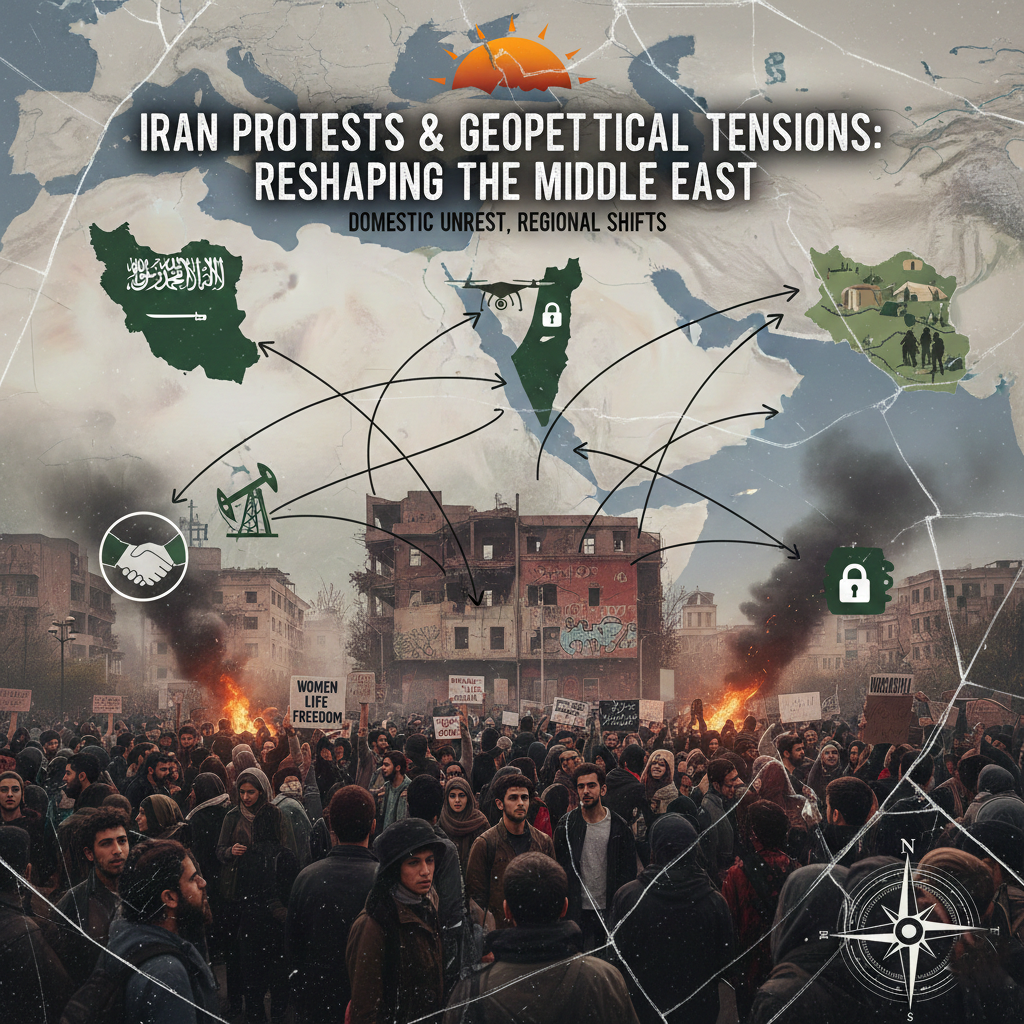
The issue of Iran protests and geopolitical tensions has once again placed the country at the center of global attention. From mass demonstrations on the streets of Tehran to intense diplomatic pressure from Western nations, Iran is facing one of the most complex periods in its modern history.
What makes the current situation different is not just the scale of public unrest, but how deeply it is intertwined with regional conflicts, nuclear negotiations, sanctions, and power struggles across the Middle East. Domestic protests are no longer an internal matter—they are shaping Iran’s foreign policy, affecting oil markets, and altering global security calculations.
This article offers a deep, human-focused analysis of Iran’s protests, their root causes, and the growing geopolitical tensions surrounding them—without jargon, fluff, or robotic language.
Understanding the Roots of Iran’s Protests
Why Are Protests Repeatedly Erupting in Iran?
Iran has witnessed waves of protests over the last decade, but recent demonstrations have been broader, more sustained, and more politically charged.
Key drivers include:
- Economic hardship due to sanctions and inflation
- Youth unemployment and lack of economic mobility
- Restrictions on personal freedoms, especially for women
- Political dissatisfaction with governance and transparency
- Rising cost of living, including fuel, food, and housing
According to independent estimates, inflation in Iran has remained above 40% in recent years, severely impacting middle- and lower-income families.
The Role of Women and Youth in Iran Protests
One defining feature of modern Iranian protests is the leadership role played by women and young people.
- Women are demanding greater social and legal rights
- Students are protesting restrictions on expression and education
- Digital platforms amplify voices despite internet shutdowns
These groups are not just protesting policies—they are challenging long-standing power structures.
Government Response and Its Global Impact
How Iran’s Leadership Has Responded
The Iranian government has consistently framed protests as:
- Foreign-instigated unrest
- National security threats
- Attempts to destabilize the Islamic Republic
Common responses include:
- Increased security deployment
- Internet blackouts
- Arrests of activists and journalists
- Strict media controls
This approach has drawn sharp criticism from international human rights organizations.
For ongoing updates and deeper analysis, readers can explore coverage on thenews.zone, which regularly reports on Middle Eastern political developments.
International Reaction to Iran’s Crackdown
Countries and organizations responding include:
| Actor | Response |
|---|---|
| United States | Sanctions, diplomatic pressure |
| European Union | Human rights resolutions |
| United Nations | Calls for independent investigations |
| NGOs | Documentation of rights violations |
High-authority global outlets such as BBC News and Al Jazeera have extensively reported on these developments, amplifying international scrutiny.
Outbound reference:
👉 BBC News – Middle East coverage
👉 Al Jazeera – Iran analysis
Iran Protests and Nuclear Diplomacy
How Protests Affect Nuclear Talks
Iran’s internal instability directly impacts negotiations around its nuclear program.
Key consequences:
- Slower diplomatic progress
- Reduced trust between Iran and Western nations
- Increased pressure for tougher sanctions
- Stronger alignment with Russia and China
Diplomats fear that prolonged unrest could harden Iran’s stance, making compromise less likely.
Geopolitical Chessboard: Iran, US, Russia, and China
Iran’s geopolitical positioning is evolving rapidly.
Current alliances include:
- Stronger military and economic ties with Russia
- Strategic cooperation with China
- Reduced engagement with Western nations
This shift has implications far beyond Iran, influencing global energy security and regional conflicts.
Regional Impact Across the Middle East
How Iran’s Unrest Affects Neighboring Countries
Iran plays a major role in several regional conflicts. Protests weaken or reshape that influence.
Affected areas include:
- Iraq: Political factions linked to Iran face backlash
- Lebanon: Hezbollah’s position becomes more complex
- Yemen: Iran-backed Houthis draw international scrutiny
- Syria: Military and financial support faces constraints
Any internal instability in Iran sends ripple effects across the Middle East.
Energy Markets and Global Economy
Iran holds some of the world’s largest oil and gas reserves. Protests and sanctions affect:
- Oil supply stability
- Energy prices
- Shipping routes in the Persian Gulf
Even rumors of instability can move global markets overnight.
Media, Internet Restrictions, and Information Warfare
The Digital Battlefield
One of the most underreported aspects of Iran protests is the information war.
- Internet shutdowns limit protest coordination
- VPN usage skyrockets
- State media pushes official narratives
- Citizen journalism fills gaps
Despite restrictions, videos and eyewitness accounts often reach international platforms within hours.
Why Global Media Attention Matters
International coverage:
- Protects protesters from complete isolation
- Pressures governments diplomatically
- Shapes global public opinion
Platforms like thenews.zone help contextualize these developments for a global audience, cutting through propaganda and speculation.
Comparison: Past vs Present Iran Protests
| Factor | Past Protests | Recent Protests |
|---|---|---|
| Leadership | Fragmented | Youth & women-led |
| Duration | Short-lived | Sustained |
| Global Impact | Limited | High |
| Geopolitical Link | Low | Strong |
This evolution explains why today’s unrest has far-reaching consequences.
Possible Future Scenarios
What Happens Next in Iran?
Experts outline three possible paths:
- Tightened control with continued protests
- Gradual reforms under international pressure
- Long-term instability affecting regional balance
None of these outcomes are simple or short-term.
What It Means for the World
- Increased diplomatic tensions
- Continued sanctions pressure
- Energy market volatility
- Shifting global alliances
Iran’s internal struggle is no longer just Iran’s problem—it is a global concern.
FAQs: Iran Protests and Geopolitical Tensions
Why are Iran protests happening now?
They stem from economic pressure, social restrictions, political dissatisfaction, and long-standing demands for reform.
How do Iran protests affect global politics?
They influence nuclear negotiations, sanctions, regional conflicts, and energy markets worldwide.
Are foreign countries involved in Iran protests?
While Iran claims foreign involvement, most analysts agree protests are largely driven by domestic issues.
Do protests weaken Iran’s government?
They increase pressure but have not yet caused structural political change.
Where can I follow reliable updates on Iran protests?
Trusted global outlets and independent platforms like thenews.zone provide regular, balanced coverage.
Conclusion: Why Iran’s Protests Matter More Than Ever
The intersection of Iran protests and geopolitical tensions marks a critical turning point—not just for Iran, but for the Middle East and the global order. What begins as a domestic struggle quickly becomes a diplomatic crisis, an energy concern, and a test of international norms.
Understanding this issue requires more than headlines—it demands context, history, and human perspective.
👉 Stay informed with in-depth global analysis, real-world context, and unbiased reporting at thenews.zone.
Your awareness today shapes smarter conversations tomorrow.
