

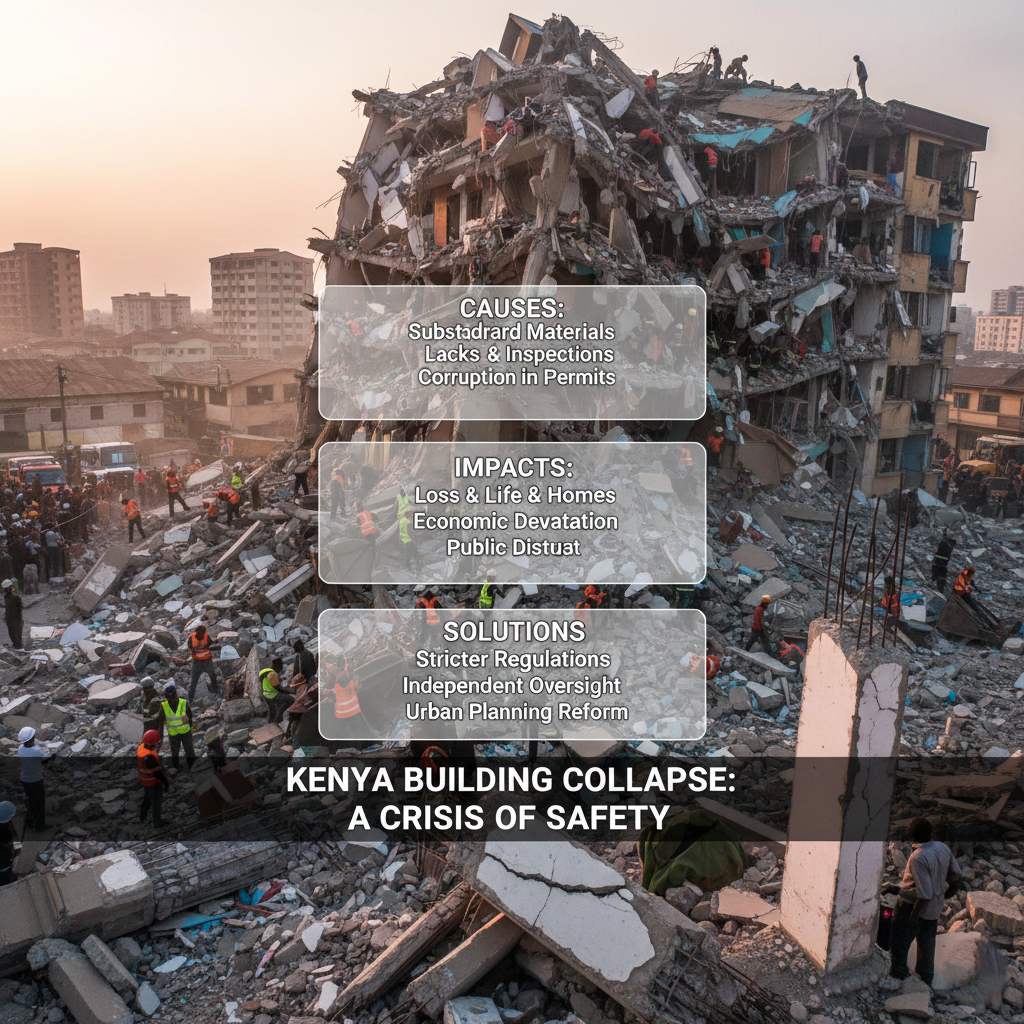
Building collapse in Kenya has become a growing national concern, raising serious questions about construction standards, safety regulations, and accountability. Over the past decade, multiple incidents—especially in rapidly expanding urban areas—have resulted in tragic loss of life, injuries, and displacement of families.
As cities like Nairobi, Mombasa, Kisumu, and Nakuru expand to meet housing demand, unsafe buildings are increasingly putting lives at risk. This article offers a deep, human-focused analysis of building collapse in Kenya, explaining why it happens, who is affected, what the law says, and how future tragedies can be prevented.
For ongoing national and global coverage of such critical issues, readers can explore trusted updates on thenews.zone, a growing hub for responsible journalism.
Understanding the Rising Cases of Building Collapse in Kenya
Kenya’s construction boom has been both a blessing and a curse. While it supports economic growth and urban housing needs, it has also exposed severe weaknesses in oversight and enforcement.
Why Building Collapses Are Increasing
Several interconnected factors contribute to the alarming frequency of collapses:
- Rapid urbanization without adequate planning
- High demand for low-cost housing
- Weak enforcement of building codes
- Corruption in approval and inspection processes
According to local engineering bodies, most collapsed buildings were already flagged as unsafe before disaster struck.
Common Causes Behind Building Collapse in Kenya
Poor Construction Materials and Substandard Workmanship
One of the leading causes of building collapse in Kenya is the use of low-quality materials.
- Weak cement mixtures
- Substandard steel reinforcements
- Fake or uncertified construction products
Many developers cut costs to maximize profits, ignoring long-term safety.
Unqualified Contractors and Engineers
Kenya’s construction sector suffers from the presence of unlicensed contractors.
Key issues include:
- Lack of structural engineering knowledge
- Ignoring approved architectural designs
- No professional supervision on-site
This problem is especially common in informal settlements and peri-urban areas.
Regulatory Failures and Corruption in the Construction Sector
How Illegal Approvals Put Lives at Risk
Despite clear regulations, unsafe buildings often receive approval through corrupt means.
- Bribes to inspectors
- Forged safety certificates
- Ignored stop-work orders
In many reported cases, collapsed buildings had exceeded approved floor limits.
Role of County Governments
County governments are responsible for:
- Approving building plans
- Conducting inspections
- Enforcing demolitions
However, inconsistent enforcement has allowed dangerous structures to stand.
For deeper investigative reports on governance failures, platforms like thenews.zone regularly publish in-depth analyses.
Impact of Building Collapse on Communities and Families
Human Cost Beyond the Headlines
The true cost of building collapse in Kenya goes beyond statistics.
- Families lose loved ones
- Survivors suffer permanent injuries
- Children are left homeless or orphaned
Many victims come from low-income backgrounds, worsening inequality.
Economic and Psychological Effects
| Impact Area | Long-Term Consequences |
|---|---|
| Healthcare | High medical bills, trauma care |
| Housing | Displacement, homelessness |
| Economy | Loss of income, rebuilding costs |
| Mental Health | PTSD, anxiety, depression |
According to mental health experts, trauma from such disasters can last for years.
Notable Building Collapse Incidents in Kenya
Urban Hotspots for Structural Failures
Some regions have recorded repeated incidents:
- Nairobi’s Eastlands area
- Mombasa’s high-density neighborhoods
- Parts of Kiambu and Machakos counties
These areas often combine poor planning with rapid construction.
Lessons from Past Tragedies
Each collapse reveals a pattern:
- Warning signs ignored
- Residents not evacuated
- Authorities react only after disaster
International media outlets like BBC and Al Jazeera have highlighted these recurring failures, drawing global attention to Kenya’s construction safety crisis.
(Source: https://www.bbc.com)
What Kenyan Law Says About Building Safety
Existing Building Codes and Standards
Kenya has clear laws governing construction:
- Physical and Land Use Planning Act
- National Building Code
- Engineers Act
All buildings must undergo structural approval and periodic inspection.
Why Enforcement Remains Weak
Despite strong laws, enforcement gaps persist due to:
- Limited inspection capacity
- Political interference
- Corruption
Experts argue that laws without enforcement offer false security.
Comparing Kenya’s Situation with Other Countries
How Other Nations Prevent Building Collapse
Countries like Singapore and Germany enforce strict compliance.
Key differences include:
- Mandatory third-party inspections
- Severe penalties for violations
- Transparent approval systems
Kenya can adopt similar measures to improve safety.
What Kenya Can Learn
- Digitize approval processes
- Publish inspection reports publicly
- Protect whistleblowers
Global best practices are well documented by organizations like UN-Habitat
(Source: https://unhabitat.org)
The Role of Engineers, Developers, and Buyers
Responsibility of Construction Professionals
Engineers and architects must:
- Refuse unsafe projects
- Report violations
- Follow ethical standards
Professional bodies must enforce discipline among members.
What Property Buyers and Tenants Should Check
Before renting or buying:
- Ask for approval documents
- Check structural inspection certificates
- Observe visible cracks or tilting
Consumer awareness can save lives.
How Media and Public Pressure Can Drive Change
Importance of Investigative Journalism
Media plays a crucial role in:
- Exposing unsafe buildings
- Holding officials accountable
- Educating the public
Independent news platforms like thenews.zone help amplify voices often ignored.
Public Advocacy and Legal Action
Civil society groups and citizens can:
- Demand audits of old buildings
- Push for public accountability
- Support victims through legal channels
Change often begins with public pressure.
Preventing Future Building Collapse in Kenya
Practical Solutions That Can Work
To reduce future incidents:
- Enforce strict inspections at every stage
- Blacklist rogue developers
- Demolish unsafe structures early
Prevention is cheaper and more humane than disaster response.
Technology as a Game Changer
- Digital construction monitoring
- Drone inspections
- Online approval tracking
Technology can reduce corruption and improve transparency.
FAQs: Building Collapse in Kenya
Why do buildings collapse so often in Kenya?
Due to poor materials, unqualified contractors, weak enforcement, and corruption in approvals.
Who is responsible when a building collapses?
Responsibility may lie with developers, contractors, engineers, and approving authorities.
Are there laws to prevent building collapse in Kenya?
Yes, but enforcement remains inconsistent despite existing regulations.
How can residents protect themselves?
By checking approvals, reporting cracks, and avoiding visibly unsafe buildings.
Where can I find reliable news on such incidents?
Trusted platforms like thenews.zone provide ongoing coverage and analysis.
Conclusion: Time for Accountability and Action
Building collapse in Kenya is not a natural disaster—it is a man-made crisis rooted in negligence, greed, and weak governance. Every tragedy is preventable if rules are enforced and ethics upheld.
The country stands at a crossroads: continue reacting after lives are lost, or commit to safety, transparency, and accountability.
👉 Stay informed, demand safer construction, and support responsible journalism by following updates on thenews.zone.
Lives depend on it.
