
Venezuela at a Political Crossroads
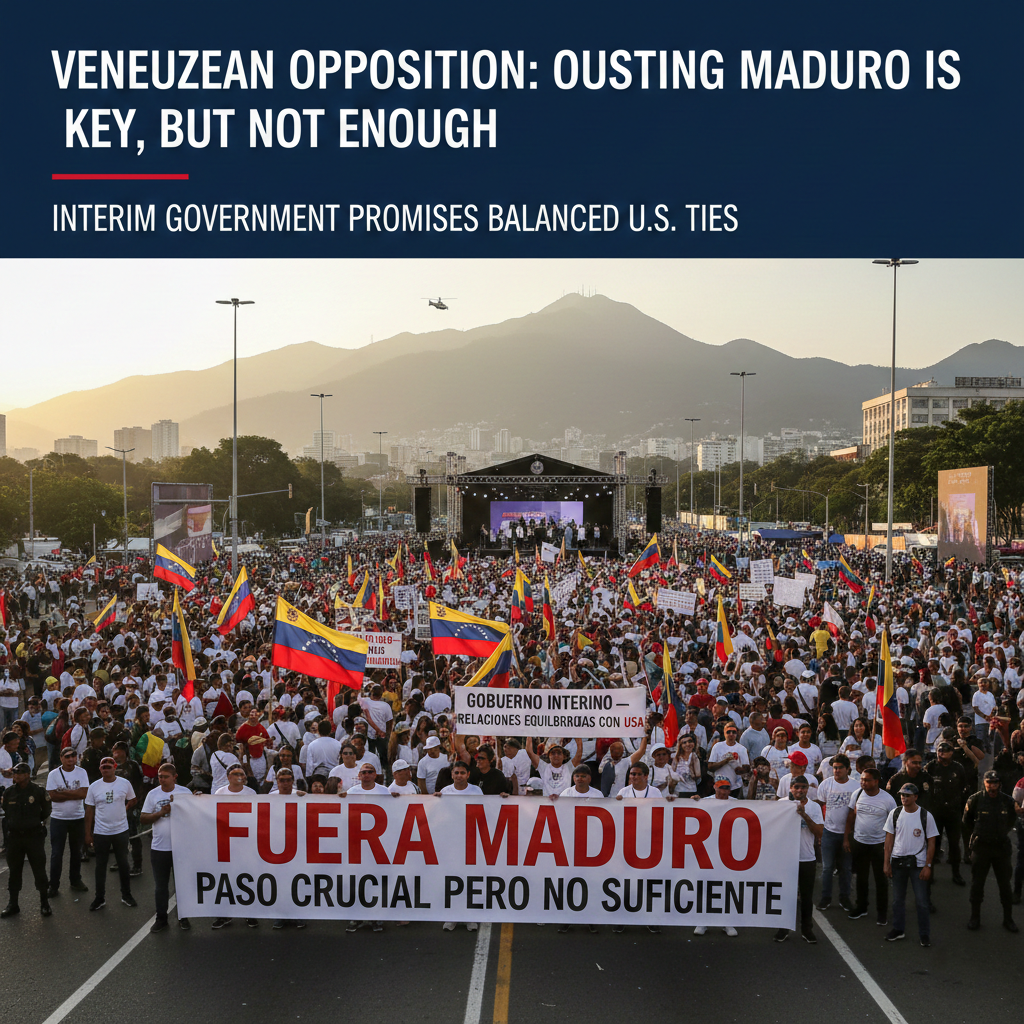
Venezuela is once again at the center of global political attention. After years of turmoil, economic collapse, and diplomatic isolation, Venezuelan opposition leaders say Nicolás Maduro’s ousting is an important step—but insufficient on its own. Their message is clear: removing a leader does not automatically rebuild institutions, restore democracy, or heal a fractured economy.
At the same time, the newly formed interim government has promised balanced diplomatic ties with Washington, signaling a shift away from ideological rigidity toward pragmatic international engagement. For many inside and outside Venezuela, this moment represents both hope and uncertainty.
This article breaks down what Maduro’s removal really means, why opposition leaders believe deeper reforms are necessary, how the interim government plans to manage relations with the United States, and what this transition could mean for Venezuela’s future. For continued global political analysis, readers can also explore coverage on thenews.zone, which tracks major geopolitical shifts worldwide.
Why Maduro’s Ousting Matters to Venezuela and the World
The removal of Nicolás Maduro marks a symbolic turning point after more than a decade of contested elections, sanctions, and mass migration.
A Long Road to Political Change
Maduro’s presidency was defined by:
- Disputed election results
- Severe economic mismanagement
- Hyperinflation that wiped out savings
- Widespread shortages of food, fuel, and medicine
- International sanctions and diplomatic isolation
For opposition leaders, his exit represents validation of years of protests, negotiations, and international pressure.
Symbolic Victory, Structural Problems Remain
While many Venezuelans celebrated the change, opposition figures quickly cautioned against excessive optimism. According to them, ousting Maduro is only the first step. The deeper challenge lies in dismantling entrenched systems of corruption and restoring public trust.
Opposition Leaders: “Change of Leader Is Not Change of System”
Why the Opposition Is Calling the Move “Insufficient”
Senior opposition leaders argue that Venezuela’s crisis is institutional, not personal. They emphasize that removing Maduro does not automatically fix:
- Politicized courts
- Weakened electoral bodies
- Militarization of civilian institutions
- Suppressed media freedom
Without reforms, they warn, Venezuela risks repeating the same cycle under a new face.
Core Demands from the Opposition
The opposition has outlined several non-negotiable priorities:
- Independent elections monitored by international observers
- Judicial reform to restore rule of law
- Freedom of the press and protection for journalists
- Release of political prisoners
- Economic transparency and anti-corruption measures
These demands echo recommendations from international human rights groups and are widely covered by outlets like Reuters and BBC News for their credibility and global reach.
The Interim Government’s Vision for Venezuela
The interim government has attempted to strike a careful tone—acknowledging public frustration while outlining a realistic roadmap forward.
Promising Stability Over Revenge
Rather than focusing on retribution, interim leaders have emphasized:
- National reconciliation
- Gradual institutional reform
- Economic stabilization
- Rebuilding trust with international partners
This approach aims to prevent further polarization in an already divided country.
Immediate Priorities Announced
The interim administration has publicly committed to:
- Stabilizing the currency
- Restoring basic public services
- Re-engaging with multilateral institutions
- Preparing a timeline for credible elections
For ongoing updates and expert breakdowns, platforms like thenews.zone provide accessible political explainers for general readers.
Balanced Diplomatic Ties with Washington: What Does It Mean?
One of the most closely watched aspects of the transition is the interim government’s stance toward the United States.
Moving Away from Dependency and Hostility
Past Venezuelan governments either clashed openly with Washington or relied heavily on U.S. backing. The interim leadership is signaling a different approach:
- Cooperation without subservience
- Dialogue without ideological alignment
- Mutual respect over confrontation
This shift is designed to reassure both domestic audiences and global investors.
Why the U.S. Relationship Matters
The United States remains crucial for Venezuela because of:
- Sanctions relief potential
- Access to global financial systems
- Oil trade and energy infrastructure
- Diplomatic influence with allies
However, interim leaders stress that balanced ties also mean strengthening relations with Latin America, Europe, and international institutions.
Comparing Venezuela’s Transition with Other Nations
To understand the stakes, it helps to compare Venezuela’s situation with similar political transitions.
Lessons from Latin America
| Country | Leader Removed | Key Lesson |
|---|---|---|
| Chile | Pinochet | Institutions matter more than individuals |
| Peru | Fujimori | Corruption reforms are long-term |
| Bolivia | Morales | Political legitimacy requires elections |
These examples show that leadership change alone does not guarantee democratic stability.
Economic Reality: The Toughest Test Ahead
Venezuela’s Economic Collapse in Numbers
- Inflation peaked at over 1,000,000% in previous years
- Oil production fell by more than 70%
- Over 7 million Venezuelans left the country
- Poverty rates exceeded 80% at their worst
Even with political change, rebuilding the economy will take years.
What the Interim Government Is Proposing
Key economic proposals include:
- Gradual lifting of price controls
- Encouraging foreign investment
- Oil sector reforms with transparency
- Social protection programs for vulnerable citizens
These ideas align with recommendations from institutions like the International Monetary Fund (IMF) and the World Bank—both high-authority outbound references in global economics.
International Reaction to Maduro’s Ousting
Regional Responses
Latin American neighbors have largely welcomed the development, calling for:
- Peaceful transition
- Humanitarian access
- Respect for sovereignty
Countries hosting Venezuelan migrants see political stability as critical to easing regional pressure.
Global Powers Watching Closely
The U.S., EU, and UN have responded cautiously, emphasizing:
- Democratic processes
- Human rights protections
- Inclusive governance
Coverage from Al Jazeera and The Guardian highlights how global confidence depends on actions, not promises.
Risks That Could Derail the Transition
Despite optimism, several risks remain:
- Resistance from entrenched elites
- Military factionalism
- Economic shocks
- Public impatience for quick results
Opposition leaders warn that without transparency and citizen engagement, trust could erode quickly.
FAQs: Venezuela’s Political Transition Explained
Is Maduro’s ousting officially recognized worldwide?
Recognition varies by country. Some governments have welcomed the change, while others are waiting to see credible elections and reforms before formal recognition.
Why do opposition leaders say the change is insufficient?
They argue Venezuela’s crisis is institutional. Without reforming courts, elections, and governance, leadership change alone won’t restore democracy.
What does “balanced ties with Washington” mean?
It means cooperation without dependency—maintaining dialogue with the U.S. while pursuing independent foreign policy decisions.
Will U.S. sanctions be lifted soon?
Sanctions relief depends on measurable democratic reforms. According to Reuters, progress on elections and human rights will be key.
How can readers stay informed about Venezuela?
Follow reliable global outlets and independent platforms like thenews.zone, which offer clear, ongoing political coverage.
Conclusion: A Defining Moment for Venezuela’s Future
The ousting of Nicolás Maduro is undeniably historic. Venezuelan opposition leaders are right to call it an important step—but not the final destination. Real change will depend on institutional reform, credible elections, economic recovery, and balanced international relationships.
The interim government’s promise of pragmatic diplomacy with Washington suggests a shift toward realism over ideology. Still, the path ahead will test leadership, unity, and public patience.
For readers seeking accurate, ongoing insights into global political transitions, stay connected with trusted international media and independent platforms like thenews.zone. Venezuela’s story is still being written—and the world is watching.
Want deeper global political analysis and daily updates? Visit thenews.zone and stay informed on the stories shaping the world.
