
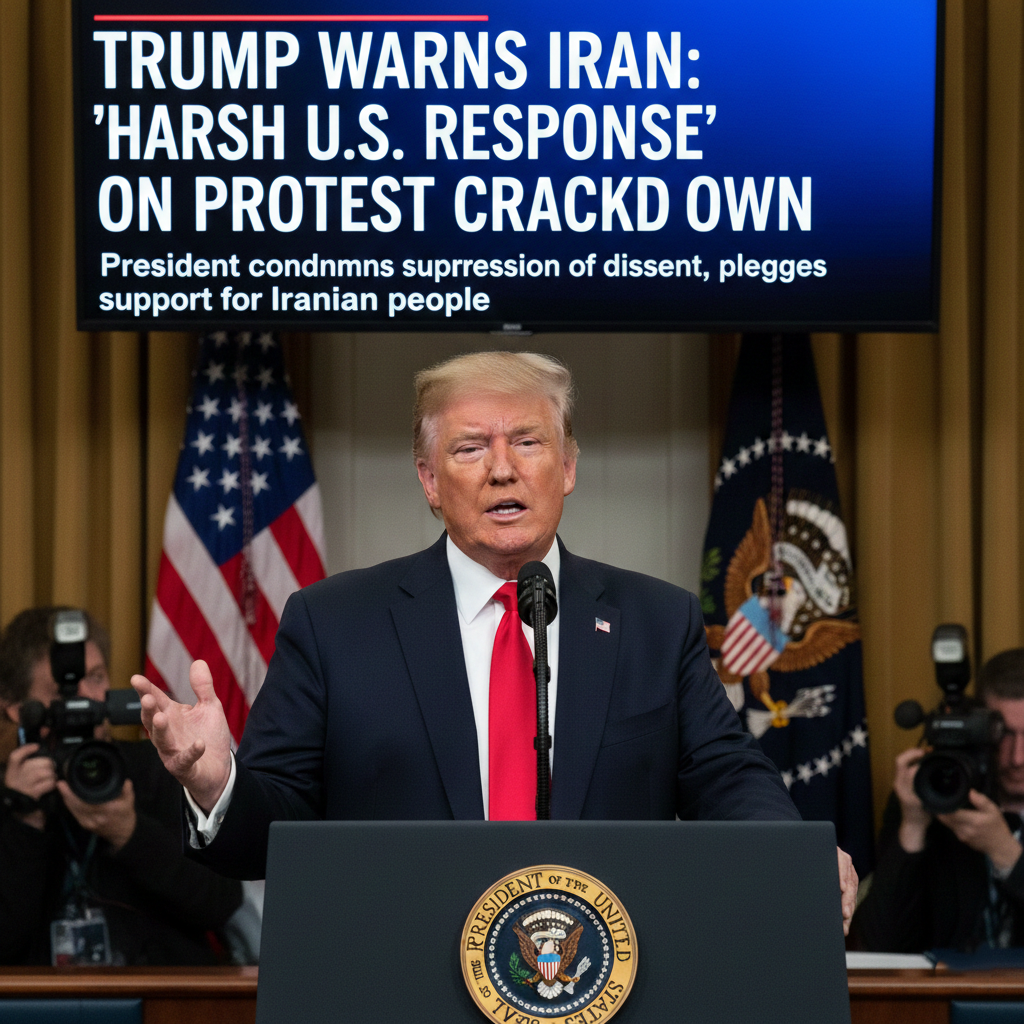
Former U.S. President Donald Trump has issued a strong warning to Iran, stating that the United States would respond harshly if Iranian forces continue to suppress anti-government protesters. The statement has reignited global debate over U.S.–Iran relations, human rights in Iran, and America’s role in international intervention.
As protests continue to flare across Iran, Trump’s comments have added fuel to an already volatile geopolitical situation. His warning comes amid growing international concern over reports of arrests, internet shutdowns, and violent crackdowns on civilians.
This article explores what Trump said, why it matters, how Iran responded, and what it could mean for global stability, while examining historical context, expert analysis, and possible future scenarios.
For continuous updates on global politics, visit thenews.zone.
Trump’s Warning to Iran: What Was Said and Why It Matters
Donald Trump, known for his tough stance on Iran during his presidency, made it clear that continued repression of Iranian protesters would not go unanswered.
Key Points from Trump’s Statement
- The U.S. would not tolerate large-scale human rights abuses
- Iran’s leadership was warned of serious consequences
- Trump emphasized support for the Iranian people
- The warning aligns with his previous “maximum pressure” policy
Trump’s remarks were widely covered by major international outlets such as The New York Times and BBC News, reflecting the seriousness of the message.
Background: Why Are Protests Erupting in Iran?
Iran has witnessed repeated waves of protests over the past several years, driven by a mix of economic hardship, political repression, and social restrictions.
Major Causes Behind the Protests
- Rising inflation and unemployment
- Allegations of corruption among elites
- Restrictions on personal freedoms
- Lack of political representation
- Harsh enforcement of social laws
According to reports from Human Rights Watch, Iranian security forces have used excessive force, including mass arrests and internet blackouts, to suppress dissent.
Iran’s Crackdown on Protesters: What the World Is Seeing
Images and videos circulating online show a heavy-handed response by Iranian authorities.
Reported Tactics Used by Iranian Forces
- Use of riot police and paramilitary units
- Arrests of activists, journalists, and students
- Internet and social media shutdowns
- Alleged use of live ammunition in some regions
International watchdogs have raised alarms, stating that such actions could amount to systematic human rights violations.
Why Trump’s Warning Carries Weight Globally
Even though Donald Trump is no longer in office, his words still matter.
Reasons His Statement Has Global Impact
- He remains a leading U.S. political figure
- He could return to power in future elections
- His Iran policy reshaped Middle East dynamics
- Allies and adversaries closely monitor his stance
Trump’s warning also resonates with governments that supported his earlier hardline approach toward Tehran.
Comparison: Trump vs Biden on Iran Policy
| Aspect | Donald Trump | Joe Biden |
|---|---|---|
| Iran Deal | Withdrew from nuclear deal | Attempted revival |
| Sanctions | Maximum pressure | Targeted sanctions |
| Protest Response | Direct threats | Diplomatic pressure |
| Military Tone | Aggressive | Cautious |
This contrast highlights how U.S. leadership style directly affects international relations.
Iran’s Response to Trump’s Remarks
Iranian officials quickly dismissed Trump’s comments, calling them interference in internal affairs.
Official Iranian Position
- Protests described as “foreign-instigated”
- U.S. accused of hypocrisy on human rights
- Warning that Iran would defend its sovereignty
State media outlets in Iran framed Trump’s warning as an attempt to destabilize the country.
International Reactions to the Warning
Trump’s statement drew mixed reactions across the globe.
Supporters Say
- Strong language is needed to deter abuse
- Iran understands only pressure
- Silence would embolden repression
Critics Argue
- Threats could escalate conflict
- Diplomacy is more effective
- External pressure may worsen conditions for protesters
The European Union, according to Reuters, has called for restraint and dialogue instead of military threats.
Human Rights at the Center of the Debate
At the heart of this issue is the question of human rights.
What International Law Says
- Peaceful protest is a fundamental right
- Excessive force violates UN conventions
- Governments are accountable for civilian protection
Organizations like Amnesty International have urged independent investigations into Iran’s actions.
Could the U.S. Really Take Action?
Trump did not specify what a “harsh response” would look like, but history offers clues.
Possible U.S. Responses
- Expanded economic sanctions
- Cyber operations
- Diplomatic isolation
- Military posturing in the region
Any direct military action, however, would carry high risks, including retaliation and regional instability.
Impact on the Middle East Region
A U.S.–Iran confrontation would not be contained within borders.
Potential Regional Effects
- Increased tensions in the Gulf
- Risks to oil supply routes
- Heightened proxy conflicts
- Market volatility
Energy analysts warn that even rhetoric can move global oil prices.
Role of Media and Social Platforms
Social media has played a major role in amplifying both protests and global reactions.
Why Digital Platforms Matter
- Protesters share real-time updates
- Governments attempt censorship
- International awareness spreads quickly
Despite restrictions, information continues to flow, keeping the world informed.
What This Means for the Iranian People
For protesters on the ground, international attention can be a double-edged sword.
Possible Outcomes
- Increased global pressure on Iran
- Risk of harsher crackdowns
- Hope for long-term reform
Many Iranians see global voices as moral support, even if immediate change is uncertain.
FAQs
Why did Donald Trump warn Iran?
Trump warned Iran to pressure its leadership to stop suppressing protesters and to highlight human rights concerns.
Does Trump have authority to act?
No, but as a major political figure, his statements influence public opinion and policy debates.
How has Iran responded to protests?
Iran has used security forces, arrests, and internet restrictions to control demonstrations.
Could the U.S. impose new sanctions?
Yes, sanctions remain one of the most likely tools if pressure increases.
Where can I read more global political news?
You can follow in-depth coverage on thenews.zone and trusted outlets like BBC News and Reuters.
Conclusion: A Warning That Echoes Beyond Borders
Donald Trump’s warning to Iran has once again placed the spotlight on human rights, power politics, and global responsibility. While words alone may not change realities overnight, they shape narratives, influence diplomacy, and signal potential consequences.
As protests continue and international scrutiny grows, the situation remains fragile. Whether through diplomacy, pressure, or reform, the path forward will affect not just Iran, but global stability as well.
👉 Stay informed, stay aware. For trusted global news and deep analysis, visit thenews.zone today.
