

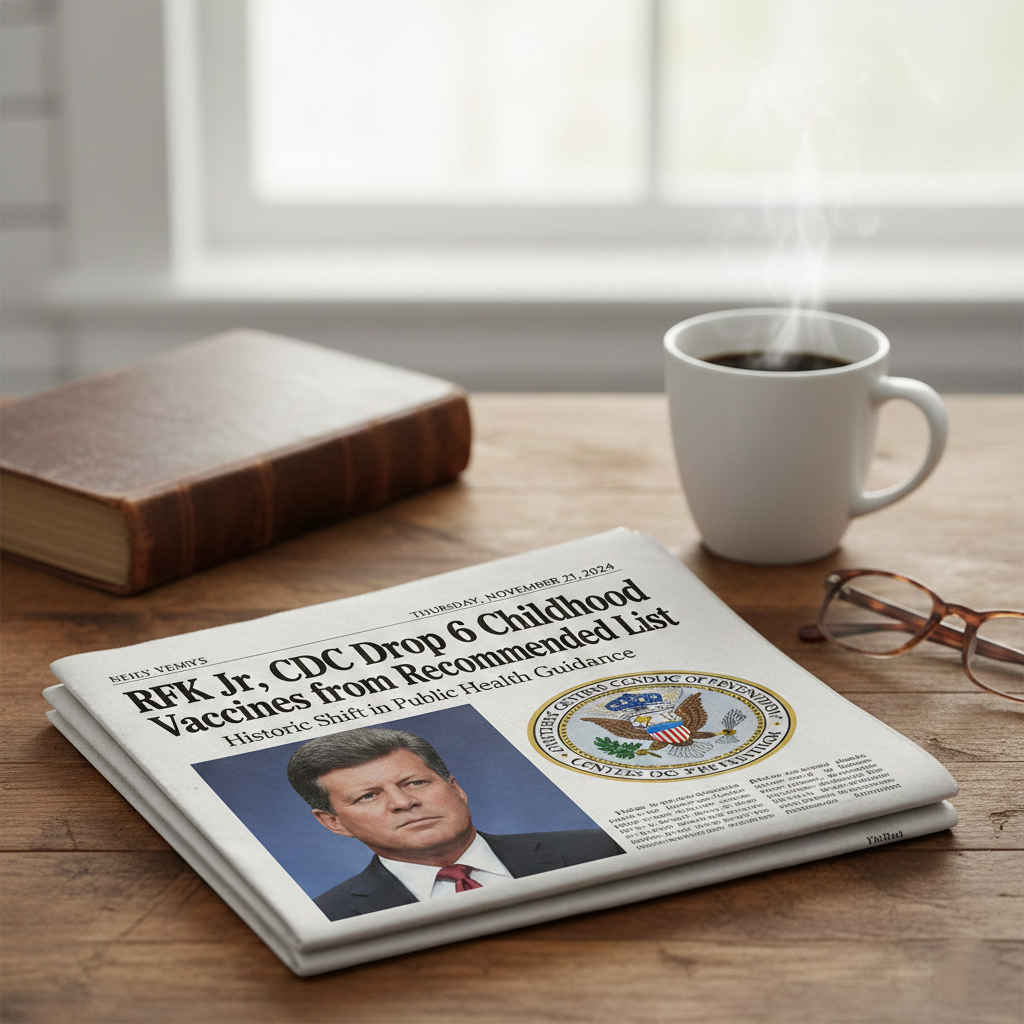
In a landmark and highly debated move, the U.S. Centers for Disease Control and Prevention (CDC) has revised its childhood vaccine recommendations, trimming six vaccines from the widely followed immunization schedule. Spearheaded by Health and Human Services Secretary Robert F. Kennedy Jr. (RFK Jr.), a figure known for his controversial views on vaccines, the decision marks one of the most dramatic shifts in U.S. public health policy in decades — and it’s stirring intense debate among doctors, parents, and policymakers alike.
This article breaks down what changed, why it happened, what vaccines were removed or repositioned, and what it means for your child’s health. Our goal is to deliver clear, evidence-based insight in a human-friendly way — not fear, not fluff.
What Exactly Changed in the CDC’s Vaccine Recommendations?
New Childhood Schedule: Fewer Universal Shots
The CDC has updated the childhood immunization schedule, reducing universally recommended vaccines from 17 to 11 diseases. Instead of broad recommendations for every child, six previously routine vaccines now fall under high-risk groups or are left to shared clinical decision-making with a healthcare provider. STAT+1
| Category | Status Under New Schedule |
|---|---|
| Measles, Mumps, Rubella | Still universally recommended |
| Polio | Still universally recommended |
| Chickenpox (Varicella) | Still universally recommended |
| HPV (Human Papillomavirus) | Still universally recommended (1 dose) |
| Flu | No longer universally recommended (shared decision-making) |
| Rotavirus | No longer universally recommended (shared decision-making) |
| RSV (Respiratory Syncytial Virus) | Now recommended only for high-risk children |
| Hepatitis A | Shifted to high-risk or shared decision |
| Hepatitis B | Shifted to high-risk or shared decision |
| Meningococcal Disease | Shifted to high-risk or shared decision |
| COVID-19 Vaccine | Removed from universal schedule |
Key takeaway: These vaccines are not banned — they remain available, but parents and clinicians now play a more active role in deciding who should receive them. NBC New York
Why Did the CDC Change Its Vaccine Recommendations?
Presidential Directive & International Comparisons
The catalyst for this overhaul was a December 2025 Presidential Memorandum that asked the Department of Health and Human Services (HHS) to review how other developed nations structure their vaccination schedules. The goal, officials say, was to align U.S. recommendations with international peers and reduce what some policymakers described as “over-vaccination.” HHS
Officials pointed to countries like Denmark, Japan, and Germany, which recommend fewer vaccines universally compared to previous U.S. policy — though experts note differences in healthcare systems, disease burden, and public health infrastructure make direct comparisons difficult. NBC New York
RFK Jr.’s Role and Policy Philosophy
As HHS Secretary, RFK Jr. supported this shift, emphasizing parental choice, transparency, and moving some decisions from government mandates to shared clinical discussions. This aligns with his long-standing critique of CDC vaccine policy and the traditional role of expert advisory panels. New York Post
What Vaccines Were Affected?
Six Vaccines Reclassified or Removed from the Recommended List
- Influenza (Flu) – shifted to shared clinical decision-making
- Rotavirus – shifted to shared clinical decision-making
- Respiratory Syncytial Virus (RSV) – recommended for high-risk groups
- Hepatitis A – moved to high-risk/shared decision category
- Hepatitis B – no longer universal; now high-risk/shared decision
- Meningococcal Disease – high-risk/shared decision
Additionally, the COVID-19 vaccine was removed from the universal list in separate changes earlier in 2025 — meaning healthy kids and pregnant women are no longer automatically recommended to receive it. Fierce Pharma+1
What “Shared Clinical Decision-Making” Means
This category signals that routine vaccination may be appropriate based on individual health factors, risk levels, and patient-clinician discussions. It’s a middle ground between universal mandates and no recommendation at all. Shared decision-making is intended to personalize care — though critics worry it may reduce vaccination uptake.
Reactions from Medical and Public Health Experts
How Experts Are Responding
Public health professionals and organizations such as the American Academy of Pediatrics and the American Medical Association have strongly criticized the changes. They argue that:
- Reduced recommendations could lower vaccination rates.
- Some diseases (like flu and rotavirus) still cause significant childhood illness.
- The process lacked sufficient scientific review and transparency. AP News
Many experts stress that vaccine schedules are crafted based on disease prevalence, pediatric health data, and scientific evidence — and that broad population coverage is crucial to maintaining herd immunity.
Supporters Argue
Supporters of the new policy say it:
- Offers greater parental control over medical decisions.
- Aligns U.S. policy with some European health systems.
- Aims to restore public trust in health institutions after pandemic-era controversies. STAT
Should Parents Be Concerned?
This is the central question for most families. Here’s a balanced look:
📌 What Parents Should Know
✔ Vaccines are still available — they’ve just changed in how they’re recommended.
✔ Health insurance is still expected to cover vaccines recommended under any category.
✔ Your child’s pediatrician remains a vital partner in deciding which shots make sense for your family.
✔ Routine scheduling changes are unprecedented and controversial — not illegal or enforced as mandates. NBC New York
FAQs — Your Top Questions Answered
1. Does this mean kids won’t get vaccinated anymore?
No. Vaccines remain available. They are still recommended — but for some shots, only under high-risk or shared clinical decision-making rather than universally. STAT
2. Will insurance still cover these vaccines?
Yes. Even for those no longer universally recommended, insurance plans generally must cover recommended vaccines under the Affordable Care Act if they are part of CDC guidance. Policies vary, so check with your provider. NBC New York
3. Are vaccines unsafe?
Scientific consensus confirms that vaccines approved by the CDC and FDA are safe and effective. This policy shift reflects recommendations, not new safety issues. For evidence-based guidance on vaccine safety, consult trusted sources like the World Health Organization (WHO) or CDC’s vaccine safety page (outbound link: https://www.cdc.gov/vaccinesafety).
4. How do these changes affect school requirements?
School and daycare vaccine requirements are determined by state health authorities, who often follow CDC guidance but set their own mandates.
5. What should parents do next?
Talk to your child’s doctor. Your pediatrician can explain the updated schedule and advise on what’s appropriate based on your child’s health, risk factors, and lifestyle.
Internal & Outbound SEO Best Practice Linking
For more insights on the evolving vaccine landscape, check out thenews.zone for ongoing health policy updates.
For official CDC schedule details, visit the CDC Childhood Immunization Schedule page: (outbound link: https://www.cdc.gov/vaccines/schedules).
Conclusion
The CDC’s decision to drop six vaccines from the universally recommended childhood list — under the leadership of RFK Jr. and a presidential directive — represents a major shift in U.S. public health policy. While this change aims to mirror international approaches and emphasize individual decision-making, it has ignited a fierce debate among healthcare experts and families.
What matters most is your child’s health. Stay informed, consult medical professionals, and don’t hesitate to ask questions about what’s best for your family.
Want continual updates and expert breakdowns on this evolving topic? Visit thenews.zone for the latest.
