

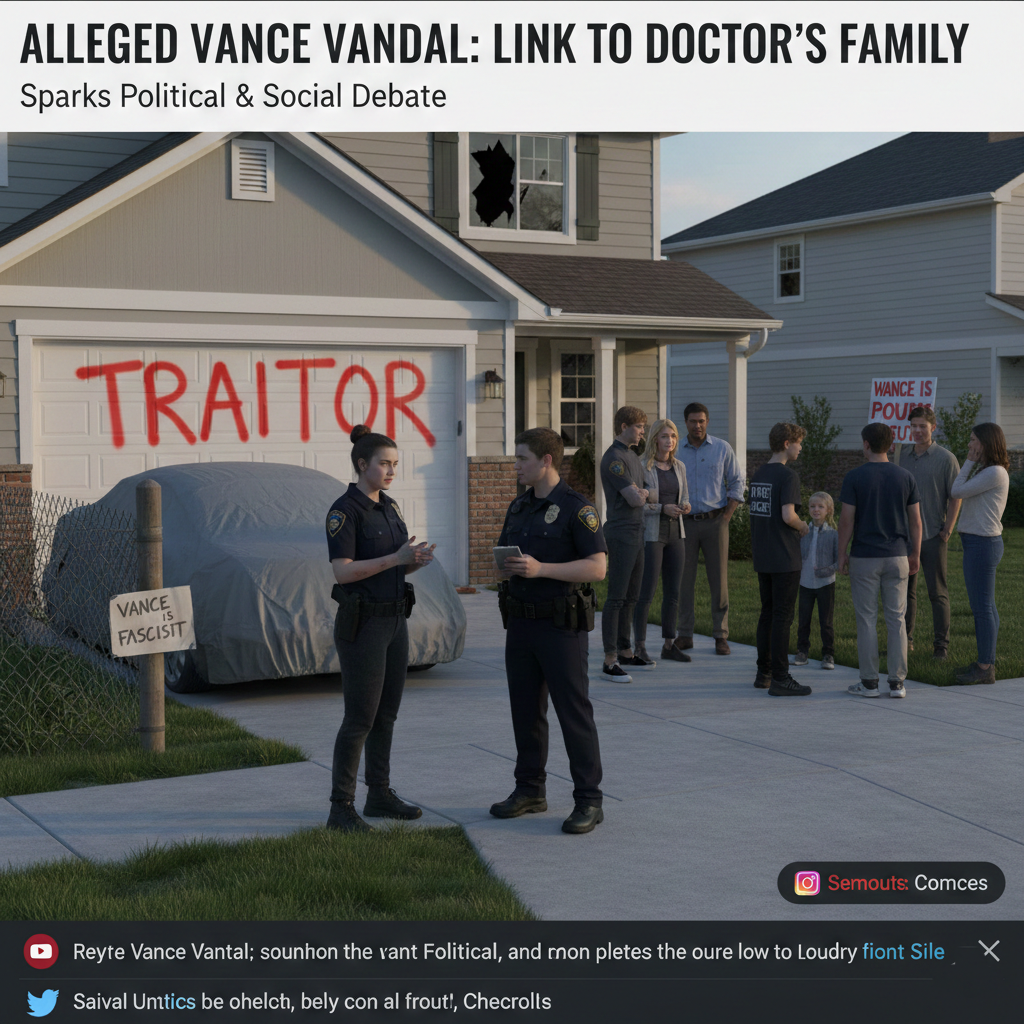
The so-called JD Vance vandalism case has escalated quickly into more than just a local crime event. A story that originally highlighted property damage has mushroomed into national news as information has come out about the suspect’s background. According to reports that have surfaced extensively online, the suspect has ties as the son of rich doctor and Democratic donor, and has recently changed his name to Julia.
Politics, wealth, identity, and public accountability have made this particular case particularly contentious and widely discussed. In a time when Americans are still trying to contend with high levels of polarization, questions are being raised that are uncomfortable but also necessary:
Who do we hold responsible? Does familial influence count? How can the media properly address such events? The article dissects the facts, context, reactions, and implications in a manner that is obvious, meticulous, and not sensationalized at all.
What We Know About the Alleged JD Vance Home Vandalism Case
There have been reports that a property believed to be connected to U.S. Senator JD Vance, a national political leader, has been vandalized. According to sources, the matter is currently under investigation, and there is no conclusive outcome yet.
| Aspect | Details (As Reported) |
|---|---|
| Target | Home linked to Senator JD Vance |
| Nature of Incident | Alleged vandalism |
| Accused Individual | Son of a wealthy doctor |
| Political Connection | Family reportedly donated to Democratic causes |
| Recent Development | Name change to Julia |
| Legal Status | Allegations under investigation |
Legal Status Charges being investigated
Important Reminder: Until proven in court, everything mentioned is an allegation. For more information about political events, there is also the analysis provided on thenews.zone, which monitors current affairs in the US.
Why JD Vance Is Central to the National Attention
JD Vance is not just another public figure. As a sitting U.S. Senator and outspoken voice in American political debates, any incident involving him naturally attracts heightened scrutiny.
JD Vance’s Political Profile
- U.S. Senator from Ohio
- Nationally recognized author and political commentator
- Known for strong positions on culture, economics, and governance
Because of this visibility, even alleged property crimes connected to him quickly become national talking points rather than local police matters.
The Suspect’s Background and Why It Matters
One of the most discussed aspects of the case is the family background of the accused.
Family Wealth and Influence
Reports suggest the suspect is the child of a wealthy medical professional with a history of political donations. This has fueled public debate around:
- Privilege and legal outcomes
- Whether wealth influences accountability
- How political affiliations shape public narratives
While family background should not determine guilt or innocence, it often affects public perception, especially in high-profile cases.
Political Donations and Public Perception
The mention of Democratic Party donations has intensified online discourse. Supporters and critics on both sides have seized on this detail to push broader political arguments.
Why Donations Became a Talking Point
- Politics today is deeply polarized
- Any crime involving political figures is quickly framed ideologically
- Donations are public records and easily amplified
However, experts caution against assuming political motives without verified evidence.
For balanced political reporting, many analysts recommend referencing primary sources such as Reuters or Associated Press, which provide fact-checked updates.
Name Change to Julia: Identity, Privacy, and Media Ethics
Another sensitive dimension of the story is the reported recent name change to Julia.
Why This Detail Is Controversial
- Some argue it is irrelevant to the alleged crime
- Others say it became public due to court or legal records
- Media outlets face ethical challenges in reporting identity-related information
Key Ethical Questions Raised
- Should personal identity changes be highlighted in crime reporting?
- Where does public interest end and privacy begin?
- Can such details distract from the actual legal issue?
Media ethicists stress that identity should never be weaponized or used to inflame public sentiment.
Legal Principle: Alleged Until Proven Guilty
One of the most important reminders in this case is the legal standard of innocent until proven guilty.
What “Alleged” Truly Means
- No conviction has occurred
- Investigations are ongoing
- Courts—not social media—determine outcomes
Misrepresentation can cause irreversible reputational harm, regardless of eventual verdicts.
For a deeper understanding of due process, readers may consult legal explainers from Cornell Law School or ACLU.
Media Coverage: Facts vs. Sensationalism
High-profile cases often reveal the tension between responsible journalism and click-driven coverage.
Responsible Reporting Should:
- Use neutral language
- Avoid speculation
- Separate verified facts from opinion
- Respect legal and personal boundaries
Unfortunately, viral headlines sometimes prioritize speed over accuracy.
This is why curated news platforms like thenews.zone emphasize context-driven reporting rather than outrage-based narratives.
Social Media’s Role in Amplifying the Story
Social platforms have turned this case into a flashpoint for debate.
Common Social Media Reactions
- Political blame-shifting
- Assumptions about guilt
- Attacks based on family background
- Viral misinformation
Once misinformation spreads, corrections rarely travel as far.
Broader Implications for American Society
This case touches on several deeper societal issues:
1. Political Polarization
Every incident becomes a political weapon, reducing space for nuance.
2. Wealth and Justice
Public trust erodes when people believe wealth changes legal outcomes.
3. Identity and Public Discourse
Personal identity issues are increasingly pulled into unrelated debates.
4. Media Responsibility
The line between informing and inflaming has never been thinner.
What Happens Next in the Case
While official investigations continue, possible next steps include:
- Formal charges or dismissal
- Court proceedings
- Public statements from involved parties
- Continued media scrutiny
Until then, responsible consumption of verified news is essential.
For ongoing updates, trusted outlets like Reuters, AP News, and curated platforms such as thenews.zone remain valuable resources.
Frequently Asked Questions (FAQs)
Who is accused in the JD Vance home vandalism case?
The accused is reportedly the son of a wealthy doctor and Democratic donor. The case remains under investigation.
Has anyone been convicted yet?
No. All information is based on allegations, and no final court ruling has been issued.
Why is the name change to Julia being discussed?
The name change was mentioned in reports, though many argue it is unrelated to the alleged crime and should be handled sensitively.
Is there proof of political motivation?
As of now, there is no verified evidence confirming political motives behind the alleged vandalism.
Where can I find balanced updates on this story?
You can follow high-authority sources like Reuters and internal coverage on thenews.zone for context-driven reporting.
Conclusion: A Case That Reflects a Larger Reality
The alleged JD Vance home vandalism case is not just about property damage it reflects the tensions shaping modern America. Politics, privilege, identity, and media responsibility all intersect here, making it a powerful example of how quickly narratives can spiral beyond facts.
As readers, the responsibility lies in seeking verified information, respecting due process, and avoiding assumptions. Cases like this remind us that truth unfolds in courtrooms, not timelines.
Stay informed with credible, balanced reporting. For ongoing political and legal analysis, explore more stories on thenews.zone.
