
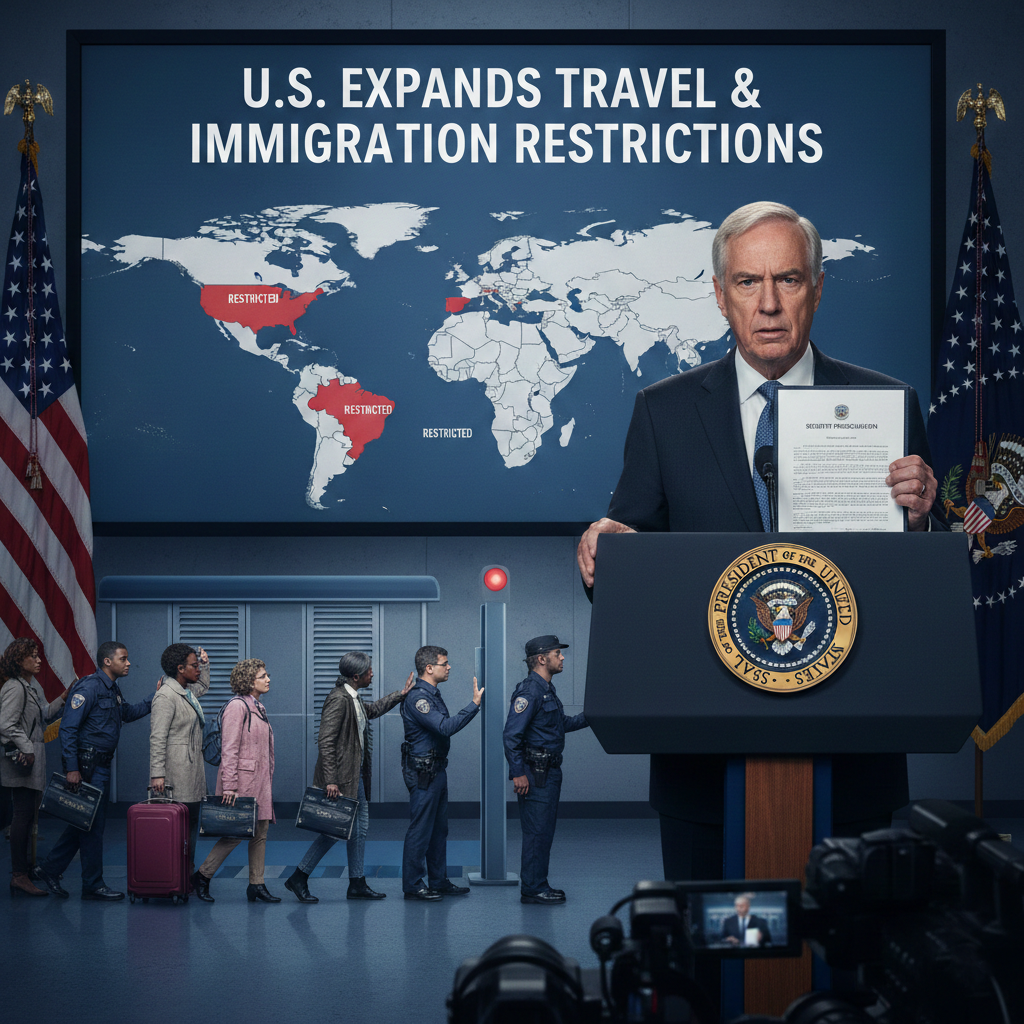
The United States has expanded travel and immigration restrictions on foreign nationals under a new security-focused presidential proclamation, signaling a tougher stance on border control, national security, and immigration screening. This move has triggered global attention, affecting travelers, international students, skilled workers, tourists, and governments worldwide.
The new proclamation strengthens vetting rules, limits entry for certain categories of foreign nationals, and increases scrutiny on visa issuance. While U.S. officials argue the decision is necessary to protect national interests, critics warn it could disrupt global mobility, economic growth, and diplomatic relations.
In this in-depth guide, we break down what the new U.S. travel and immigration restrictions mean, who is impacted, the legal and security rationale behind the decision, and how it may shape the future of global travel and migration.
Understanding the New U.S. Security Proclamation
The newly announced security proclamation expands existing immigration controls by introducing stricter eligibility requirements and enhanced screening measures for foreign nationals seeking entry into the United States.
Key Objectives of the Proclamation
The U.S. government has highlighted several core goals behind the expanded restrictions:
- Strengthening national security and border safety
- Preventing potential threats before they reach U.S. soil
- Improving inter-agency data sharing and identity verification
- Closing perceived loopholes in the immigration system
- Ensuring compliance with U.S. immigration laws
This proclamation reflects a broader global trend toward security-driven immigration policies, especially in response to geopolitical tensions and transnational risks.
Who Is Affected by the Expanded Travel and Immigration Restrictions
The proclamation does not apply uniformly to all travelers. Instead, it targets specific categories based on risk assessment, documentation, and compliance history.
Foreign Nationals Most Impacted
- Certain temporary visa holders
- Individuals from high-risk or non-cooperative countries
- Applicants with incomplete biometric or background data
- Travelers with previous immigration violations
- Foreign nationals flagged during enhanced security screening
Visa Categories Under Increased Scrutiny
| Visa Type | Impact Level | Notes |
|---|---|---|
| Tourist Visas (B1/B2) | High | More interviews and background checks |
| Student Visas (F/M) | Moderate to High | Academic verification tightened |
| Work Visas (H-1B, L-1) | High | Employer compliance review |
| Refugee & Asylum | Very High | Security vetting intensified |
| Family-Based Immigration | Moderate | Extended processing times |
Why the U.S. Government Expanded Immigration Restrictions
National Security Concerns
According to U.S. officials, the primary reason for the new proclamation is preventive security. Authorities aim to identify potential threats earlier by applying stricter screening at visa issuance and entry points.
Data Sharing & Identity Verification Gaps
The proclamation addresses concerns that some countries fail to provide:
- Reliable identity documents
- Criminal history data
- Biometric information
- Travel history verification
Without these safeguards, U.S. agencies argue they cannot fully assess potential risks.
Immigration System Integrity
The policy also seeks to reduce:
- Visa overstays
- Fraudulent applications
- Abuse of temporary visa programs
- Unauthorized employment
How the New Proclamation Changes the Travel Process
Foreign nationals planning to visit or immigrate to the U.S. should expect longer timelines and stricter checks.
Major Changes Travelers Will Notice
- Extended visa processing periods
- Increased in-person interviews
- Mandatory biometric submissions
- Deeper background investigations
- Higher documentation requirements
Airports and Ports of Entry
Even with an approved visa, travelers may face:
- Secondary inspections
- Additional questioning
- Device and document reviews
- Entry denial if concerns arise
Impact on International Students and Skilled Workers
International Students
The U.S. remains a top destination for global education, but the new restrictions may:
- Delay university start dates
- Increase visa rejection rates
- Require stronger proof of intent to return home
- Demand higher financial documentation
Skilled Workers and Tech Professionals
Industries reliant on global talent—such as IT, healthcare, and engineering—could see:
- Slower hiring timelines
- Higher compliance costs for employers
- Reduced talent mobility
- Increased petition scrutiny
Economic and Business Implications
The expanded travel and immigration restrictions could have significant economic consequences.
Potential Economic Effects
- Reduced international tourism revenue
- Labor shortages in key sectors
- Slower innovation and research collaboration
- Increased costs for multinational companies
U.S. Business Community Response
Many business leaders argue that while security is essential, overly restrictive policies could hurt America’s global competitiveness.
Global and Diplomatic Reactions
The proclamation has drawn mixed reactions worldwide.
Supportive Responses
- Countries emphasizing strong border control
- National security-focused policymakers
- Domestic groups advocating stricter immigration
Critical Responses
- Human rights organizations
- Immigration advocacy groups
- Countries affected by entry limitations
- International education institutions
Some nations may consider reciprocal travel restrictions, potentially impacting U.S. travelers abroad.
Legal Authority Behind the Proclamation
Presidential Powers on Immigration
Under U.S. law, the President has broad authority to:
- Restrict entry of foreign nationals
- Suspend visa issuance
- Enforce national security-based immigration rules
Courts typically allow such measures if tied to security or foreign policy concerns.
Potential Legal Challenges
Despite legal backing, the proclamation may face:
- Lawsuits from advocacy groups
- Challenges related to discrimination claims
- Congressional oversight and debate
How Foreign Nationals Can Prepare
If you plan to travel to or immigrate to the U.S., preparation is critical.
Practical Tips for Applicants
- Apply well in advance
- Ensure documents are accurate and complete
- Maintain a clean immigration history
- Be honest during interviews
- Consult qualified immigration professionals
- Monitor official U.S. government updates
Comparison With Previous U.S. Travel Restrictions
| Aspect | Previous Policies | New Proclamation |
|---|---|---|
| Scope | Limited countries | Broader screening |
| Focus | Country-based | Risk & data-based |
| Screening | Standard checks | Enhanced vetting |
| Flexibility | More exemptions | Tighter controls |
What This Means for the Future of U.S. Immigration
The new security proclamation suggests that U.S. immigration policy will remain cautious and security-driven in the near future. Digital identity verification, biometric tracking, and international data cooperation are likely to expand further.
Frequently Asked Questions (FAQs)
What is the new U.S. security proclamation about?
It expands travel and immigration restrictions on certain foreign nationals to strengthen national security and immigration screening.
Does this affect tourists and students?
Yes. Tourist, student, and work visa applicants may face stricter checks and longer processing times.
Are all countries affected equally?
No. The impact varies based on country cooperation, documentation standards, and risk assessment.
Can approved visa holders still be denied entry?
Yes. Final entry decisions are made at U.S. ports of entry after inspection.
Is this a permanent policy?
Such proclamations can be revised, extended, or revoked depending on future security assessments.
Conclusion: What You Should Do Next
The U.S. expansion of travel and immigration restrictions on foreign nationals marks a significant shift toward tighter border controls and enhanced security vetting. While aimed at safeguarding national interests, the policy has wide-reaching implications for travelers, students, professionals, and global businesses.
If you plan to travel to or settle in the United States, staying informed and prepared is more important than ever.
