

A Defining Moment in the Russia-Ukraine Naval Conflict
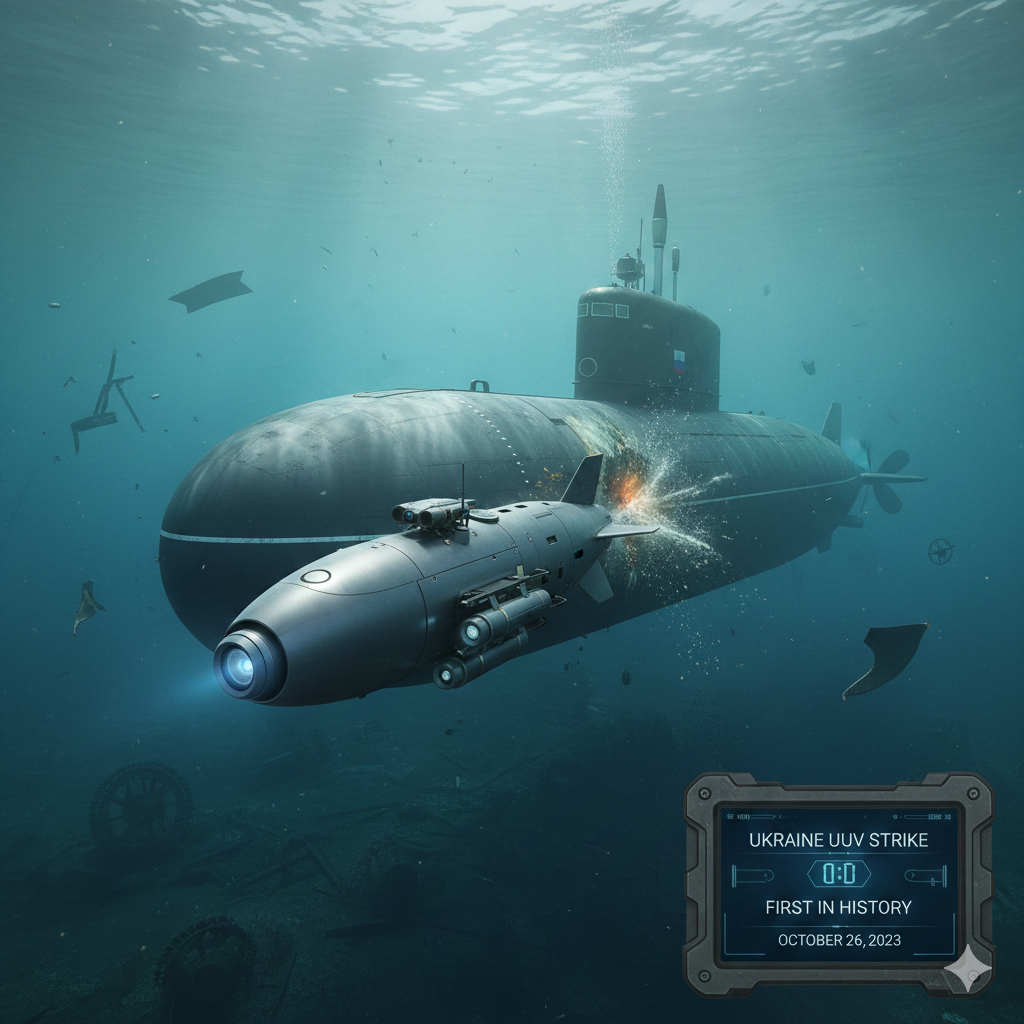
In a development that could permanently reshape modern naval warfare, Ukraine has reportedly used underwater drones to strike a Russian submarine—an unprecedented event in military history. If confirmed, this operation would mark the first known combat instance of unmanned underwater vehicles (UUVs) successfully targeting a submarine, signaling a dramatic shift in maritime combat strategy during the ongoing Russia-Ukraine conflict.
As the war continues to evolve beyond traditional battlefields, Ukraine’s increasing reliance on advanced drone warfare, particularly in the Black Sea, highlights a new era where asymmetric naval tactics can challenge even the world’s most powerful navies. This article explores what happened, how underwater drones work, why this strike matters globally, and what it means for the future of naval and submarine warfare.
Understanding the Reported Incident: What Happened Beneath the Black Sea?
According to multiple defense and intelligence reports, Ukraine deployed unmanned underwater drones to attack a Russian submarine operating in or near contested waters of the Black Sea. While official details remain limited due to operational secrecy, analysts believe the strike either damaged or forced the submarine to retreat, disrupting Russian naval operations.
Key highlights of the reported strike
- First-ever use of underwater drones against a submarine in active combat
- Conducted amid heightened naval tensions in the Black Sea
- Demonstrates Ukraine’s growing technological and tactical innovation
- Challenges traditional submarine stealth and dominance
Unlike surface drones, which Ukraine has already used effectively against Russian warships, underwater drones operate invisibly, making detection and interception significantly more difficult.
What Are Underwater Drones and How Do They Work?
Underwater drones, also known as Unmanned Underwater Vehicles (UUVs), are remotely operated or autonomous systems designed to operate beneath the ocean’s surface. Traditionally used for research, surveillance, and mine countermeasures, their role has rapidly expanded into offensive military operations.
Core features of military underwater drones
- Stealth capabilities: Extremely low acoustic and visual signature
- Autonomous navigation: AI-assisted route planning and obstacle avoidance
- Long endurance: Capable of traveling hundreds of kilometers underwater
- Explosive payloads: Designed to damage hulls, propellers, or sensors
Ukraine’s domestically developed naval drones, such as the Marichka and other classified systems, are believed to combine low cost with high impact, making them ideal for countering larger Russian naval assets.
Why Targeting a Submarine Is a Historic Breakthrough
Submarines are among the most protected and stealthy military assets in the world. Designed to evade detection, they rely on depth, silence, and advanced sonar systems to remain hidden.
Why submarines were considered nearly untouchable
- Operate deep underwater, beyond most weapon systems
- Advanced sonar detection of surface threats
- Limited exposure time near coastlines
Ukraine’s reported success changes this assumption entirely.
What makes this strike historically significant
| Aspect | Traditional Naval Warfare | Underwater Drone Warfare |
|---|---|---|
| Cost | Extremely high | Relatively low |
| Risk to personnel | High | Minimal |
| Detection | Easier | Very difficult |
| Strategic impact | Regional | Potentially global |
This incident suggests that submarine dominance is no longer guaranteed, even against a navy with superior resources.
Ukraine’s Evolving Naval Strategy in the Russia-Ukraine War
Since the start of the conflict, Ukraine has faced a severe disadvantage in conventional naval power. Russia entered the war with a much larger Black Sea Fleet, including cruisers, frigates, and submarines.
Instead of competing ship-for-ship, Ukraine adopted a technology-driven, asymmetric naval strategy.
Key pillars of Ukraine’s naval approach
- Extensive use of surface naval drones
- Coastal missile systems targeting warships
- Satellite and intelligence-driven targeting
- Expansion into underwater drone warfare
This strategy has already resulted in notable successes, including the sinking of the Russian flagship Moskva and multiple drone attacks on naval bases in Crimea.
The reported submarine strike represents the next logical evolution of this approach.
How Underwater Drones Change the Rules of Naval Warfare
The use of underwater drones against submarines fundamentally alters naval doctrine worldwide.
Strategic implications for global navies
- Reduced submarine survivability in contested waters
- Increased need for anti-drone underwater defenses
- Shift toward autonomous naval systems
- Higher emphasis on AI and sensor fusion
Navies that once relied on submarines as deterrence platforms—especially nuclear-armed states—must now reconsider how secure those assets truly are.
Russia’s Naval Challenges in the Black Sea
The Russian Navy has faced growing difficulties in maintaining control over the Black Sea since the war began.
Current challenges facing Russia’s submarine fleet
- Limited safe ports due to drone threats
- Increased surveillance from NATO and Ukraine
- Aging submarine detection systems
- Rising psychological pressure on crews
If underwater drones become widely adopted, submarines could face constant low-level threats, reducing their operational freedom and effectiveness.
Global Military Reactions and Strategic Concerns
Defense experts worldwide are closely analyzing the implications of Ukraine’s reported underwater drone strike.
Why global powers are paying attention
- NATO navies rely heavily on submarines for deterrence
- China’s naval strategy includes extensive submarine deployment
- Middle Eastern and Asian navies are investing in drone technology
This single event could accelerate global investment in underwater drone defense systems, sonar upgrades, and counter-UUV technologies.
Ethical and Legal Dimensions of Autonomous Underwater Weapons
The rise of underwater drones also raises serious questions about international law and military ethics.
Key concerns
- Autonomous decision-making in lethal systems
- Accountability for unintended damage
- Escalation risks in maritime conflict zones
Currently, international maritime law has limited provisions addressing autonomous underwater weapons, leaving a regulatory gap that may soon demand urgent attention.
How This Strike Fits into the Future of Warfare
Modern warfare is increasingly defined by automation, artificial intelligence, and unmanned systems. Ukraine’s reported submarine strike fits squarely into this broader trend.
Warfare trends reinforced by this incident
- Drones replacing traditional platforms
- Smaller nations leveraging innovation over scale
- Increased reliance on cyber-physical systems
- Blurring lines between naval, cyber, and space warfare
This is not just a tactical victory—it’s a strategic signal to militaries worldwide.
Frequently Asked Questions (FAQs)
Did Ukraine really hit a Russian submarine with an underwater drone?
While full official confirmation is limited, multiple credible reports suggest Ukraine successfully used an underwater drone against a Russian submarine, marking a historic first in naval warfare.
What type of underwater drone did Ukraine use?
Ukraine has developed several unmanned underwater vehicles domestically. Specific models used in the operation remain classified for security reasons.
Why is this considered a first in military history?
This is reportedly the first time an underwater drone has been used offensively to target a submarine in active combat, changing long-standing naval assumptions.
How does this impact global naval security?
It forces navies worldwide to rethink submarine defense strategies and invest in counter-drone technologies.
Could this escalate the Russia-Ukraine conflict?
While unlikely to change the war overnight, it increases strategic pressure and demonstrates Ukraine’s growing technological capabilities.
Conclusion: A Turning Point Beneath the Waves
Ukraine’s reported use of underwater drones to strike a Russian submarine represents one of the most significant naval warfare developments of the 21st century. It highlights how innovation, adaptability, and technology can redefine military balance—even against a traditionally superior force.
As the Russia-Ukraine conflict continues, this event may be remembered as the moment when submarine warfare entered a new, more vulnerable era. For defense planners, policymakers, and military analysts worldwide, the message is clear: the future of naval combat lies not just on the surface—but deep beneath it.
Stay informed on global defense innovations and breaking geopolitical developments. Share this article, subscribe for updates, and join the conversation on how technology is reshaping modern warfare.
