

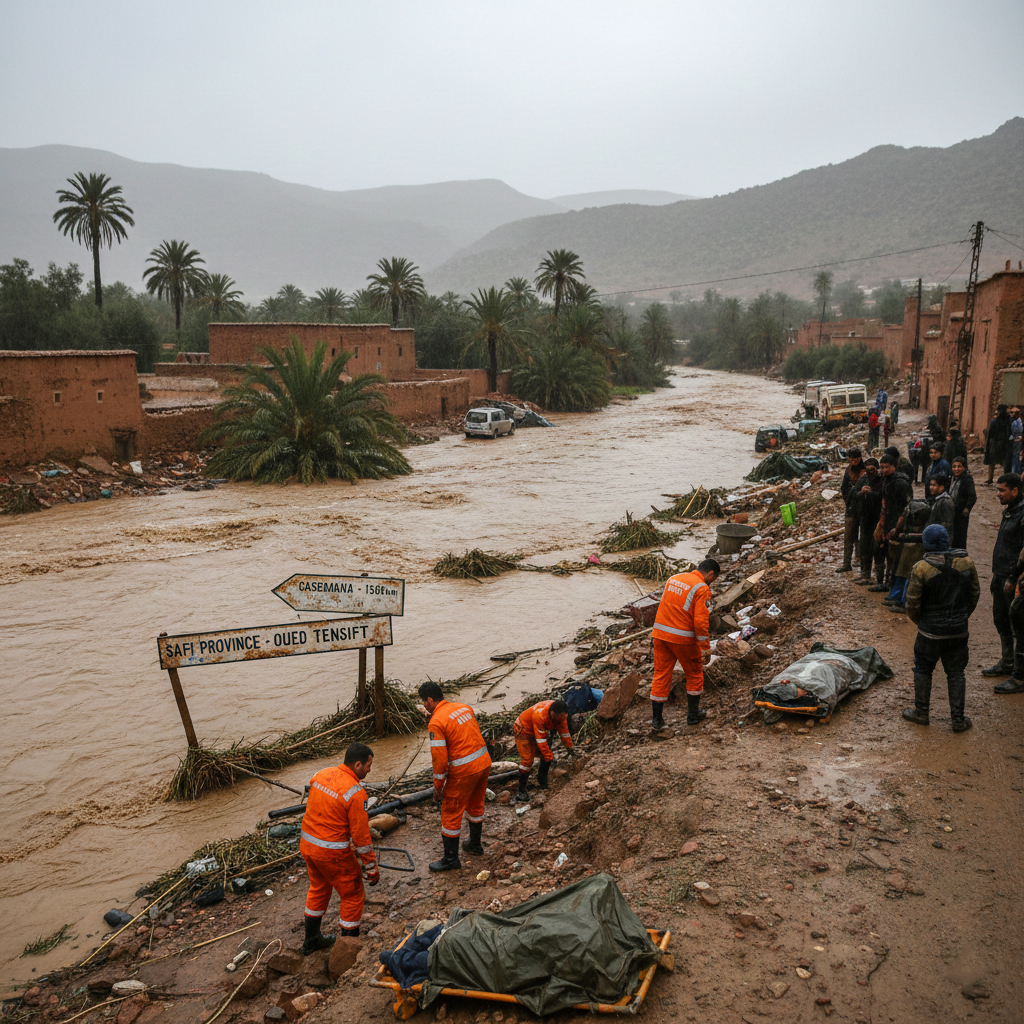
Flash floods in Morocco have once again turned deadly, as torrential rainfall in Safi province triggered sudden flooding that killed dozens of people, damaged homes, and disrupted daily life. What began as heavy seasonal rain quickly escalated into a humanitarian and environmental crisis, catching communities off guard and overwhelming local infrastructure.
This tragic event has brought renewed attention to extreme weather events in North Africa, the growing impact of climate change on rainfall patterns, and the urgent need for disaster preparedness and early warning systems. In this in-depth report, we examine what happened in Safi, why flash floods are becoming more frequent in Morocco, how authorities and communities are responding, and what lessons must be learned to prevent future loss of life.
Torrential Rainfall Triggers Deadly Flash Floods in Safi Province
Safi province, located along Morocco’s Atlantic coast, experienced intense and concentrated rainfall within a short period. The sudden downpour caused rivers, wadis, and drainage channels to overflow, leading to rapid flash flooding across several urban and semi-rural areas.
What Made the Floods So Dangerous?
Unlike slow-rising river floods, flash floods develop rapidly, often within minutes or hours. In Safi:
- Rainfall intensity exceeded normal seasonal averages
- Poor drainage systems struggled to handle runoff
- Low-lying neighborhoods filled with water quickly
- Nighttime flooding reduced visibility and response time
Residents reported water rushing through streets “like rivers,” sweeping away vehicles, damaging buildings, and trapping families inside their homes.
Human Toll: Dozens Killed, Many More Affected
The most heartbreaking outcome of the Safi flash floods is the loss of dozens of lives, including women, children, and elderly residents. Many victims were reportedly caught in vehicles, homes, or streets when floodwaters surged unexpectedly.
Key Impacts on People and Communities
- Fatalities: Dozens confirmed dead across affected areas
- Injuries: Many residents treated for trauma and hypothermia
- Displacement: Families forced to evacuate flooded homes
- Livelihood losses: Shops, farms, and small businesses destroyed
Emergency services worked around the clock to rescue stranded residents, recover bodies, and provide temporary shelter to displaced families.
Why Flash Floods Are Increasing in Morocco
Flash floods in Morocco are not isolated incidents. In recent years, the country has seen a rise in extreme rainfall events, alternating with prolonged droughts.
Climate Change and Extreme Weather in North Africa
Climate scientists warn that global warming is intensifying weather extremes across North Africa, including Morocco. Key contributing factors include:
- Warmer air holding more moisture, leading to heavier rainfall
- Irregular seasonal patterns disrupting traditional weather cycles
- Longer dry periods followed by sudden, intense storms
This “feast or famine” rainfall pattern significantly increases the risk of flash floods.
Urbanization and Infrastructure Challenges in Safi
Another major factor behind the devastation in Safi is rapid urban growth without adequate flood management infrastructure.
Infrastructure Gaps That Worsened the Flooding
- Insufficient stormwater drainage systems
- Construction in flood-prone zones
- Blocked or poorly maintained channels
- Limited green spaces to absorb runoff
As cities expand, natural water pathways are often replaced by concrete surfaces, causing rainwater to accumulate and flow rapidly into streets and homes.
Emergency Response and Government Action
Following the disaster, Moroccan authorities launched emergency response operations to assist affected communities in Safi province.
Immediate Measures Taken
- Deployment of civil protection and rescue teams
- Temporary evacuation centers for displaced residents
- Medical assistance for the injured
- Damage assessments and safety inspections
Government officials expressed condolences to victims’ families and pledged support for recovery and rebuilding efforts.
Comparing Safi Floods to Past Flood Disasters in Morocco
Morocco has experienced several deadly floods in the past, highlighting a recurring pattern of vulnerability.
| Year | Location | Cause | Impact |
|---|---|---|---|
| 2014 | Guelmim | Flash floods | Dozens killed |
| 2020 | Taroudant | Heavy rainfall | Widespread damage |
| 2023 | Southeastern regions | Storms & floods | Infrastructure losses |
| 2025 | Safi province | Torrential rainfall | Dozens killed |
This comparison shows that flash flooding remains a persistent national challenge, not a one-off tragedy.
The Role of Early Warning Systems
One of the most critical lessons from the Safi floods is the importance of effective early warning systems.
How Early Warnings Can Save Lives
- Timely alerts allow residents to evacuate
- Authorities can close roads and vulnerable zones
- Emergency services can be pre-positioned
- Schools and workplaces can suspend activities
While Morocco has made progress in meteorological monitoring, gaps remain in local-level communication and preparedness.
Impact on Agriculture and Local Economy
Safi province is known not only for its urban areas but also for agriculture and fishing-related activities.
Economic Consequences of the Floods
- Crop fields submerged and damaged
- Livestock losses in rural zones
- Supply chain disruptions
- Rising repair and reconstruction costs
For many families, these floods represent not just a personal tragedy but a long-term economic setback.
Environmental Effects of Flash Flooding
Beyond human and economic losses, flash floods also cause significant environmental damage.
Environmental Consequences
- Soil erosion and land degradation
- Pollution from sewage and debris
- Damage to coastal and river ecosystems
- Increased sedimentation in waterways
These impacts can persist long after floodwaters recede, affecting future agriculture and biodiversity.
What Can Be Done to Prevent Future Disasters?
Preventing flash flood tragedies like the one in Safi requires a multi-layered approach involving government, communities, and urban planners.
Long-Term Solutions for Flood Risk Reduction
- Investment in modern drainage infrastructure
- Strict enforcement of land-use regulations
- Flood risk mapping and zoning
- Community awareness and preparedness training
- Climate-resilient urban planning
Adapting to climate change is no longer optional—it is essential.
How Communities Can Protect Themselves
While large-scale solutions take time, local communities can also take proactive steps.
Practical Safety Measures for Residents
- Avoid driving through flooded roads
- Follow weather alerts and official instructions
- Identify safe evacuation routes
- Keep emergency kits ready during rainy seasons
Community-level resilience can significantly reduce casualties during sudden disasters.
Global Context: Morocco’s Floods and Climate Reality
The Safi flash floods reflect a broader global trend. From Europe to Asia, extreme rainfall and flooding events are increasing worldwide.
Why This Matters Beyond Morocco
- Highlights global climate vulnerability
- Shows urgent need for climate adaptation funding
- Reinforces importance of disaster risk management
Morocco’s experience serves as a warning—and a lesson—for many countries facing similar risks.
Frequently Asked Questions (FAQs)
What caused the flash floods in Safi province?
The floods were caused by torrential rainfall within a short period, overwhelming drainage systems and natural waterways.
How many people died in the Morocco flash floods?
Reports confirm that dozens of people were killed, with many others injured or displaced.
Are flash floods common in Morocco?
Yes, Morocco has experienced multiple flash flood events in recent years, particularly after intense rainfall.
Is climate change linked to these floods?
Experts say climate change increases the frequency and intensity of extreme rainfall, making flash floods more likely.
What is being done to prevent future floods?
Authorities are focusing on infrastructure upgrades, early warning systems, and disaster preparedness, though challenges remain.
Conclusion: A Wake-Up Call for Climate Preparedness
The deadly flash floods in Safi province are a stark reminder of how quickly extreme weather can turn catastrophic. As Morocco mourns the lives lost, the disaster underscores an urgent truth: climate resilience, infrastructure planning, and community preparedness must become national priorities.
Lives can be saved through better forecasting, smarter urban development, and timely warnings. The tragedy in Safi should not be remembered only for its destruction—but as a turning point toward safer, more resilient communities.
Stay informed, follow weather alerts, and support climate-smart solutions—because preparedness today can save lives tomorrow.
