
When Music, Identity, and Expression Collide
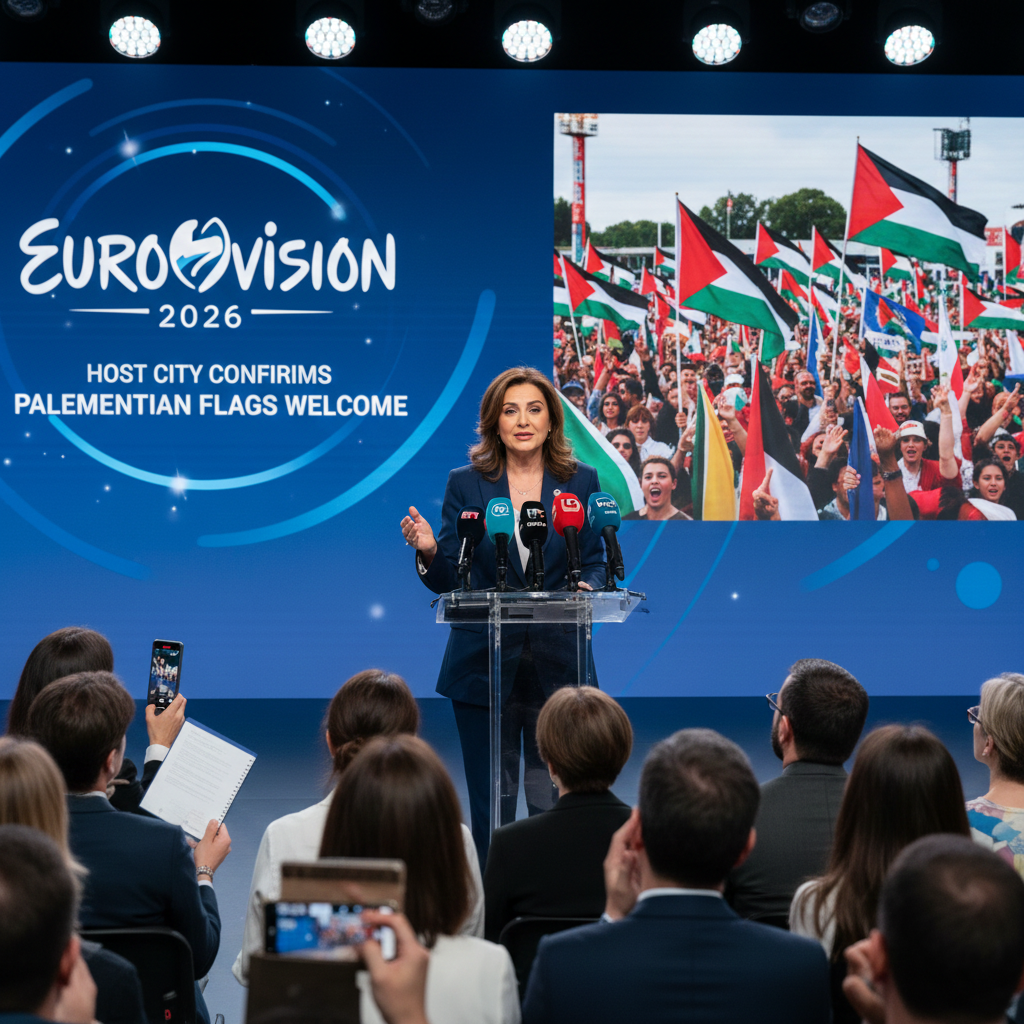
As preparations for Eurovision Song Contest 2026 gather momentum, one statement from the host country has already sparked global discussion. The Eurovision 2026 host has confirmed that Palestinian flags will not be banned during the contest, a decision that has reignited debates around cultural identity, freedom of expression, and the role of politics in international music events.
Eurovision is more than a song competition. For millions worldwide, it is a symbol of unity, diversity, and cross-cultural dialogue. Yet, it has always walked a fine line between art and politics. The decision regarding Palestinian flags places Eurovision 2026 at the center of an ongoing global conversation: Can cultural expression be separated from political reality?
This article explores the issue in depth—covering Eurovision’s rules, past controversies, cultural symbolism, public reactions, and what this decision could mean for the future of the contest.
Eurovision Song Contest: A Cultural Phenomenon Beyond Music
Since its inception in 1956, the Eurovision Song Contest has evolved into one of the world’s largest live entertainment events, watched by over 160 million viewers annually across Europe, Australia, and beyond.
Why Eurovision Matters Globally
Eurovision’s influence goes far beyond pop music:
- It promotes cultural diversity and inclusion
- It gives smaller nations a global stage
- It often reflects social change and political tensions
- It shapes conversations around identity and representation
Because of this reach, decisions made by Eurovision organizers and host countries carry significant symbolic weight.
Eurovision 2026 and the Flag Policy Debate
What the Host Actually Said
The host of Eurovision 2026 clarified that Palestinian flags will not be banned inside the venue, as long as they comply with general safety and conduct rules. This aligns with the broader principle that national, cultural, and identity-based symbols are allowed, provided they are not used to incite hate or disrupt performances.
This announcement immediately drew international attention, particularly because flags have historically been one of the most sensitive topics at Eurovision.
Understanding Eurovision’s Flag Rules
Eurovision operates under guidelines set by the European Broadcasting Union (EBU). While rules have evolved over time, the core principle remains consistent.
General Flag Guidelines at Eurovision
- Flags must not promote hate, violence, or discrimination
- Symbols must not disrupt performances or threaten safety
- Cultural and identity flags are typically allowed
- Political messaging on stage is restricted, but audience expression is broader
Performer vs Audience Rules
| Category | Rules Applied |
|---|---|
| Performers | Strict neutrality, no political messages |
| Audience | Greater freedom, within safety & conduct rules |
| Broadcast | Organizers may limit visuals deemed inflammatory |
The Palestinian flag decision falls under audience expression, not performer messaging.
Palestinian Flags as Cultural Symbols
More Than Politics for Many
For supporters, the Palestinian flag represents:
- Cultural identity
- Historical heritage
- Human rights awareness
- Solidarity with a people and history
Many argue that displaying such flags is cultural expression, not political provocation.
Why This Matters at Eurovision
Eurovision brands itself as a safe space for diversity and inclusion. Allowing cultural symbols reinforces that identity, especially in a contest built on representing nations, cultures, and voices.
The Long History of Politics at Eurovision
Despite claims of neutrality, Eurovision has never been entirely free from political undertones.
Notable Past Controversies
- Songs referencing war, displacement, or peace
- Flags banned or restricted in earlier editions
- Lyrics interpreted as political statements
- On-stage gestures sparking international debates
Famous Examples
- Songs about peace during Cold War tensions
- Performances highlighting LGBTQ+ rights
- Visual symbolism tied to national struggles
Eurovision often reflects the world’s realities—even when it tries not to.
Why Eurovision Tries to Stay Apolitical
The EBU’s Core Argument
The EBU consistently emphasizes that Eurovision is:
- A music competition
- A celebration of unity through art
- Not a platform for political campaigning
The fear is that allowing overt political messaging could:
- Divide audiences
- Overshadow musical talent
- Lead to diplomatic conflicts
Yet, enforcing complete neutrality has proven nearly impossible.
Public Reaction to the Eurovision 2026 Decision
Supporters’ Perspective
Those welcoming the decision argue:
- Freedom of expression should be protected
- Cultural symbols should not be censored
- Eurovision must reflect real-world diversity
- Silencing identity harms inclusivity
Critics’ Perspective
Opponents raise concerns such as:
- Eurovision becoming politicized
- Risk of protests or disruptions
- Inconsistent enforcement of rules
- Potential backlash from broadcasters
This split reaction highlights the complexity of balancing openness with neutrality.
Comparing Flag Policies Across Major Global Events
To understand Eurovision’s stance, it helps to compare it with other international events.
Flag Policies: A Comparison
| Event | Audience Flags Allowed | Political Expression |
|---|---|---|
| Eurovision | Yes (with limits) | Restricted on stage |
| FIFA World Cup | Yes (varies by host) | Strongly regulated |
| Olympics | Yes | Strictly controlled |
| Cannes Film Festival | Limited | Case-by-case |
Eurovision remains one of the most culturally expressive global events, particularly for audiences.
Cultural Expression vs Political Messaging: Where Is the Line?
This debate raises a critical question: When does cultural expression become political messaging?
Key Differences
- Cultural Expression: Identity, heritage, solidarity
- Political Messaging: Advocacy, slogans, campaigns
The Palestinian flag exists in both spaces, depending on context and interpretation.
Impact on Eurovision 2026 Viewership and Reputation
Potential Positive Outcomes
- Reinforces Eurovision’s inclusive image
- Attracts younger, socially conscious audiences
- Encourages cultural dialogue
- Strengthens freedom of expression values
Potential Risks
- Media controversy overshadowing performances
- Diplomatic pressure on organizers
- Heightened security concerns
- Divided public opinion
How organizers manage the event will be crucial.
How Eurovision 2026 Organizers Plan to Handle It
While Palestinian flags won’t be banned, organizers have emphasized:
- Clear behavioral guidelines
- Zero tolerance for hate speech
- Strict performer neutrality
- Audience conduct monitoring
This approach aims to allow expression without chaos.
The Role of Music in Global Conversations
Music has always been a mirror of society. From protest songs to cultural anthems, artists and audiences use sound and symbols to express realities that words alone cannot.
Why Eurovision Reflects the World
- It brings together conflicting narratives
- It amplifies underrepresented voices
- It showcases shared humanity
- It sparks difficult but necessary conversations
Eurovision 2026 may become another chapter in this long tradition.
What This Means for Future Eurovision Contests
The decision sets a precedent that future hosts may reference.
Possible Long-Term Effects
- More clarity in flag and expression rules
- Increased emphasis on audience responsibility
- Greater scrutiny of cultural symbols
- Continued tension between art and politics
Eurovision’s identity will continue evolving alongside global realities.
Frequently Asked Questions (FAQs)
Will Palestinian flags be allowed at Eurovision 2026?
Yes. The host has confirmed that Palestinian flags will not be banned, provided they comply with safety and conduct rules.
Are performers allowed to display political symbols?
No. Performers must remain politically neutral on stage under Eurovision rules.
Why is this decision controversial?
Because the Palestinian flag is seen by some as political, while others view it as cultural identity, creating divided opinions.
Has Eurovision allowed similar flags before?
Yes. Audience members have displayed various cultural and identity flags in past contests, though enforcement has varied.
Could this decision change Eurovision rules permanently?
It may influence future guidelines, but each host country still applies rules within EBU frameworks.
Conclusion: Eurovision 2026 and the Power of Cultural Visibility
The decision by the Eurovision 2026 host to allow Palestinian flags highlights a deeper truth: music cannot exist in a vacuum. Eurovision, despite its apolitical aspirations, reflects the world it entertains.
By choosing not to ban Palestinian flags, the host acknowledges the importance of cultural expression, identity, and dialogue—while still attempting to preserve the contest’s unifying spirit.
As Eurovision 2026 approaches, one thing is clear: the event will once again prove that music is not just about melodies and lyrics—it’s about people, stories, and the shared human experience.
