

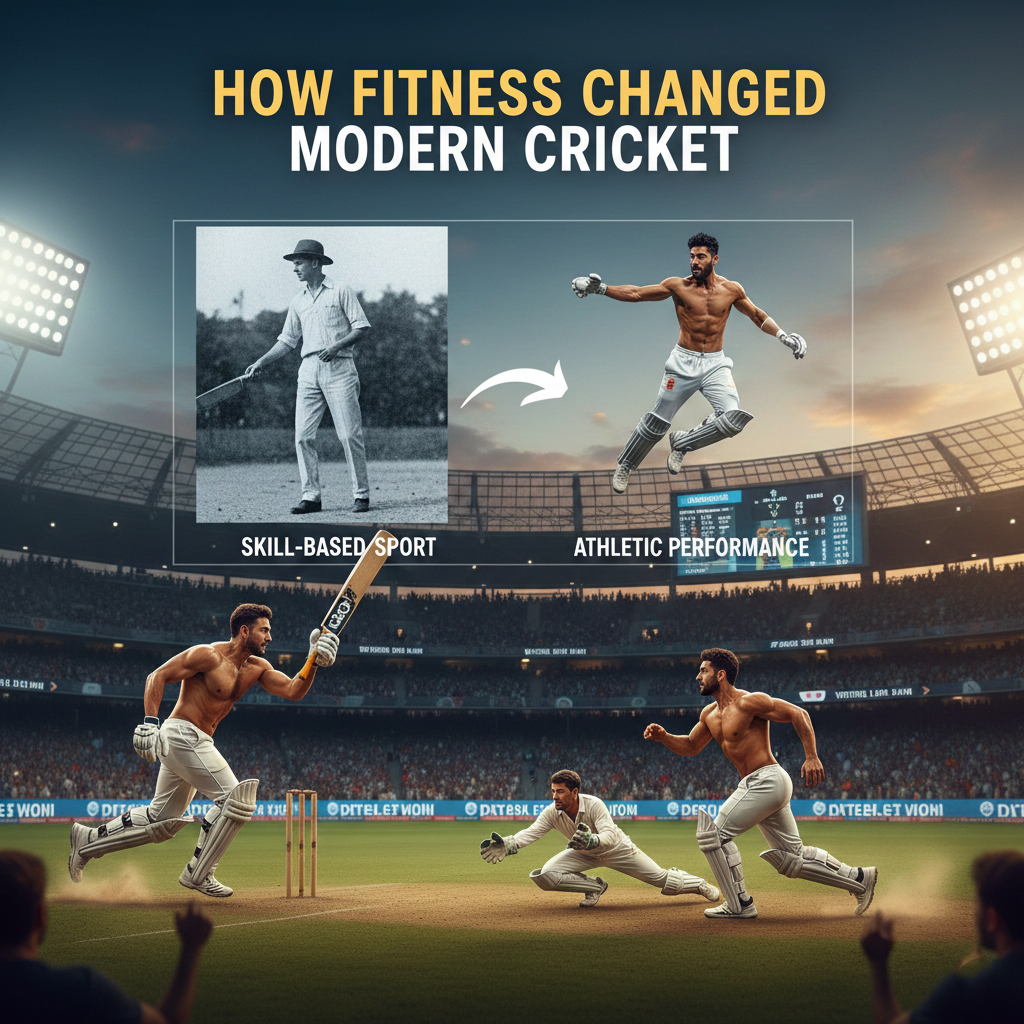
Cricket Is No Longer Just About Talent
Cricket has always been a game of skill, patience, and strategy. But in the last two decades, one factor has completely redefined how the sport is played, watched, and dominated—fitness.
Gone are the days when cricketers could rely purely on natural talent. Today, modern cricket demands peak physical conditioning, athleticism, speed, strength, and mental endurance. From explosive T20 matches to grueling five-day Test battles, fitness has become the backbone of success.
In this in-depth article, we explore how fitness changed modern cricket, why it matters more than ever, and how it transformed players into full-fledged athletes.
Cricket Before the Fitness Revolution
When Skill Outweighed Conditioning
In earlier eras, cricket rewarded technique more than physical conditioning. Many legendary players succeeded despite average fitness levels.
Key characteristics of old-era cricket:
- Minimal gym culture
- Limited focus on agility and speed
- Fielding considered secondary
- Longer careers despite injuries
While talent shined, the pace of the game was noticeably slower.
Limited Fielding Expectations
Fielders were mostly stationary, and diving stops or athletic catches were rare. Fitness was optional, not mandatory.
The Turning Point: When Fitness Entered the Spotlight
The Rise of One-Day and T20 Cricket
The introduction of:
- ODIs (1970s)
- T20 cricket (2000s)
forced players to adapt to:
- Faster scoring rates
- Shorter reaction times
- Continuous movement
- Explosive power
Fitness became a competitive advantage, not a luxury.
Global Influence of Professional Sports Science
Cricket began borrowing concepts from:
- Football
- Athletics
- Rugby
This included:
- Strength and conditioning coaches
- Sports physiotherapists
- Nutritionists
- Data-driven performance tracking
How Fitness Changed Batting in Modern Cricket
Power Hitting and Endurance
Modern batters are required to:
- Play long innings
- Hit big sixes consistently
- Maintain balance and timing under pressure
Fitness improvements led to:
- Stronger core muscles
- Faster bat speed
- Better stamina
Running Between the Wickets
Quick singles and doubles now decide matches.
Fitness impact on running:
- Faster acceleration
- Improved coordination
- Reduced run-out chances
Today, a batter’s fitness can add 20–30 extra runs per innings.
Bowling Transformed by Athletic Conditioning
Fast Bowlers Became Faster and Safer
Fitness revolutionized fast bowling by:
- Reducing injury frequency
- Improving bowling speed
- Extending career longevity
Key fitness elements for bowlers:
- Strong hamstrings
- Core stability
- Shoulder strength
- Controlled workloads
Spinners Benefited Too
Spinners improved:
- Endurance for long spells
- Fielding ability
- Batting contributions
Fitness turned bowlers into all-round contributors.
Fielding: The Biggest Fitness Upgrade in Cricket
From Weak Link to Match-Winning Skill
Fielding has seen the most dramatic transformation.
Modern fielders are:
- Faster
- More agile
- Fearless
- Technically sound
Athletic Fielding Standards Today
Key improvements include:
- Diving stops
- Boundary rope acrobatics
- One-handed catches
- Direct-hit run-outs
| Era | Fielding Level | Impact |
|---|---|---|
| Pre-2000 | Average | Defensive |
| Post-2010 | Elite | Match-winning |
A single brilliant fielding moment can now change the game.
Fitness and the Rise of All-Rounders
Why Multi-Skilled Players Dominate
Fitness made it possible for players to:
- Bat aggressively
- Bowl consistently
- Field athletically
Modern cricket rewards:
- Versatility
- Endurance
- Adaptability
This is why all-rounders are now among the most valuable assets in any team.
The Role of Gym Training in Modern Cricket
Strength Training Without Bulking
Contrary to myths, cricketers train for:
- Functional strength
- Flexibility
- Injury prevention
Not bodybuilder physiques.
Core Fitness Became Essential
A strong core helps with:
- Batting balance
- Bowling control
- Injury reduction
Nutrition and Recovery: The Hidden Game-Changers
Diet Became as Important as Practice
Modern cricketers follow:
- Personalized diet plans
- Protein-rich meals
- Hydration protocols
Fueling the body correctly directly impacts performance.
Recovery Is Training Too
Recovery techniques now include:
- Ice baths
- Physiotherapy
- Massage therapy
- Sleep monitoring
A well-recovered player performs better consistently.
Mental Fitness: The New Frontier
Handling Pressure Across Formats
Fitness isn’t only physical.
Mental conditioning helps players:
- Handle pressure
- Stay focused
- Recover from failures
- Perform consistently
Sports psychologists are now standard in professional teams.
How Fitness Improved Injury Management
Shorter Recovery Times
Better fitness means:
- Fewer injuries
- Faster rehabilitation
- Longer careers
Workload Monitoring
Technology tracks:
- Bowling loads
- Sprint distances
- Fatigue levels
This prevents burnout and overuse injuries.
Impact of Fitness on Different Cricket Formats
Test Cricket: Endurance and Patience
Fitness helps players:
- Stay sharp for five days
- Maintain bowling speed
- Concentrate longer
ODIs: Balance of Speed and Stamina
ODIs demand:
- Continuous movement
- Sustained intensity
- Tactical awareness
T20s: Explosive Athleticism
T20 cricket is a fitness test:
- Quick reflexes
- Power hitting
- Rapid recovery
Fitness Standards: Then vs Now
| Aspect | Earlier Era | Modern Era |
|---|---|---|
| Training | Net practice | Scientific conditioning |
| Fielding | Basic | Elite athleticism |
| Injuries | Frequent | Managed & reduced |
| Career Span | Shorter | Longer |
| Player Role | Specialized | Multi-skilled |
Why Fitness Is Now Non-Negotiable in Cricket
Today, selectors prioritize:
- Fitness tests
- Yo-Yo scores
- Agility drills
Talent without fitness struggles to survive at the highest level.
Challenges of the Fitness Revolution
Increased Physical Demands
Modern cricket also brings:
- Tighter schedules
- Mental fatigue
- Burnout risks
Balance between fitness and rest is crucial.
Future of Fitness in Cricket
Technology-Driven Performance
The future includes:
- AI-based training plans
- Wearable fitness tech
- Real-time data analysis
Youth Cricket Going Professional Early
Young players now train like professionals from teenage years, raising overall standards.
Frequently Asked Questions (FAQs)
How has fitness changed modern cricket the most?
Fitness improved fielding, injury prevention, and all-round performance, making cricket faster and more competitive.
Is fitness more important than skill in cricket today?
Skill remains vital, but without fitness, skill alone is not enough at the professional level.
Why are modern cricketers more athletic?
Due to structured training, sports science, nutrition, and high-intensity formats like T20 cricket.
Has fitness increased cricket injuries?
No. Proper fitness has actually reduced injuries and extended player careers.
Will future cricket demand even higher fitness levels?
Yes. With faster formats and packed schedules, elite fitness will be essential.
Conclusion: Fitness Redefined the Soul of Cricket
Fitness didn’t just change cricket—it evolved it.
Modern cricket is faster, sharper, more competitive, and more entertaining because players are fitter, stronger, and mentally tougher than ever before. From breathtaking fielding to relentless bowling spells and explosive batting, fitness fuels every moment of today’s game.
If cricket once celebrated pure skill, it now celebrates complete athletes.
👉 Whether you’re a player, coach, fan, or aspiring cricketer, one thing is clear: fitness is the future of cricket.
