

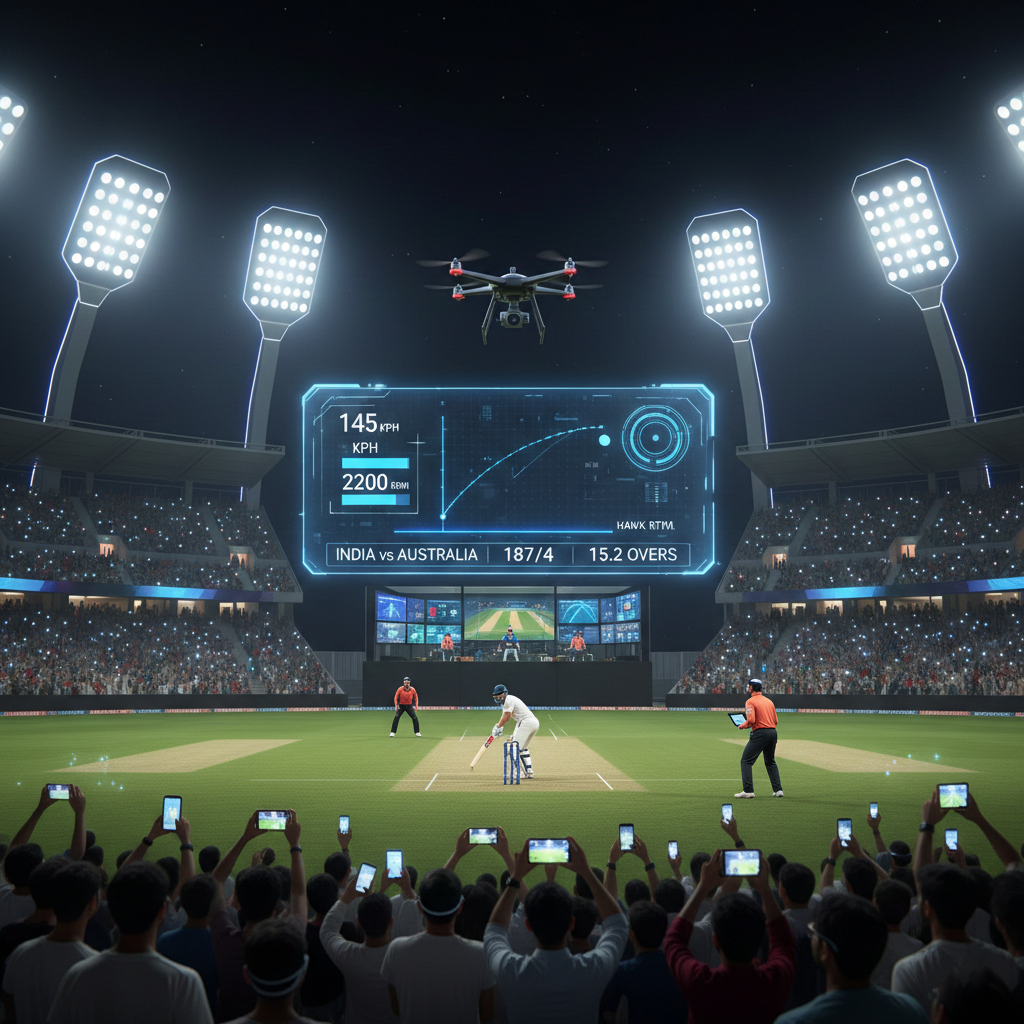
Technology’s Powerful Role in Modern Cricket
Cricket has always been a game of skill, patience, and strategy. But in today’s era, technology in cricket has become just as important as talent and teamwork. From decision-making to performance analysis and fan engagement, technology is reshaping how cricket is played, watched, and managed across the world.
Whether it’s the Decision Review System (DRS) correcting umpire calls, wearable tech tracking player fitness, or AI-driven analytics influencing team strategies, modern cricket is deeply connected to digital innovation. What was once a traditional sport is now a high-tech global spectacle.
In this in-depth guide, we’ll explore how technology is used in cricket, its real-world impact, benefits, challenges, and what the future holds—all explained in a simple, human-friendly way.
The Evolution of Technology in Cricket
Cricket technology didn’t appear overnight. It evolved gradually to address key challenges like fairness, accuracy, and performance optimization.
Early Use of Technology in Cricket
- Television replays for run-outs and stumpings
- Slow-motion cameras to analyze bowling actions
- Basic radar guns to measure bowling speed
Modern-Day Digital Transformation
Today, cricket uses advanced systems like:
- Ball-tracking technology
- Ultra-edge sound detection
- Artificial intelligence and big data
- Virtual reality training tools
This evolution has turned cricket into one of the most technology-driven sports globally.
Decision Review System (DRS): Ensuring Fair Play
One of the biggest technological revolutions in cricket is the Decision Review System (DRS). It helps reduce human error and improves on-field decision accuracy.
Key Components of DRS
- Hawk-Eye: Tracks ball trajectory for LBW decisions
- UltraEdge / Snickometer: Detects faint edges using sound waves
- Ball Tracking: Predicts where the ball would have gone
- Hot Spot (limited use): Uses infrared imaging to detect contact
Why DRS Matters
- Reduces umpiring errors
- Increases transparency
- Enhances player and fan trust
📊 Stat Insight: ICC reports show DRS accuracy has improved LBW decisions by over 90% in international cricket.
Hawk-Eye Technology: Seeing What the Human Eye Can’t
Hawk-Eye is one of the most trusted technologies in cricket.
How Hawk-Eye Works
- Uses multiple high-speed cameras
- Tracks the ball in real time
- Creates a 3D simulation of ball movement
Applications of Hawk-Eye
- LBW decisions
- Pitch maps for bowlers
- Wagon wheels for batsmen
- Predictive analysis for commentators
Hawk-Eye has made cricket more data-driven and objective.
UltraEdge and Snickometer: Detecting the Finest Touch
Edge detection has always been controversial. Technology solved this problem.
What UltraEdge Does
- Uses highly sensitive microphones
- Displays sound waves alongside video
- Confirms bat-pad or bat-ball contact
Impact on the Game
- Eliminates guesswork
- Reduces on-field arguments
- Increases accuracy in caught-behind decisions
This technology has brought clarity and fairness to close calls.
Wearable Technology: Enhancing Player Fitness and Safety
Modern cricketers rely heavily on wearable technology to monitor performance and prevent injuries.
Common Wearable Devices Used in Cricket
- GPS trackers
- Heart rate monitors
- Smart vests and bands
- Sleep and recovery trackers
Benefits for Players and Teams
- Injury prevention
- Workload management
- Improved stamina and endurance
- Data-backed training programs
🏏 Teams like Australia, England, and India extensively use wearables to maintain peak performance.
Artificial Intelligence and Data Analytics in Cricket
AI has changed how teams prepare, play, and plan.
How AI Is Used in Cricket
- Predicting opponent strategies
- Analyzing batting weaknesses
- Optimizing bowling plans
- Simulating match scenarios
Big Data’s Role
- Millions of data points per match
- Player performance trends
- Venue-based analytics
📈 Example: IPL teams use AI-powered tools to decide playing XI, batting order, and bowling matchups.
Technology in Batting and Bowling Analysis
Performance improvement is one of the biggest advantages of cricket technology.
Batting Analysis Tools
- Bat sensors measuring swing speed
- Shot selection heat maps
- Timing and impact analysis
Bowling Analysis Tools
- Biomechanics analysis
- Release point tracking
- Seam and swing data
These insights help coaches make precise technical corrections.
LED Stumps and Smart Equipment
Cricket equipment has also gone smart.
LED Bails and Stumps
- Light up instantly when disturbed
- Ideal for run-out and stumping decisions
- Improve night match visibility
Smart Cricket Balls
- Embedded sensors (in trials)
- Measure swing, seam, and speed
These innovations make the game faster and more accurate.
Broadcast Technology: Enhancing Fan Experience
Technology doesn’t just help players—it transforms how fans enjoy cricket.
Modern Broadcast Innovations
- Spider cams and drone shots
- Player mic-ups
- Real-time statistics
- Augmented reality graphics
Fan Engagement Benefits
- Better understanding of the game
- Interactive viewing experience
- Global accessibility
📺 Cricket broadcasts today are immersive, educational, and entertaining.
Virtual Reality (VR) and Augmented Reality (AR) in Training
Cricket training has entered the virtual world.
How VR Is Used
- Facing virtual bowlers
- Match situation simulations
- Improving reflexes and decision-making
Benefits of VR Training
- Safe practice environment
- Repetition without fatigue
- Mental conditioning
Elite teams use VR to prepare players for high-pressure scenarios.
Umpiring Technology Beyond DRS
Technology assists umpires in multiple ways.
Other Umpiring Technologies
- Front-foot no-ball detection
- Automated score updates
- Time management systems
These tools allow umpires to focus more on game control rather than calculations.
Comparison: Cricket Before vs After Technology
| Aspect | Traditional Cricket | Technology-Driven Cricket |
|---|---|---|
| Decision Accuracy | Human judgment | AI-assisted decisions |
| Player Fitness | Manual tracking | Wearable-based monitoring |
| Fan Experience | Basic broadcast | Interactive digital viewing |
| Strategy | Experience-based | Data-driven planning |
Challenges and Limitations of Technology in Cricket
While technology has benefits, it also brings challenges.
Key Concerns
- High implementation costs
- Over-dependence on technology
- Marginal errors in predictive tools
- Accessibility for lower-level cricket
Balancing technology with the spirit of the game remains crucial.
The Future of Technology in Cricket
The future looks exciting.
Upcoming Innovations
- Fully AI-powered umpiring
- Smart pitches and stadiums
- Advanced injury prediction models
- Enhanced fan interaction through metaverse
Cricket is moving toward a fully digital ecosystem.
Frequently Asked Questions (FAQs)
How is technology used in cricket today?
Technology is used for decision-making (DRS), player fitness tracking, performance analysis, broadcasting, and fan engagement.
What is the most important technology in cricket?
The Decision Review System (DRS) is considered the most impactful technology for fairness and accuracy.
Does technology reduce umpire authority?
No, technology assists umpires—it does not replace their final authority.
Is technology used in domestic and local cricket?
Mostly at international and league levels, but adoption is gradually increasing in domestic cricket.
Will AI replace human decision-making in cricket?
AI will assist decisions, but human judgment will always remain essential.
Conclusion: Technology Is Shaping the Future of Cricket
Technology in cricket is no longer optional—it’s essential. From improving fairness and performance to enhancing fan engagement, digital innovation has elevated the game to new heights.
As cricket continues to grow globally, smart technology will play a central role in making the sport more transparent, competitive, and exciting. The challenge lies in using technology wisely—without losing the human emotion and spirit that make cricket special.
👉 Want more insightful sports and technology content?
Explore our latest articles, stay updated with innovations, and experience cricket beyond the boundary line.
