

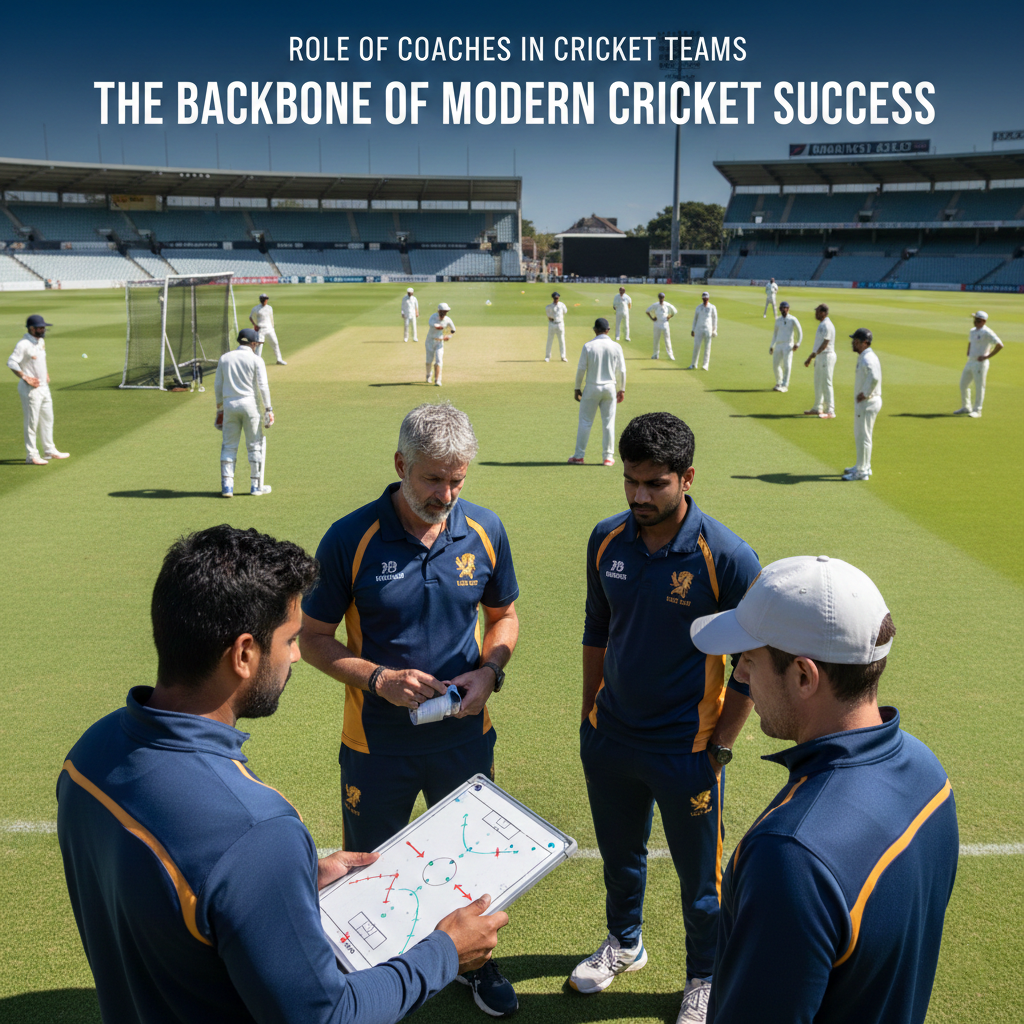
Why Coaches Matter More Than Ever in Cricket
Cricket today is no longer just a game of talent—it is a game of preparation, planning, psychology, and precision. Behind every successful cricket team, there is a strong coaching unit working tirelessly off the field. The role of coaches in cricket teams has evolved dramatically, making them one of the most important pillars of modern cricket success.
From shaping raw talent into world-class players to designing match-winning strategies, coaches influence every aspect of the game. Whether it’s international cricket, domestic leagues, or grassroots development, coaches play a decisive role in building winning teams.
This article explores the complete role of coaches in cricket teams, covering their responsibilities, types of coaches, impact on players, and why coaching has become indispensable in today’s competitive cricket environment.
Understanding the Modern Role of Coaches in Cricket Teams
In earlier eras, cricket teams relied mainly on captains and senior players for guidance. Today, coaching has become a full-fledged profession backed by data, science, and psychology.
How the Coaching Role Has Evolved Over Time
Cricket coaching has transformed due to:
- Introduction of technology and analytics
- Increased workload on players
- Growth of T20 leagues and packed schedules
- Focus on mental fitness and injury prevention
Modern coaches are planners, mentors, analysts, and motivators—all rolled into one.
Core Responsibilities of Coaches in Cricket Teams
The responsibilities of cricket coaches go far beyond running practice sessions. Their role touches every department of team performance.
1. Skill Development and Technical Improvement
One of the primary roles of a coach is to enhance individual player skills.
Key areas include:
- Batting techniques (stance, footwork, shot selection)
- Bowling mechanics (action, line & length, variations)
- Fielding skills (catching, throwing, agility)
- Wicketkeeping fundamentals
Coaches identify technical flaws and correct them using drills, video analysis, and one-on-one sessions.
2. Match Strategy and Game Planning
Winning matches requires intelligent planning, and coaches are central to this process.
Strategic responsibilities include:
- Opponent analysis
- Pitch and weather assessment
- Playing XI selection support
- Batting order decisions
- Bowling rotations and field placements
Before every match, coaches work closely with captains to prepare detailed game plans.
3. Mental Conditioning and Player Psychology
Cricket is as much a mental game as it is physical.
Coaches help players:
- Handle pressure situations
- Build confidence after failures
- Maintain focus during long matches
- Develop a winning mindset
Many teams now employ mental conditioning coaches, but head coaches also play a vital motivational role.
Different Types of Coaches in a Cricket Team
Modern cricket teams rely on a specialized coaching staff rather than a single coach.
Head Coach
The head coach is the overall leader of the coaching unit.
Key duties:
- Defining team vision and culture
- Coordinating with selectors and management
- Overseeing all coaching departments
- Acting as a bridge between players and administration
Batting Coach
A batting coach focuses on run-scoring techniques and consistency.
Responsibilities include:
- Improving shot selection
- Developing strategies for different formats
- Helping players counter specific bowlers
- Preparing batsmen for different pitch conditions
Bowling Coach
Bowling coaches work on attack, control, and variations.
Key focus areas:
- Fast bowling workload management
- Spin bowling tactics
- Death bowling skills
- Swing, seam, and pace variations
Fielding Coach
Fielding can change matches, especially in limited-overs cricket.
Fielding coaches help improve:
- Reflex catching
- Ground fielding
- Throwing accuracy
- Fitness and agility
Fitness and Strength Coach
Injury prevention and endurance are critical in modern cricket.
Fitness coaches focus on:
- Strength training
- Injury rehabilitation
- Flexibility and stamina
- Match fitness across formats
Role of Coaches Across Different Cricket Formats
Each format of cricket demands a unique coaching approach.
Test Cricket Coaching
Test cricket requires patience, discipline, and long-term planning.
Coaching priorities:
- Technique over aggression
- Mental endurance
- Session-wise strategies
- Bowling consistency
ODI Cricket Coaching
ODIs balance aggression and stability.
Coaches focus on:
- Powerplay strategies
- Middle-over consolidation
- Death-over execution
- Fielding efficiency
T20 Cricket Coaching
T20 cricket is fast-paced and high-pressure.
Key coaching areas:
- Innovative shot-making
- Match-ups and data-driven decisions
- Bowling variations
- Quick decision-making
How Coaches Shape Team Culture and Discipline
Beyond tactics and skills, coaches build the team’s identity.
A strong coach:
- Sets discipline standards
- Encourages teamwork
- Creates trust and respect
- Promotes accountability
Teams with a healthy culture often outperform more talented but disorganized teams.
Coach–Captain Relationship: A Winning Partnership
One of the most critical relationships in cricket is between the coach and the captain.
Why This Relationship Matters
- Ensures consistent decision-making
- Builds confidence in leadership
- Reduces dressing room conflicts
- Aligns strategy with execution
Successful teams thrive when coaches support captains without undermining their authority.
Use of Technology and Data by Cricket Coaches
Modern coaching is heavily data-driven.
Tools Used by Coaches
| Technology | Purpose |
|---|---|
| Video analysis | Technique correction |
| Performance analytics | Player statistics |
| GPS tracking | Workload monitoring |
| Match simulations | Strategy testing |
These tools allow coaches to make informed, unbiased decisions.
Role of Coaches in Player Development at Grassroots Level
Coaching is equally important at the junior and domestic levels.
Grassroots coaches:
- Identify raw talent
- Teach fundamentals
- Build discipline early
- Inspire young players
Strong grassroots coaching ensures a steady pipeline of future international players.
Challenges Faced by Cricket Coaches
Despite their importance, coaches face many challenges.
Common Challenges
- Managing player egos
- Handling media pressure
- Dealing with injuries and fatigue
- Balancing short-term wins with long-term goals
Successful coaches adapt quickly and remain calm under pressure.
Impact of Great Coaches on Cricket History
Some coaches have changed the destiny of teams.
Examples of coaching impact:
- Transforming underperforming teams into champions
- Reviving careers of struggling players
- Creating dominant team cultures
A great coach leaves a legacy beyond trophies.
Coaches vs Talent: What Matters More?
Talent wins matches, but coaching wins tournaments.
Comparison:
| Aspect | Talent Alone | Coaching Support |
|---|---|---|
| Consistency | Low | High |
| Team unity | Weak | Strong |
| Long-term success | Uncertain | Sustainable |
The best teams combine talent with strong coaching systems.
FAQs: Role of Coaches in Cricket Teams
What is the main role of a cricket coach?
The main role of a cricket coach is to improve player performance, plan strategies, build team culture, and guide the team toward consistent success.
Do cricket coaches make match decisions?
Coaches assist in planning and strategy, but final on-field decisions are usually made by the captain.
Why are multiple coaches needed in modern cricket?
Modern cricket demands specialization in batting, bowling, fitness, and mental conditioning, making multiple coaches essential.
Can a team succeed without a coach?
In today’s competitive cricket environment, it is extremely difficult for teams to succeed consistently without professional coaching support.
How do coaches help young cricketers?
Coaches develop fundamentals, discipline, confidence, and technical skills, laying a strong foundation for future success.
Conclusion: Coaches Are the Unsung Heroes of Cricket
The role of coaches in cricket teams goes far beyond what fans see on match days. They are planners, teachers, psychologists, and leaders who shape the destiny of teams and players alike. In modern cricket, where competition is intense and margins are thin, effective coaching can be the difference between victory and defeat.
Whether at the international level or grassroots stage, coaches are the backbone of sustainable cricket success.
