

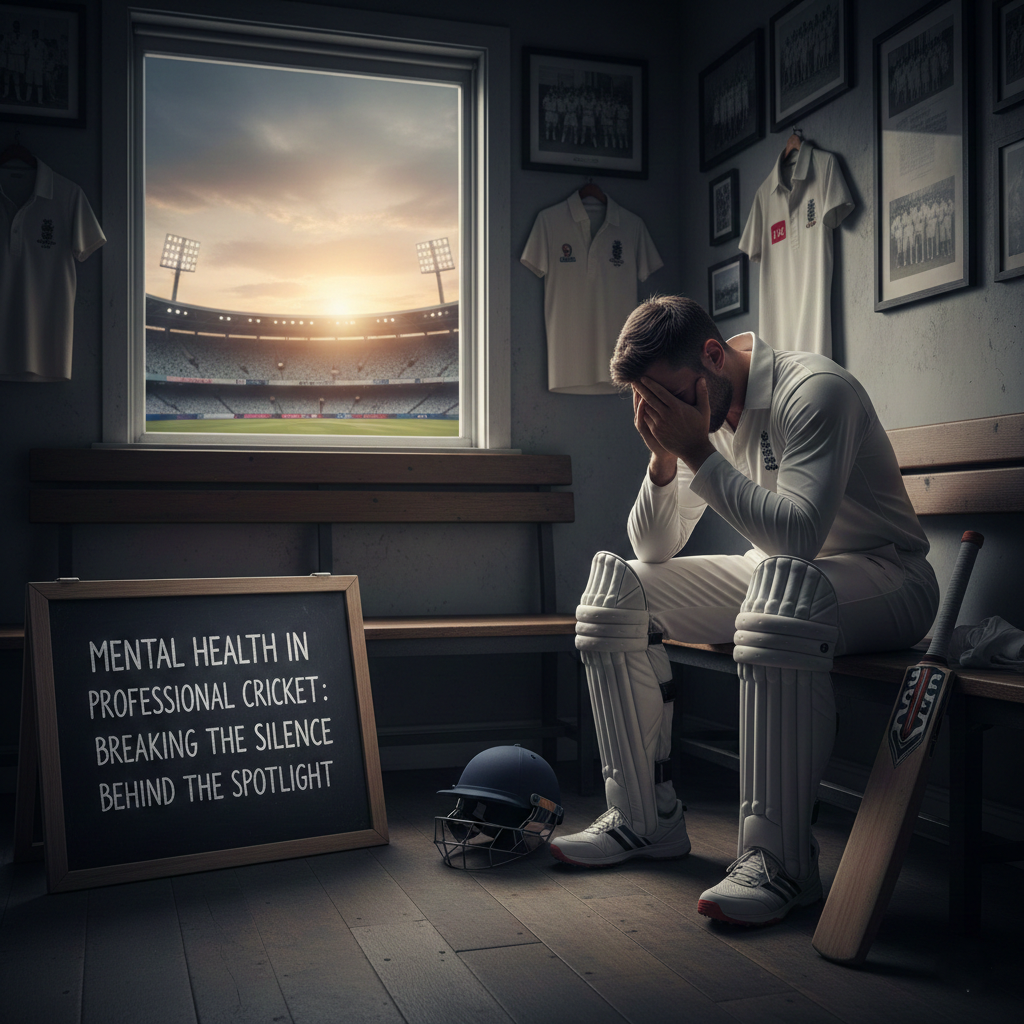
When Success Comes With Silent Struggles
Mental health in professional cricket has emerged as one of the most important yet long-ignored topics in modern sports. Behind the roaring crowds, packed stadiums, and million-dollar contracts, many cricketers silently battle anxiety, depression, burnout, and emotional exhaustion.
Cricket is not just a game of skill—it is a game of patience, pressure, and public judgment. One bad inning can spark national criticism. One dropped catch can haunt a player for years. Unlike many professions, cricketers perform their job in front of millions, with every mistake recorded, replayed, and analyzed.
In recent years, high-profile players speaking openly about their mental health struggles have forced the cricketing world to listen. The result? A slow but meaningful shift toward awareness, support, and reform.
This article explores the real mental health challenges in professional cricket, why they happen, how they affect performance, and what the future of the game must look like to protect its players.
Understanding Mental Health in Professional Cricket
Mental health refers to a person’s emotional, psychological, and social well-being. In professional cricket, mental health directly affects:
- Decision-making under pressure
- Consistency and performance
- Motivation and confidence
- Relationships with teammates and coaches
- Life beyond the field
Unlike physical injuries, mental health issues are invisible. Players often feel pressure to “stay strong” and hide their struggles to protect their selection, reputation, and contracts.
Why Cricket Is Mentally More Demanding Than It Looks
Cricket stands apart from many sports due to its unique structure:
- Long formats (Test matches lasting up to 5 days)
- Frequent travel across countries and time zones
- Extended periods of isolation during tours
- Individual failure in a team sport (batting, bowling)
- Intense scrutiny from media and fans
A batsman may fail 7 out of 10 times and still be considered great. Living with repeated failure requires extraordinary mental resilience.
Key Mental Health Challenges Faced by Professional Cricketers
Performance Pressure and Fear of Failure
At the elite level, every run, wicket, and decision matters. Players often carry:
- Fear of losing their place in the team
- Anxiety about national expectations
- Pressure from selectors and sponsors
This constant evaluation creates chronic stress, which can lead to burnout and self-doubt.
Anxiety and Depression in Elite Cricket
Studies and player testimonies show that professional cricketers experience anxiety and depression at rates similar to or higher than the general population.
Common symptoms include:
- Persistent sadness
- Loss of interest in the game
- Sleep disturbances
- Panic attacks before matches
- Emotional numbness
Unlike injuries, these symptoms are often dismissed as “poor form.”
Mental Burnout From Packed Schedules
Modern cricket offers little downtime. Players move from:
- International matches
- To leagues (IPL, BBL, CPL, etc.)
- To domestic tournaments
This relentless calendar leaves minimal time for recovery—mentally and emotionally.
Mental burnout signs include:
- Lack of motivation
- Irritability
- Reduced concentration
- Emotional fatigue
Social Media Pressure and Online Abuse
Cricketers today face a new opponent: social media.
One bad performance can result in:
- Personal attacks
- Threats
- Abuse targeting family members
- Viral trolling
For young players especially, this constant negativity can be devastating.
Injury, Identity Loss, and Mental Trauma
When injured, cricketers often feel:
- Disconnected from the team
- Fearful of being replaced
- Loss of identity and purpose
For players whose entire life revolves around cricket, injury can trigger depression and anxiety.
Mental Health Statistics in Professional Cricket
| Mental Health Aspect | Key Findings |
|---|---|
| Anxiety & Depression | ~35% of elite cricketers report symptoms |
| Burnout | Higher in all-format players |
| Post-Retirement Issues | Increased risk of depression |
| Help-Seeking Behavior | Less than 50% seek professional support |
Source: Player welfare studies & sports psychology research
Why Cricketers Struggle to Speak Up
Despite growing awareness, stigma still exists.
Cultural Barriers in Cricket
- “Mental toughness” is often misunderstood
- Emotional vulnerability seen as weakness
- Fear of losing selection or contracts
In some cricketing cultures, mental health conversations are still taboo.
The Role of Media and Public Expectations
Cricketers are public figures. Admitting mental health struggles can lead to:
- Media sensationalism
- Misinterpretation of intent
- Long-term reputation damage
As a result, many choose silence over support.
The Turning Point: Players Speaking Out
The biggest shift in mental health awareness in cricket came when top players broke the silence.
Their openness achieved:
- Normalization of mental health discussions
- Pressure on boards to act
- Increased access to professional help
These moments proved one thing clearly: mental health struggles can affect anyone, even champions.
How Mental Health Directly Impacts Performance
Mental health is not separate from performance—it shapes it.
Mental Well-being vs Performance Comparison
| Strong Mental Health | Poor Mental Health |
|---|---|
| Better focus | Overthinking |
| Confidence under pressure | Fear of failure |
| Consistent form | Erratic performances |
| Healthy recovery | Chronic fatigue |
A calm mind often wins matches before skill does.
Support Systems in Modern Professional Cricket
Sports Psychologists and Mental Skills Coaches
Top teams now include:
- Full-time psychologists
- Mental conditioning sessions
- One-on-one counseling
These professionals help players:
- Handle pressure
- Build routines
- Manage failure
- Improve confidence
Cricket Boards and Mental Health Policies
Many boards are introducing:
- Mandatory mental health check-ins
- Confidential counseling services
- Player workload management
- Family inclusion during long tours
This shift reflects a growing understanding that player welfare equals long-term success.
Role of Coaches and Team Management
Coaches today are expected to:
- Recognize emotional distress
- Encourage open communication
- Create safe team environments
Leadership now extends beyond tactics—it includes empathy.
Mental Health and Young Cricketers
Young and emerging players face unique challenges:
- Sudden fame
- Financial pressure
- Fear of early failure
- Unrealistic expectations
Without guidance, early mental stress can shorten promising careers.
Early mental health education is no longer optional—it is essential.
Life After Cricket: A Hidden Mental Health Battle
Retirement often brings:
- Loss of routine
- Reduced public attention
- Financial uncertainty
- Identity crisis
Many former cricketers struggle silently after leaving the game. Preparing players for life beyond cricket is now a critical mental health issue.
What More Needs to Be Done
To truly protect mental health in professional cricket:
- Normalize mental health discussions
- Treat mental injuries like physical injuries
- Limit excessive match scheduling
- Regulate online abuse
- Educate players from junior levels
- Encourage help-seeking behavior
Mental health care must be proactive, not reactive.
Frequently Asked Questions (FAQs)
Why is mental health important in professional cricket?
Mental health affects performance, decision-making, confidence, and overall well-being. Ignoring it can shorten careers and harm lives.
Do professional cricketers suffer from depression and anxiety?
Yes. Research shows a significant percentage of elite cricketers experience anxiety, depression, and burnout during their careers.
How does social media affect cricketers’ mental health?
Online abuse, trolling, and constant criticism increase stress, anxiety, and self-doubt, especially after poor performances.
Are cricket boards doing enough for mental health?
Progress has been made, but consistent policies, workload management, and stigma reduction are still needed globally.
Can mental health support improve cricket performance?
Absolutely. A healthy mind improves focus, confidence, resilience, and long-term consistency.
Conclusion: Protecting the Mind That Plays the Game
Mental health in professional cricket is no longer a side issue—it is central to the future of the sport. Talent alone cannot survive relentless pressure without emotional support. Strength is not about hiding pain; it is about addressing it.
Cricket has begun its journey toward mental health awareness, but the road ahead requires honesty, empathy, and action. When players are mentally healthy, the game becomes better, fairer, and more human.
If you’re part of the cricket ecosystem—player, coach, fan, or administrator—support mental health conversations. Because a stronger game begins with healthier minds.
👉 Share this article to help normalize mental health discussions in sports.
