

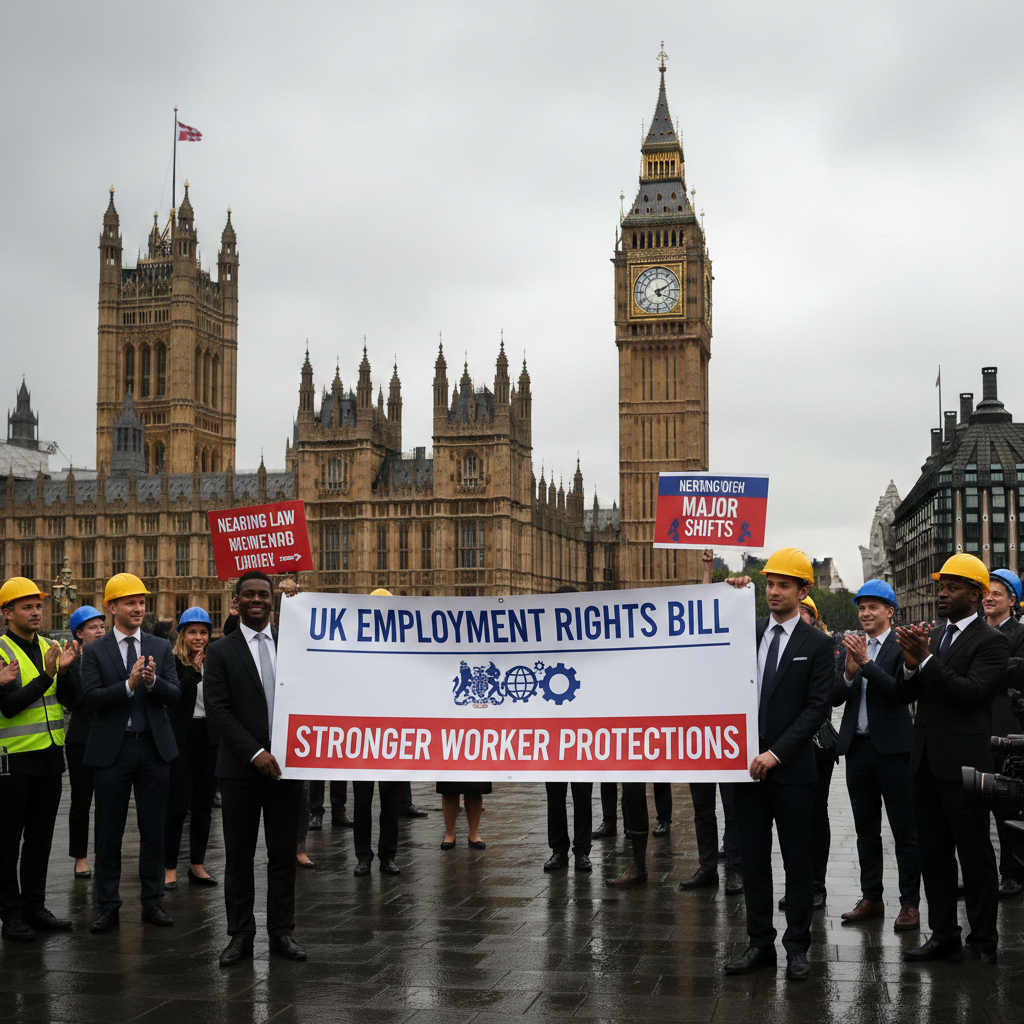
A Defining Moment for Workers’ Rights in the UK
The UK Employment Rights Bill is edging closer to becoming law, marking one of the most significant reforms to workers’ rights in decades. At a time when job security, fair pay, and workplace dignity are under intense public scrutiny, this landmark legislation promises to reshape the balance of power between employers and employees.
As reported by The Guardian, the bill is not just about employment protections—it also reflects broader political shifts and foreign policy developments shaping the United Kingdom’s future. From gig economy reforms to stronger trade union rights, the proposed law could redefine how millions of people work and live.
This article breaks down what the Employment Rights Bill means, why it matters now, how it fits into the UK’s political landscape, and what workers, employers, and global observers should expect next.
Why the UK Employment Rights Bill Matters Right Now
The UK labour market has changed dramatically over the last decade. Zero-hour contracts, platform-based gig work, and rising living costs have exposed gaps in existing employment laws.
Key pressures driving reform include:
- Growing income inequality
- Increased job insecurity after Brexit and the pandemic
- Expansion of the gig and freelance economy
- Public demand for fair wages and predictable working hours
The Employment Rights Bill aims to address these challenges by strengthening legal protections, modernising outdated regulations, and aligning UK labour standards with international norms.
What Is the UK Employment Rights Bill? A Clear Overview
The Employment Rights Bill is a comprehensive package of reforms designed to enhance workplace fairness, security, and accountability.
Core Objectives of the Bill
- Protect vulnerable workers from exploitation
- Strengthen collective bargaining and trade union rights
- Improve enforcement of labour laws
- Reduce insecure work arrangements
Unlike previous incremental reforms, this bill represents a system-wide approach to employment rights.
Key Worker Protections Proposed Under the Bill
1. Stronger Protection Against Unfair Dismissal
One of the most significant proposals is day-one protection from unfair dismissal.
What this means:
- Employees would no longer need long qualifying periods
- Employers must provide valid reasons for termination
- Workers gain immediate job security
This change could dramatically reduce arbitrary dismissals, especially for new hires and younger workers.
2. Reforms to Zero-Hour Contracts
Zero-hour contracts have long been controversial in the UK.
The bill proposes:
- Guaranteed minimum working hours
- Compensation for last-minute shift cancellations
- Greater transparency in scheduling
These measures aim to give workers predictable incomes and stable work-life balance.
3. Enhanced Rights for Gig Economy and Platform Workers
The rise of app-based work has blurred the line between employee and contractor.
The Employment Rights Bill seeks to:
- Clarify employment status
- Extend basic rights like sick pay and holiday pay
- Prevent misclassification of workers
This could significantly impact sectors such as food delivery, ride-hailing, and logistics.
4. Strengthened Trade Union Powers
Trade unions are set to gain a more influential role under the bill.
Proposed changes include:
- Easier union recognition
- Stronger collective bargaining frameworks
- Increased protection for union representatives
Supporters argue this will rebalance power in the workplace, while critics warn of increased costs for businesses.
How the Bill Affects Employers and Businesses
While the Employment Rights Bill focuses on workers, it also has major implications for employers.
Potential Benefits for Businesses
- Clearer employment rules
- Reduced staff turnover
- Higher employee morale and productivity
Concerns Raised by Business Groups
- Increased compliance costs
- Reduced flexibility in hiring
- Risk of legal disputes
Small and medium-sized enterprises (SMEs) are particularly concerned about adapting to the new framework.
Political Context: Why This Bill Is Gaining Momentum
Changing Political Climate in the UK
The Employment Rights Bill reflects a broader political shift toward social justice and economic fairness.
Key political drivers include:
- Growing public support for labour reform
- Pressure from trade unions and civil society
- Lessons learned from post-pandemic labour shortages
This momentum suggests that employment rights are becoming a central political issue, not a fringe concern.
Opposition and Debate in Parliament
Despite strong support, the bill faces resistance.
Opponents argue:
- The reforms could hurt economic competitiveness
- Businesses may relocate or reduce hiring
- The UK could lose its labour market flexibility advantage
The coming parliamentary debates will determine the final shape of the law.
Foreign Policy and Global Implications
Aligning UK Labour Standards with Global Norms
The Employment Rights Bill also has international significance.
It may help the UK:
- Improve its standing with the International Labour Organization (ILO)
- Strengthen trade relationships with the EU
- Enhance its global human rights reputation
Labour standards are increasingly tied to trade agreements and diplomatic relations, making this bill relevant beyond domestic politics.
Post-Brexit Positioning on Workers’ Rights
After Brexit, critics feared a “race to the bottom” in labour protections.
This bill sends a different message:
- The UK intends to maintain high labour standards
- Worker protections are compatible with economic growth
- Social responsibility remains a policy priority
Comparison: UK Employment Rights Before vs After the Bill
| Area | Before the Bill | After the Bill (Proposed) |
|---|---|---|
| Unfair dismissal | Qualifying period required | Day-one protection |
| Zero-hour contracts | Limited regulation | Minimum hours & compensation |
| Gig workers | Unclear legal status | Defined rights & protections |
| Union powers | Restricted in many sectors | Expanded recognition & bargaining |
| Enforcement | Fragmented oversight | Stronger enforcement mechanisms |
Public Reaction and Media Coverage
Major media outlets, including The Guardian, have highlighted the bill as a turning point for workers.
Public opinion trends show:
- Strong support among younger workers
- Backing from trade unions and advocacy groups
- Mixed reactions from business leaders
Social media discussions suggest growing awareness of employment rights as a quality-of-life issue.
What Workers Should Do Now
If the bill becomes law, workers should:
- Review their employment contracts
- Understand new rights and protections
- Engage with workplace representatives or unions
- Stay informed about implementation timelines
Knowledge will be key to fully benefiting from the reforms.
What Employers Should Prepare For
Businesses should begin early preparations:
- Audit current employment practices
- Update HR policies
- Train managers on new compliance rules
- Seek legal advice where needed
Proactive adaptation can reduce risk and improve workforce relations.
Frequently Asked Questions (FAQs)
What is the UK Employment Rights Bill?
It is proposed legislation aimed at strengthening worker protections, improving job security, and modernising UK employment laws.
When will the Employment Rights Bill become law?
The bill is nearing final legislative stages, but exact timelines depend on parliamentary approval and implementation schedules.
Who benefits most from the Employment Rights Bill?
Workers on insecure contracts, gig economy workers, new employees, and union members stand to gain the most.
Will the bill affect small businesses?
Yes, SMEs may face higher compliance requirements, though clearer rules could also reduce disputes and turnover.
How does this bill impact UK foreign policy?
By aligning with global labour standards, the bill strengthens the UK’s position in trade negotiations and international diplomacy.
Expert Insight: Long-Term Impact on the UK Economy
Economists suggest that while short-term adjustments may be challenging, long-term benefits could include:
- Higher workforce stability
- Increased consumer confidence
- Improved productivity
- Reduced inequality
Countries with stronger labour protections often show more resilient economies over time.
Conclusion: A Turning Point for Work and Politics in the UK
The UK Employment Rights Bill represents more than a legislative update—it signals a new social contract between workers, employers, and the state. By promising stronger protections, clearer rules, and fairer treatment, the bill reflects changing political priorities and evolving global expectations.
As political debates continue and foreign policy considerations come into play, one thing is clear: employment rights are no longer a background issue. They are central to the UK’s economic future and democratic values.
Stay informed, understand your rights, and be ready for change—because the future of work in the UK is being rewritten.
👉 If you found this analysis helpful, share it with colleagues or subscribe for more in-depth updates on UK politics, labour laws, and global affairs.
