
A Turning Point for Global Health Systems
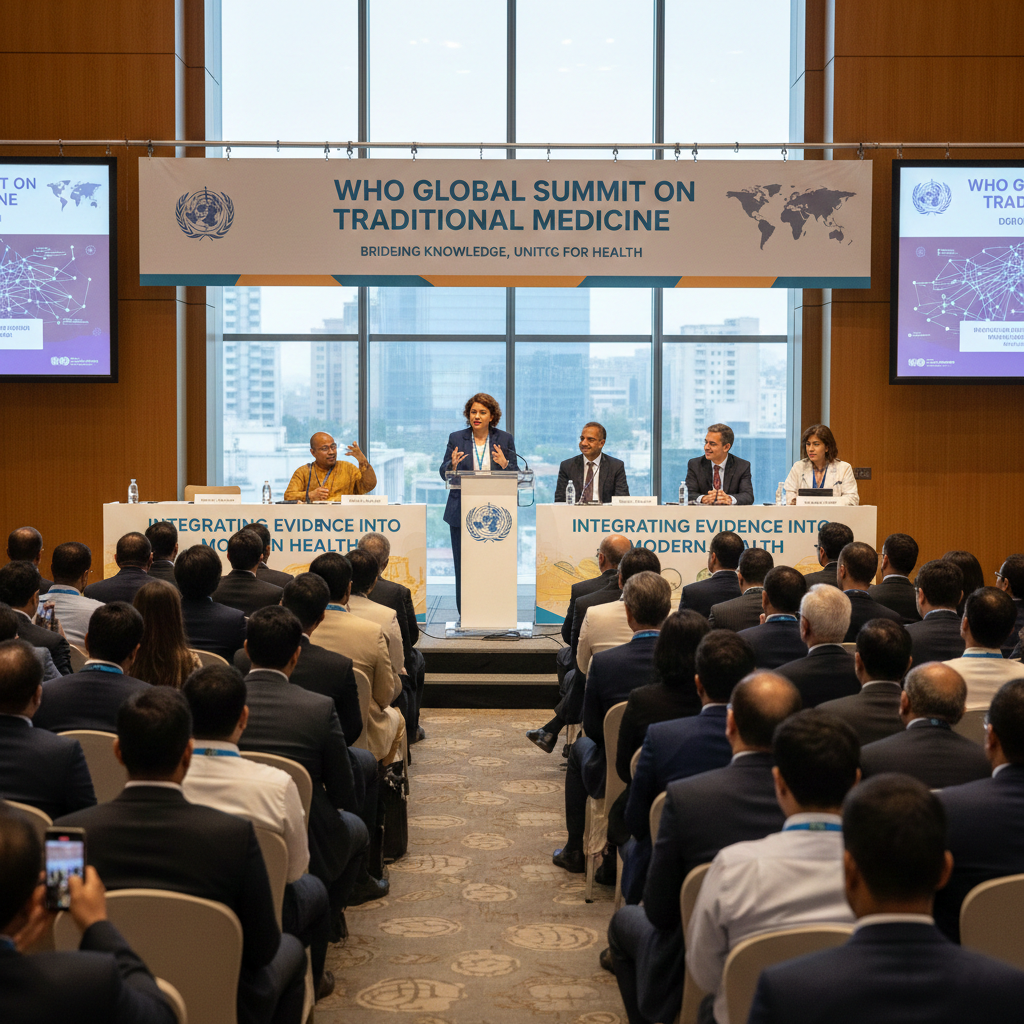
The World Health Organization (WHO) has taken a decisive step toward reshaping the future of healthcare by hosting a global summit on traditional medicine, signaling a new era of collaboration between ancient healing systems and modern, evidence-based healthcare. With millions of people worldwide relying on traditional medicine for primary healthcare, this landmark initiative aims to safely, scientifically, and ethically integrate proven traditional practices into national and global health systems.
This summit is more than a symbolic gathering. It reflects a growing recognition that traditional medicine, when backed by scientific evidence, can play a powerful role in addressing global health challenges—from chronic diseases and mental health to aging populations and healthcare access gaps.
As global health systems face rising costs, workforce shortages, and increasing disease burdens, WHO’s initiative highlights a pragmatic and inclusive approach: combining the best of traditional knowledge with modern medical science.
Why Traditional Medicine Matters in Global Healthcare Today
Traditional medicine is not a niche or alternative practice—it is a mainstream reality for billions of people.
According to WHO estimates:
- Over 80% of the global population uses some form of traditional or complementary medicine.
- In many low- and middle-income countries, traditional medicine is the first point of healthcare access.
- Even in developed nations, the use of herbal medicine, acupuncture, yoga, and mindfulness-based therapies is steadily increasing.
The Global Reach of Traditional Medicine
Traditional medicine includes a wide range of practices, such as:
- Ayurveda and Yoga (India)
- Traditional Chinese Medicine (TCM)
- African traditional healing systems
- Indigenous medicine in the Americas
- Unani, Siddha, Kampo, and other regional systems
These systems are deeply rooted in cultural identity and community trust. WHO’s focus is not to replace modern medicine but to integrate validated traditional practices safely and effectively into broader health systems.
The WHO Global Summit: Purpose and Vision
The WHO-hosted global summit on traditional medicine brought together:
- Health ministers and policymakers
- Scientists and clinical researchers
- Traditional medicine practitioners
- Global health organizations
- Regulatory authorities
- Academic institutions
Core Objectives of the Summit
The summit was built around clear and actionable goals:
- Promote evidence-based validation of traditional medicine practices
- Strengthen global cooperation and knowledge-sharing
- Develop international standards and regulations
- Encourage responsible integration into national healthcare systems
- Protect indigenous knowledge and biodiversity
- Ensure patient safety, quality, and ethical use
By focusing on science, safety, and policy alignment, WHO aims to move traditional medicine from the margins into mainstream, regulated healthcare frameworks.
Evidence-Based Integration: The Central Theme
One of the summit’s strongest messages was clear: only evidence-based traditional medicine should be integrated into health systems.
What Evidence-Based Traditional Medicine Means
Evidence-based integration involves:
- Clinical trials and scientific research
- Standardized formulations and dosages
- Quality control and safety monitoring
- Ethical sourcing of medicinal plants
- Peer-reviewed validation of outcomes
This approach ensures that traditional medicine meets the same safety and effectiveness standards as conventional treatments.
Bridging Ancient Wisdom with Modern Science
The summit emphasized collaboration between:
- Biomedical researchers
- Pharmacologists
- Ethnobotanists
- Traditional healers
This interdisciplinary model allows ancient knowledge to be tested, refined, and adapted for modern healthcare needs without losing its cultural essence.
Strengthening Global Health Cooperation Through Traditional Medicine
A major outcome of the WHO summit is the push for stronger international collaboration.
How Global Cooperation Is Being Enhanced
WHO highlighted several cooperative strategies:
- Cross-country research partnerships
- Shared global databases on traditional medicine
- Joint regulatory frameworks
- Capacity-building programs for healthcare professionals
- Technology transfer and digital health integration
This collaborative approach ensures that knowledge is shared, not siloed, and benefits reach both developed and developing nations.
Traditional Medicine and Universal Health Coverage
Universal Health Coverage (UHC) remains a key WHO priority, and traditional medicine plays an important role in achieving it.
Supporting Accessible and Affordable Care
Traditional medicine can:
- Reduce healthcare costs
- Increase access in rural and underserved areas
- Complement preventive healthcare strategies
- Support chronic disease management
When integrated responsibly, traditional medicine strengthens health systems rather than burdening them.
Role of Digital Health and Innovation
The summit also explored how digital health technologies can support traditional medicine integration.
Digital Tools Driving Integration
Key innovations include:
- AI-driven research and drug discovery from traditional formulations
- Digital documentation of indigenous knowledge
- Telemedicine platforms offering integrative care
- Mobile health apps promoting preventive traditional practices
Digital transformation ensures transparency, scalability, and global reach while preserving traditional knowledge responsibly.
Safeguarding Indigenous Knowledge and Biodiversity
WHO strongly emphasized the ethical dimension of traditional medicine.
Protecting Communities and Nature
Key safeguards discussed:
- Intellectual property rights for indigenous communities
- Fair benefit-sharing models
- Sustainable harvesting of medicinal plants
- Conservation of biodiversity
- Prevention of biopiracy
This ensures that integration does not lead to exploitation but rather empowers local communities.
Regulatory Frameworks and Quality Assurance
For traditional medicine to gain global acceptance, regulation is essential.
WHO’s Regulatory Focus
The summit reinforced the need for:
- International quality standards
- Safety monitoring systems
- Practitioner certification
- Standardized education and training
- Transparent labeling and consumer information
Regulation builds trust among patients, doctors, and policymakers.
Traditional Medicine vs Modern Medicine: A Complementary Approach
| Aspect | Traditional Medicine | Modern Medicine |
|---|---|---|
| Foundation | Cultural knowledge, holistic care | Scientific research, clinical trials |
| Focus | Prevention, balance, lifestyle | Diagnosis, treatment, acute care |
| Accessibility | High in rural areas | High in urban settings |
| Integration Goal | Complementary, evidence-based | Supportive, regulated |
WHO’s approach is not “either-or” but “together, responsibly.”
Key Takeaways from the WHO Global Summit
- Traditional medicine is a global healthcare reality
- Evidence-based validation is essential
- Integration strengthens health systems
- Global cooperation accelerates innovation
- Regulation ensures safety and trust
- Indigenous knowledge must be protected
Frequently Asked Questions (FAQs)
What is the WHO global summit on traditional medicine?
It is an international meeting hosted by WHO to promote the evidence-based integration of traditional medicine into modern healthcare systems.
Why is WHO focusing on traditional medicine now?
Rising healthcare costs, chronic disease burden, and global reliance on traditional medicine make integration both necessary and timely.
Does WHO support all traditional medicine practices?
No. WHO supports only evidence-based, safe, and regulated practices backed by scientific research.
How does this benefit patients?
Patients gain access to more holistic, affordable, and culturally acceptable healthcare options.
Will traditional medicine replace modern medicine?
No. WHO promotes a complementary model, not replacement.
The Future of Global Healthcare: A More Inclusive Model
The WHO-hosted global summit on traditional medicine marks a historic shift in global health thinking. By embracing scientifically validated traditional practices, the world is moving toward a more inclusive, resilient, and people-centered healthcare model.
This initiative recognizes that innovation does not always mean something new—sometimes it means refining and validating what has worked for centuries.
Conclusion: A Call for Responsible Integration
The integration of evidence-based traditional medicine into global health systems is no longer a concept—it is a coordinated global movement led by WHO. With strong regulation, scientific validation, ethical safeguards, and international cooperation, traditional medicine can become a powerful ally in achieving better health outcomes worldwide.
Healthcare leaders, policymakers, researchers, and practitioners must now work together to turn this vision into reality.
👉 Stay informed on global health innovations, policy shifts, and WHO initiatives. Follow trusted global health updates and be part of the future of integrated healthcare.
