

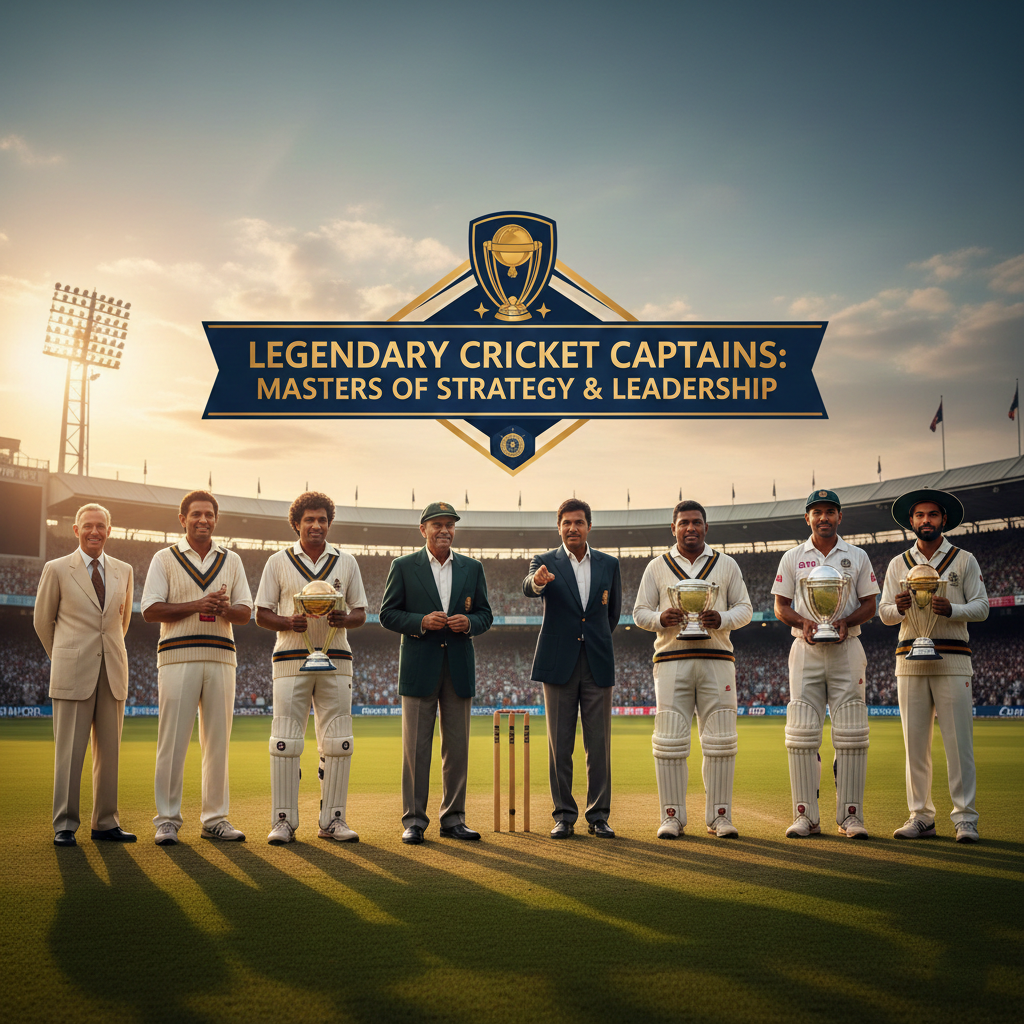
The Art of Cricket Leadership
Cricket is more than just a sport; it’s a game of strategy, skill, and leadership. While players shine with bat and ball, the captain often defines the fate of a team. Legendary cricket captains of all time are remembered not only for their records but also for their vision, decision-making, and ability to inspire their teammates under pressure. From tactical brilliance to leading from the front, these captains have left an indelible mark on cricket history. In this article, we explore some of the most iconic leaders who have shaped the game and set standards for generations.
What Makes a Cricket Captain Legendary?
Not every captain earns the tag of “legend.” The most revered cricket leaders combine skill, strategy, and charisma. Some key qualities include:
- Strategic Vision: Ability to read the game and make tactical decisions under pressure.
- Leading by Example: Performing well personally while inspiring the team.
- Man-Management Skills: Motivating and uniting players with diverse personalities.
- Consistency: Delivering results over a long period.
- Adaptability: Adjusting strategies for different formats, conditions, and opponents.
Top Legendary Cricket Captains in History
1. Sir Donald Bradman (Australia)
Often referred to as the greatest batsman ever, Sir Donald Bradman also had a keen sense of leadership. While his captaincy tenure was brief, he inspired the Australian team during a formative era of cricket.
Key Achievements:
- Test Matches Captained: 24
- Wins: 15
- Win Ratio: 62.5%
- Batting Average as Captain: 101.44
Bradman’s approach emphasized discipline, focus, and setting an example through unmatched performance.
2. Clive Lloyd (West Indies)
Clive Lloyd led the West Indies during their golden era in the 1970s and 1980s. Known for his calm demeanor and aggressive captaincy, he turned the West Indies into an invincible force.
Key Achievements:
- ICC Cricket World Cups Won: 2 (1975, 1979)
- Test Matches Captained: 74
- Wins: 36
- Win Ratio: 48.6%
Lloyd’s leadership combined tactical awareness with nurturing young fast bowlers who dominated world cricket.
3. Kapil Dev (India)
Kapil Dev, India’s 1983 World Cup-winning captain, transformed Indian cricket. His aggressive batting and inspirational leadership redefined India’s cricketing ambitions.
Highlights:
- ICC Cricket World Cup: 1983 Winner
- Test Matches Captained: 34
- Wins: 14
- Famous Victory: 1983 World Cup final vs West Indies
Kapil Dev’s charisma and fearless approach made him a true legend, influencing future Indian captains.
4. Imran Khan (Pakistan)
Imran Khan, the charismatic all-rounder, brought Pakistan its first-ever World Cup in 1992. His leadership style combined personal brilliance with unwavering belief in his team.
Notable Records:
- ICC Cricket World Cup: 1992 Winner
- Test Matches Captained: 48
- Wins: 14
- Legacy: Revolutionized Pakistan cricket with aggressive and positive play
Imran’s ability to inspire underdog teams and lead them to victory remains unmatched.
5. Ricky Ponting (Australia)
Ricky Ponting is widely regarded as one of the most successful captains in cricket history. He led Australia through a period of dominance in both Tests and ODIs.
Career Highlights:
- ICC Cricket World Cups Won: 2 (2003, 2007)
- Test Matches Captained: 77
- Wins: 48
- Win Ratio: 62.3%
Ponting’s aggressive style and tactical sharpness made him one of the most feared leaders globally.
6. MS Dhoni (India)
MS Dhoni revolutionized modern cricket with calm leadership and sharp decision-making. Known as “Captain Cool,” Dhoni excelled in pressure situations and excelled across formats.
Major Achievements:
- ICC Cricket World Cups Won: 2 (2007 T20, 2011 ODI)
- ICC Champions Trophy: 2013 Winner
- Test Matches Captained: 60
- Win Ratio: 50%
Dhoni’s ability to remain composed, mentor young players, and finish matches personally sets him apart as a modern legend.
7. Graeme Smith (South Africa)
Graeme Smith became captain at just 22 and led South Africa with resilience and consistency. Known for his fearless batting and aggressive captaincy, he elevated South African cricket globally.
Stats & Records:
- Test Matches Captained: 108
- Wins: 53
- Win Ratio: 49.1%
- Century as Captain: Multiple match-winning innings
Smith’s leadership demonstrated that youth and confidence could redefine a team’s destiny.
Comparative Table: Legendary Captains by Win Ratios
| Captain | Test Matches | Wins | Win Ratio | World Cups Won | Era |
|---|---|---|---|---|---|
| Donald Bradman | 24 | 15 | 62.5% | 0 | 1930s–40s |
| Clive Lloyd | 74 | 36 | 48.6% | 2 | 1970s–80s |
| Kapil Dev | 34 | 14 | 41.1% | 1 | 1980s |
| Imran Khan | 48 | 14 | 29.1% | 1 | 1980s–90s |
| Ricky Ponting | 77 | 48 | 62.3% | 2 | 2000s |
| MS Dhoni | 60 | 30 | 50% | 2 | 2000s–2010s |
| Graeme Smith | 108 | 53 | 49.1% | 0 | 2000s–2010s |
Leadership Lessons from Legendary Cricket Captains
Studying these legends provides insights beyond cricket:
- Patience and Vision: Bradman’s focus on precision and preparation.
- Fearless Leadership: Lloyd’s aggressive captaincy style.
- Inspiring Performance: Kapil Dev and Dhoni leading by example.
- Adaptability: Imran Khan’s flexible strategies for different conditions.
- Team Building: Smith’s approach to nurturing young talent.
These lessons are applicable not only on the field but also in business, management, and personal growth.
FAQs About Legendary Cricket Captains
Q1. Who is considered the greatest cricket captain of all time?
A: While opinions vary, captains like Ricky Ponting, MS Dhoni, and Clive Lloyd are often cited as the greatest due to their record, leadership, and impact on their teams.
Q2. Which captain has won the most ICC World Cups?
A: Ricky Ponting leads with 2 ICC ODI World Cups (2003, 2007), while MS Dhoni has won both ODI and T20 formats, also totaling 2 major ICC titles.
Q3. What qualities make a cricket captain legendary?
A: Strategic acumen, leading by example, team motivation, adaptability, and the ability to perform under pressure are key traits.
Q4. Can a captain be successful without being the best player?
A: Yes, leadership and tactical intelligence often outweigh individual brilliance, although most legendary captains excel in both.
Q5. Are modern captains more successful than historical ones?
A: Success depends on context, era, and team dynamics. Modern captains like Dhoni and Ponting adapted to multiple formats, while historical captains laid the foundation for strategic leadership.
Conclusion: Embrace the Legacy of Cricket Leadership
The legendary cricket captains of all time have defined what it means to lead with vision, courage, and consistency. Their stories inspire not only cricket enthusiasts but also anyone aiming to excel in leadership roles. From Bradman’s perfection to Dhoni’s calm under pressure, these captains remind us that leadership is about strategy, example, and the ability to inspire others to achieve greatness.
Whether you’re a budding cricketer or a cricket fan, studying these legends can sharpen your understanding of the game and leadership. Share this article with fellow cricket lovers and celebrate the timeless legacy of cricket’s greatest captains.
