

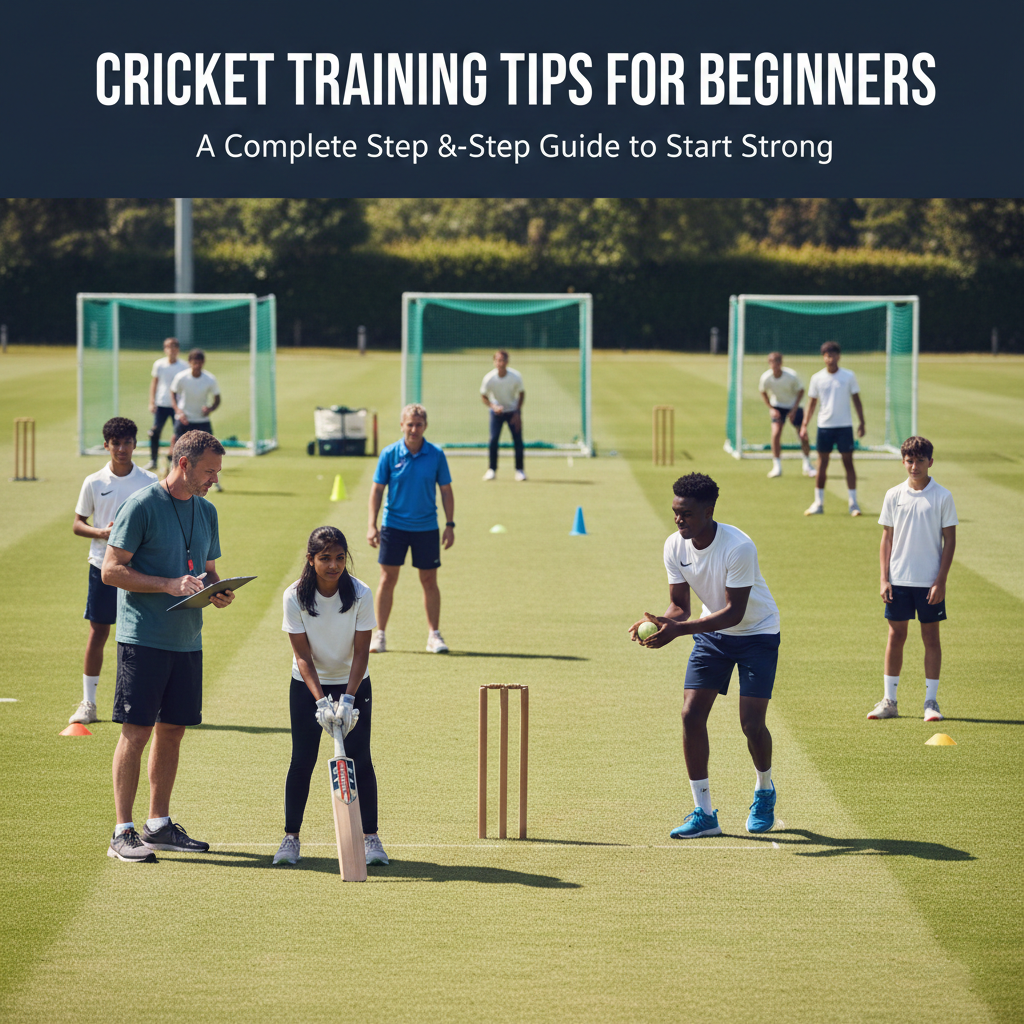
Starting Your Cricket Journey the Right Way
Cricket is more than just a sport—it’s a game of skill, patience, fitness, and strategy. If you’re just starting out, proper cricket training for beginners can make the difference between struggling early and building a strong foundation that lasts for years.
Many beginners make the mistake of copying advanced players without learning the basics. The truth is, world-class cricketers mastered fundamentals first—grip, stance, footwork, fitness, and mental discipline.
This guide is designed for absolute beginners who want clear, practical, and proven cricket training tips. Whether you aim to play at school, club, or professional level, these insights will help you train smarter, not harder.
Understanding the Basics of Cricket Before Training
Before stepping onto the field, it’s important to understand what cricket demands from a player.
Cricket tests:
- Hand-eye coordination
- Physical endurance
- Tactical thinking
- Emotional control under pressure
Key Skills Every Beginner Must Learn
- Batting fundamentals
- Bowling techniques
- Fielding basics
- Fitness and flexibility
- Game awareness
Training without understanding these areas leads to slow progress and bad habits.
Cricket Fitness Training for Beginners
Fitness is the backbone of cricket performance. You don’t need a gym membership to get started, but you do need consistency.
Why Fitness Matters in Cricket
- Improves shot timing and bowling accuracy
- Reduces injury risk
- Enhances stamina for long matches
- Builds confidence on the field
Essential Fitness Exercises for Beginners
Start with bodyweight exercises that improve strength and mobility:
Daily Warm-Up (10–15 minutes):
- Light jogging
- Arm circles and shoulder rotations
- Hip openers
- Ankle mobility drills
Beginner Strength Exercises:
- Squats (for leg power)
- Push-ups (upper body strength)
- Planks (core stability)
- Lunges (balance and agility)
Cardio Training Options:
- Running intervals
- Skipping rope
- Cycling
- Swimming
Stat Insight: According to sports performance studies, cricketers with strong lower-body fitness generate up to 25% more power in batting and bowling actions.
Batting Training Tips for Cricket Beginners
Batting is often the most exciting part of cricket, but it requires discipline and technique.
Master the Batting Grip and Stance
A correct grip and stance provide control and balance.
Batting Grip Basics:
- Hands close together
- “V” shape formed by thumb and index finger
- Relaxed grip, not tight
Perfect Batting Stance:
- Feet shoulder-width apart
- Knees slightly bent
- Head still and eyes level
Footwork: The Secret of Good Batting
Footwork separates average batters from great ones.
Practice:
- Forward defense movement
- Backfoot shots
- Side-stepping drills
Shot Selection for Beginners
Don’t try fancy shots early.
Focus on:
- Straight drive
- Defensive block
- Cover drive
- Pull shot (only after mastering basics)
Pro Tip: Watch the ball till it hits the bat. Most beginner dismissals happen due to poor concentration, not lack of skill.
Bowling Training Tips for Beginners
Bowling is both an art and a science. Beginners should focus on control before speed or spin.
Choosing Your Bowling Style
Start by understanding what suits you:
- Fast Bowling: Requires strength and stamina
- Medium Pace: Focuses on accuracy
- Spin Bowling: Relies on wrist and finger control
Bowling Action Fundamentals
A legal and smooth action prevents injuries and improves consistency.
Key points:
- Straight run-up
- Balanced delivery stride
- Follow-through after release
Accuracy Over Speed
Beginners often try to bowl too fast.
Instead, practice:
- Hitting a single stump
- Bowling consistent line and length
- Using cones or targets
Common Mistake: Chasing speed early can cause shoulder and back injuries.
Fielding Skills Every Beginner Must Practice
Fielding can change matches and earn selection even if you’re new.
Basic Fielding Techniques
- Stay low while fielding
- Use two hands when catching
- Keep eyes on the ball
Throwing and Catching Drills
Practice daily:
- Underarm throws
- Overarm throws
- High catches
- Ground fielding
Why Fielding Matters More Than You Think
- Saves runs
- Creates wicket opportunities
- Builds team trust
Many selectors value a good fielder over an average batter.
Cricket Training Equipment for Beginners
You don’t need expensive gear, but the right equipment matters.
Essential Cricket Gear List
| Equipment | Why It’s Important |
|---|---|
| Cricket Bat | Match your height and strength |
| Batting Gloves | Hand protection |
| Helmet | Head safety |
| Pads | Leg protection |
| Cricket Shoes | Grip and balance |
| Tennis Ball (practice) | Safe for beginners |
Start with practice balls before moving to hard leather balls.
Mental Training and Discipline in Cricket
Cricket is as much mental as it is physical.
Developing the Right Mindset
- Stay patient
- Accept failures
- Learn from mistakes
Handling Pressure as a Beginner
- Focus on the next ball, not the last mistake
- Control breathing
- Stick to basics
Mindset Fact: Elite cricketers spend nearly 30% of training time on mental preparation and visualization.
Daily Cricket Practice Routine for Beginners
Consistency beats intensity.
Sample Beginner Training Schedule (60–90 Minutes)
Warm-up: 10 minutes
Batting practice: 20–25 minutes
Bowling drills: 20 minutes
Fielding practice: 15 minutes
Fitness & stretching: 10–15 minutes
Practice at least 5 days a week for visible improvement.
Common Mistakes Beginners Should Avoid
Avoiding mistakes saves years of correction.
- Skipping warm-up
- Ignoring fitness
- Copying advanced techniques
- Overtraining without rest
- Playing without safety gear
Remember: progress is a marathon, not a sprint.
Nutrition Tips for Beginner Cricketers
Fueling your body correctly boosts performance.
What to Eat Before Practice
- Fruits (banana, apple)
- Whole grains
- Plenty of water
Post-Training Nutrition
- Protein-rich foods
- Hydration with electrolytes
- Light meals for recovery
Good nutrition improves energy, focus, and recovery speed.
FAQs: Cricket Training Tips for Beginners
How long does it take to learn cricket basics?
Most beginners can understand fundamentals within 3–6 months of regular practice.
Can I start cricket training at any age?
Yes. Cricket can be started at any age with proper fitness and coaching.
Is coaching necessary for beginners?
Coaching helps correct technique early, but self-training with discipline also works initially.
How many hours should beginners practice cricket daily?
1 to 2 hours daily is ideal for beginners.
Which skill should beginners focus on first?
Start with fitness, batting basics, and fielding before specialization.
Conclusion: Start Smart, Stay Consistent, Succeed in Cricket
Cricket success doesn’t come overnight. With the right cricket training tips for beginners, disciplined practice, and a learning mindset, anyone can build strong fundamentals and grow confidently in the game.
Focus on basics, train regularly, respect fitness, and enjoy the journey. Every great cricketer started as a beginner—what matters is how you train today.
Ready to take your cricket skills to the next level?
Start your daily practice routine now, stay consistent, and let your performance speak on the field. 🏏
