

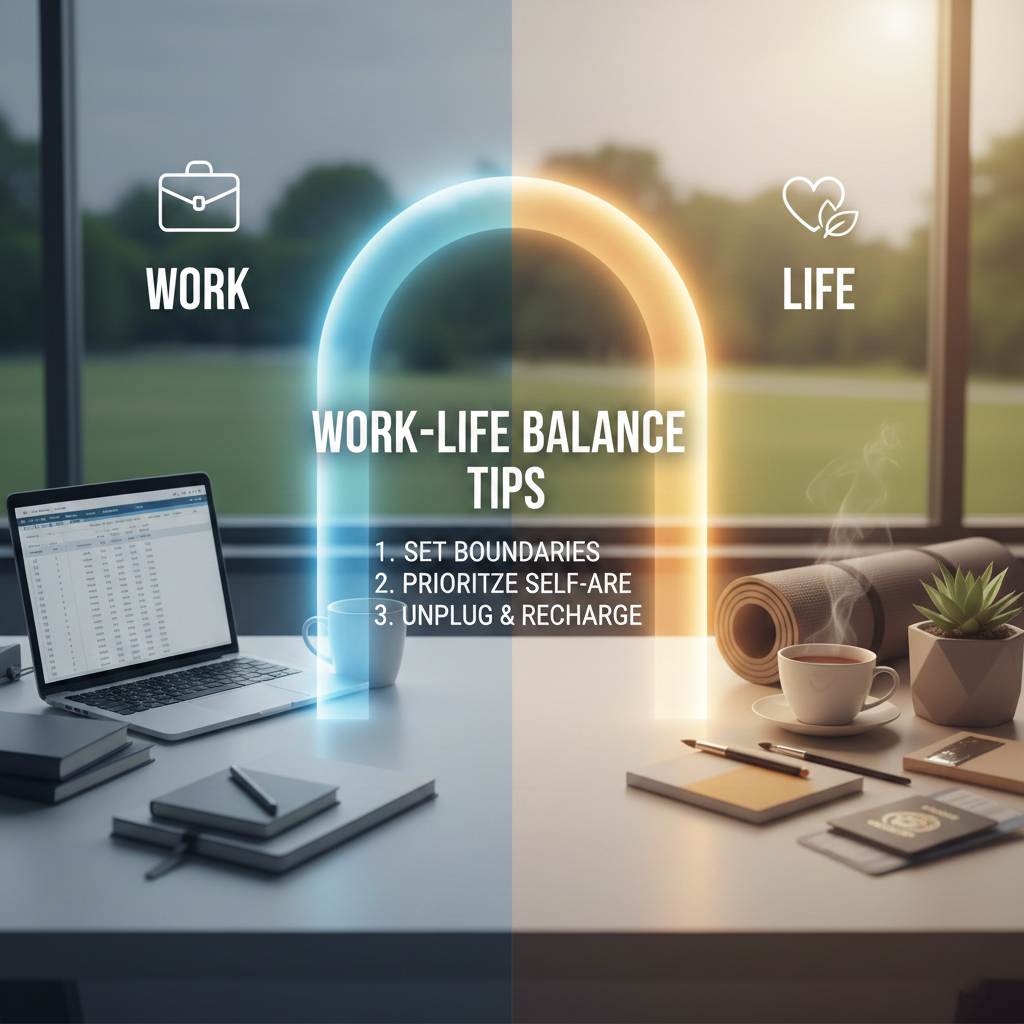
Why Work-Life Balance Matters More Than Ever
Work-life balance tips are no longer a luxury—they are a necessity. In today’s fast-paced world of deadlines, notifications, side hustles, and long work hours, many people feel constantly tired, stressed, and disconnected from their personal lives.
According to the World Health Organization, long working hours contribute to hundreds of thousands of deaths globally every year due to stress-related illnesses. This makes work-life balance not just a lifestyle choice, but a serious health priority.
Whether you are a student, working professional, entrepreneur, or remote worker, learning how to balance work and personal life can improve your mental health, productivity, relationships, and overall happiness.
In this in-depth guide, you’ll learn practical, real-world work-life balance strategies that actually work—without unrealistic advice or empty motivation.
Understanding Work-Life Balance in the Modern World
What Does Work-Life Balance Really Mean?
Work-life balance does not mean working less or ignoring your responsibilities. It means:
- Managing work without sacrificing health
- Making time for family, rest, and personal growth
- Reducing stress while staying productive
- Creating boundaries between professional and personal life
True balance looks different for everyone. For some, it means flexible hours. For others, it means clear time boundaries or remote work options.
The Real Cost of Poor Work-Life Balance
Ignoring balance has long-term consequences that many people underestimate.
Physical Health Impacts
- Chronic fatigue
- Sleep disorders
- Heart disease
- Weakened immunity
The Harvard T.H. Chan School of Public Health reports that work stress is linked to higher risks of cardiovascular diseases. (Outbound link: https://www.hsph.harvard.edu)
Mental and Emotional Effects
- Anxiety and burnout
- Irritability and mood swings
- Reduced motivation
- Depression
Professional Consequences
| Poor Balance | Healthy Balance |
|---|---|
| Low productivity | Higher focus |
| Frequent burnout | Sustainable performance |
| Job dissatisfaction | Career satisfaction |
| High turnover | Long-term growth |
Practical Work-Life Balance Tips That Actually Work
Set Clear Work Boundaries (Even at Home)
One of the most effective work-life balance tips is boundary-setting.
How to do it:
- Define fixed work hours
- Avoid checking emails after work
- Use separate devices for work if possible
- Communicate availability clearly to your team
Remote workers should be especially careful. Without boundaries, work can easily take over personal time.
Learn the Power of Saying “No”
Overcommitting is one of the biggest causes of imbalance.
Say no when:
- Tasks don’t align with priorities
- Deadlines are unrealistic
- Your workload is already full
Saying no respectfully protects your energy and productivity.
Prioritize Tasks Using Smart Planning
Not all tasks deserve equal attention.
Use the Eisenhower Matrix
| Urgent | Not Urgent |
|---|---|
| Do immediately | Schedule |
| Delegate | Eliminate |
This method helps you focus on what truly matters instead of reacting all day.
Create a Daily Routine That Supports Balance
Consistency reduces stress.
Balanced daily routine includes:
- Fixed wake-up and sleep time
- Dedicated work blocks
- Short breaks every 60–90 minutes
- Time for family, exercise, or hobbies
A predictable routine helps your brain switch between work and rest smoothly.
Managing Time Without Burning Out
Time Blocking for Better Focus
Time blocking is one of the most effective productivity techniques.
How it works:
- Assign specific time slots for tasks
- Avoid multitasking
- Include buffer time
This method reduces decision fatigue and improves work efficiency.
Stop Confusing Busy With Productive
Being busy doesn’t mean being effective.
Productivity is about:
- Completing high-impact work
- Reducing distractions
- Delivering quality results
Spending 10 focused minutes is often better than 1 distracted hour.
Digital Detox: Reclaiming Your Personal Time
How Technology Disrupts Balance
Constant notifications blur the line between work and life.
According to research shared by the American Psychological Association, excessive screen time increases stress and sleep issues.
(Outbound link: https://www.apa.org)
Simple Digital Detox Tips
- Turn off non-essential notifications
- Set “Do Not Disturb” after work hours
- Avoid screens 1 hour before sleep
- Use productivity apps intentionally
Work-Life Balance Tips for Remote and Hybrid Workers
Remote work offers flexibility—but also new challenges.
Common Remote Work Problems
- Overworking
- Isolation
- Blurred work-life boundaries
Solutions That Work
- Create a dedicated workspace
- Dress for work to create mental separation
- Take real lunch breaks
- Log off at a fixed time
You can read more practical workplace insights and lifestyle strategies on thenews.zone (internal link).
Importance of Physical Health in Work-Life Balance
Exercise as a Stress Management Tool
Regular movement improves both mental and physical health.
Benefits include:
- Reduced anxiety
- Better sleep
- Improved focus
- Increased energy
You don’t need a gym—walking, stretching, or yoga works too.
Sleep Is Not Optional
Sleep deprivation destroys productivity and balance.
Healthy sleep habits:
- 7–8 hours nightly
- Consistent sleep schedule
- No screens before bed
The National Sleep Foundation highlights sleep as a critical factor for work performance.
(Outbound link: https://www.sleepfoundation.org)
Emotional Well-Being and Personal Time
Make Time for What Makes You Happy
Personal time is not wasted time.
Examples include:
- Reading
- Music
- Travel
- Learning new skills
- Spending time with loved ones
These activities recharge your mental energy and improve long-term performance.
Build Strong Support Systems
Healthy relationships reduce stress and improve resilience.
- Share challenges with trusted people
- Spend quality time with family
- Avoid work talk during personal moments
Strong personal connections are essential for sustainable success.
Work-Life Balance Tips for Entrepreneurs and Freelancers
Separate Identity From Work
Entrepreneurs often tie self-worth to work results.
Healthy mindset:
- Your value is not your productivity
- Rest improves creativity
- Breaks are investments, not losses
Plan Breaks Like Meetings
Schedule:
- Weekly off-days
- Short daily breaks
- Vacations in advance
Burnout costs more than rest.
Common Myths About Work-Life Balance
Myth 1: Balance Means Less Success
Reality: Balanced professionals perform better long-term.
Myth 2: Hustle Culture Is Necessary
Reality: Chronic hustle leads to burnout, not growth.
Myth 3: Balance Is One-Time Setup
Reality: It’s an ongoing adjustment based on life stages.
FAQs: Work-Life Balance Tips Explained
What is the best definition of work-life balance?
Work-life balance means managing work responsibilities while maintaining physical health, mental well-being, and personal relationships.
How can I improve work-life balance quickly?
Start by setting work boundaries, prioritizing tasks, and limiting after-hours communication.
Is work-life balance possible in high-pressure jobs?
Yes. With time management, boundaries, and support systems, balance is achievable even in demanding roles.
Does work-life balance improve productivity?
Absolutely. Studies show balanced workers are more focused, creative, and efficient.
Where can I read more lifestyle and productivity insights?
You can explore trusted articles and daily insights on thenews.zone .
Final Thoughts: Balance Is the New Success
Work-life balance is not about perfection—it’s about intention.
By applying these practical work-life balance tips:
- You protect your health
- Improve relationships
- Increase productivity
- Build a more fulfilling life
Success without well-being is not real success.
